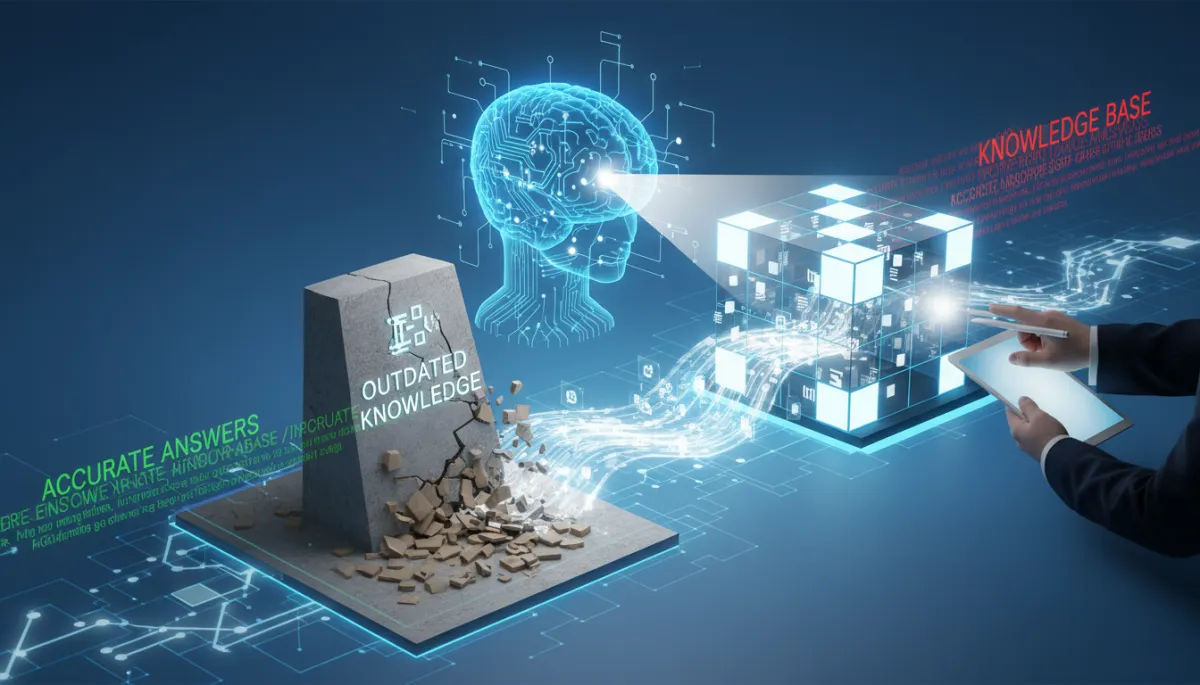
Improve AI Answers: Focus on Knowledge Base
AI, Knowledge Bases, Automation Strategy
When AI Gives a Bad Answer, Blame the Knowledge Base, Not the Model
If your AI assistant is confidently giving wrong answers, the problem is usually not “the AI.” For most businesses and agencies, the real failure lives in the knowledge base feeding it. Until you treat that knowledge base as a product in its own right, you will keep debugging the wrong thing.
Bad Answers Are Usually Good Logic on Bad Information
Modern AI models are remarkably good at following instructions and synthesizing information. When they produce a “bad” answer, they are often doing exactly what they are designed to do: faithfully reason over the data you gave them. If that data is stale, incomplete, or contradictory, the model will still respond with fluent confidence—just in the wrong direction.
Bot-Brand sees this pattern constantly when auditing AI deployments for high-volume service businesses and agencies. The model is blamed for “hallucinating,” but on inspection, the answer is perfectly faithful to:
A stale website that still lists services you stopped offering last year
An outdated pricing or services page buried three clicks deep in your CMS
Inconsistent information copied from emails, chat logs, or internal notes
The model is not misbehaving; it is obeying. It is faithfully reflecting whatever your knowledge base claims is true—whether or not that matches how your business actually operates today.
Most “AI failures” trace back to old pages and inconsistent public information.
Your Knowledge Base Is the Real Product
To build reliable AI agents, you must treat the knowledge base as a first-class product—just as critical as your website or your CRM. At Bot-Brand, we use a strict working definition: your knowledge base is the current, specific set of statements your business is willing to deliver to customers without human intervention.
That definition has important boundaries. A true operational knowledge base excludes:
High-level marketing copy that sounds good but does not commit to specifics (“We always go the extra mile.”)
Internal strategy decks, roadmaps, or brainstorming documents that are not meant for customers
Draft policies that have not been approved or tested in real operations
The knowledge base should contain only clear, current, operational facts: what you do, when you do it, where you do it, for whom, at what price, under which conditions, and with which exceptions. That is the substrate on which any serious AI automation must run.
📌 Key Takeaway: If you would not let a new hire quote a statement to a customer, it does not belong in your autonomous knowledge base.
The Fastest Way to Build a Knowledge Base: Your Last 60 Conversations
You do not need a six-month documentation project to get started. For most agencies and local service businesses, the fastest path is brutally simple: analyze your last sixty inbound conversations. That might be phone calls, live chats, emails, or support tickets—whatever channel your prospects and customers use most.
Collect transcripts or notes from the most recent 60 inbound interactions.
For each, write down the core question the person was asking in one sentence.
Group similar questions together and count how often each appears.
You will almost always discover the classic “long tail” pattern: a small number of questions accounts for a large majority of your volume. In many Bot-Brand audits, 10–15 distinct questions cover 70–80% of all inbound conversations. Those questions are your first layer of the knowledge base. They are where your AI agents can create immediate, visible value by intercepting and resolving routine inquiries with human-grade clarity.

A handful of repeated questions usually drives the majority of inbound volume.
Draw a Hard Line Between Descriptions and Answers
As you turn those questions into knowledge base entries, draw a strict line between descriptions and answers. Descriptions talk about your business; answers resolve the customer’s specific situation.
Description: “We offer same-day appointments in most metro areas.”
Answer: “Yes, we can schedule a same-day appointment in your ZIP code if you contact us before 2 p.m.”
Your AI agents need answer-level statements: precise, conditional, and actionable. When Bot-Brand designs Neural Intercept flows, we translate vague descriptions into concrete rules that can be executed autonomously: eligibility criteria, time windows, exceptions, and escalation triggers.
💡 Pro Tip: If a statement does not let the AI decide “yes,” “no,” or “here is exactly what happens next,” it is still just a description.
Exposing Inconsistent or Nonexistent Policies Is a Feature, Not a Bug
As you convert real questions into clear answers, you will inevitably discover something uncomfortable: many of your “policies” do not actually exist—or they exist only in the heads of a few experienced staff members.
Different team members give different answers about refunds, rescheduling, territory limits, or exceptions. Your AI cannot be consistent where your business is not. The process of building a knowledge base forces you to standardize reality:
Decide what actually happens in edge cases, not what “usually” happens.
Align leadership, operations, and frontline staff on a single version of the truth.
Capture those decisions as explicit, AI-ready statements.
This can feel like friction, but it is one of the biggest hidden benefits of AI deployment. By forcing clarity, you reduce internal confusion, protect your brand, and unlock the kind of precision logic that Bot-Brand’s autonomous systems rely on to scale without human babysitting.
Document What Your System Should Never Say
A robust knowledge base is not just a list of things the AI can say. It also includes clear guardrails on what it must never say. This is critical for compliance, safety, and brand integrity.
No medical, legal, or financial advice beyond your licensed scope
No promises about outcomes you cannot guarantee (e.g., “100% success rate”)
No commitments about pricing, discounts, or timelines that bypass your actual policies
In Bot-Brand deployments, these “never say” rules sit alongside the knowledge base as hard constraints. They instruct the AI to redirect, disclaim, or escalate instead of improvising. This is how you maintain technical architectural integrity while still giving your agents room to speak naturally.
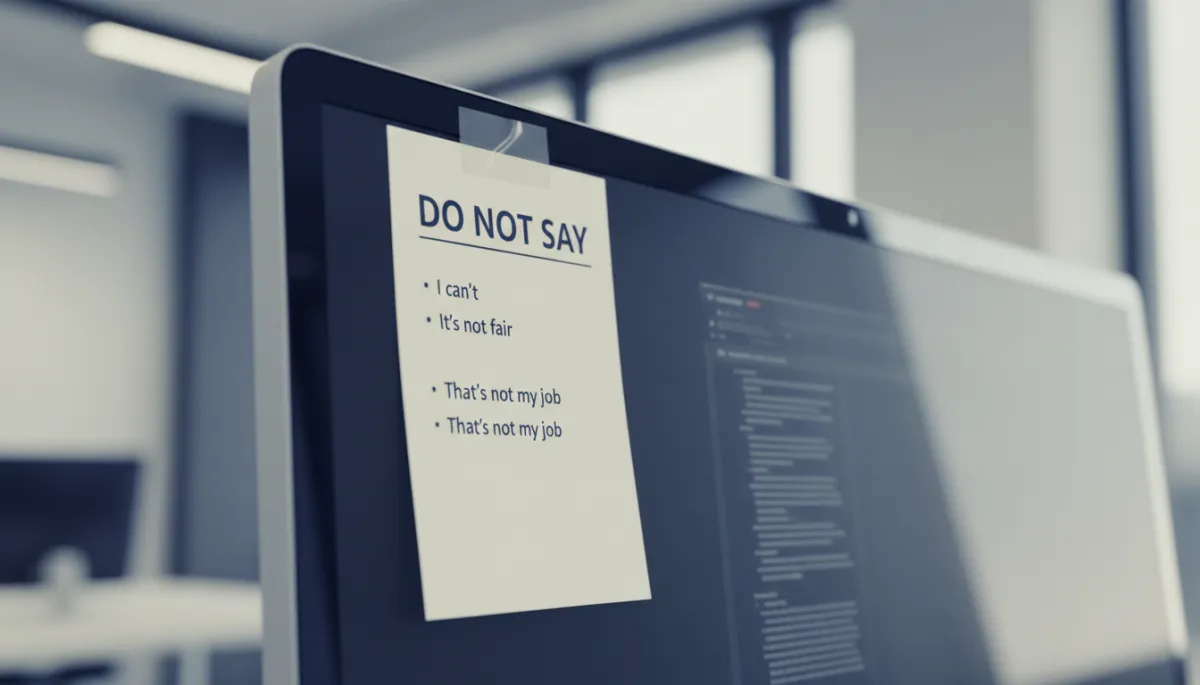
Clear “never say” rules protect your brand and keep AI within safe boundaries.
Fix Staleness by Tying Updates to Changes, Not Calendars
Staleness is the silent killer of AI reliability. Many teams promise to “review the knowledge base every quarter,” then miss the date or forget what changed. By the time someone notices, the AI has been giving outdated answers for months.
Instead, attach updates to events, not calendars. Whenever you:
Change pricing or add/remove a service
Adjust your service area or operating hours
Update refund, cancellation, or warranty policies
…you should have a lightweight, mandatory step: update the knowledge base entry and push it to your AI stack. In Bot-Brand’s autonomous ecosystems, this is treated like updating a contract—non-optional, tracked, and auditable. The result is a living source of truth that evolves in real time with your business, not in sporadic bursts.
A 20-Minute Monthly Reality Check With Real Conversations
Event-based updates keep your knowledge base aligned with intentional changes. But you also need a simple way to catch drift—those subtle gaps between how you think customers ask questions and how they actually do.
The solution is surprisingly light-weight: a twenty-minute monthly review of real conversations. Choose a small sample of AI chats, calls, or emails from the last month and ask:
Did the AI have enough information to answer confidently?
Where did it hedge, escalate, or confuse the issue?
Which new questions are appearing often enough to deserve a formal answer entry?
Twenty minutes is enough to keep your knowledge base honest without creating another bureaucratic meeting. Over time, this rhythm compounds into an AI system that feels less like a script and more like a seasoned operator—because it is trained on the same reality your best humans live in.

A focused 20-minute review keeps your AI grounded in real customer language.
Turn Your Knowledge Base Into an Autonomous Growth Engine
When you stop blaming the model and start engineering the knowledge base, your AI stops feeling like a risky experiment and starts behaving like infrastructure. For high-volume service businesses and ambitious agencies, that is the difference between a chatbot that occasionally helps and an autonomous system that reliably intercepts, qualifies, and synchronizes leads without human intervention.
This is the core of Bot-Brand’s Neural Intercept Protocol: precise knowledge architecture, strict separation of descriptions and answers, explicit “never say” constraints, and a living update process tied to real operational changes. With those foundations in place, the model becomes what it should be—a powerful, obedient engine running your playbook at scale, 24/7.
Next Step: If you want to see how your current knowledge base is limiting your AI, initialize a Secure Uplink with Bot-Brand for an Architectural Audit and Systems Diagnostic. We will map your real conversations to a deployable knowledge architecture and show you exactly where autonomy is being throttled by stale or missing information.