Why the Auto-Confirmation Sells the Job Before You Show Up
A homeowner reaches out to two service companies on the same evening. Both have similar reviews. Both quote in the same price range. Both serve the area. From the outside, they look like equivalent options.
Company A responds the next morning with a phone call. Friendly, professional, books the appointment.
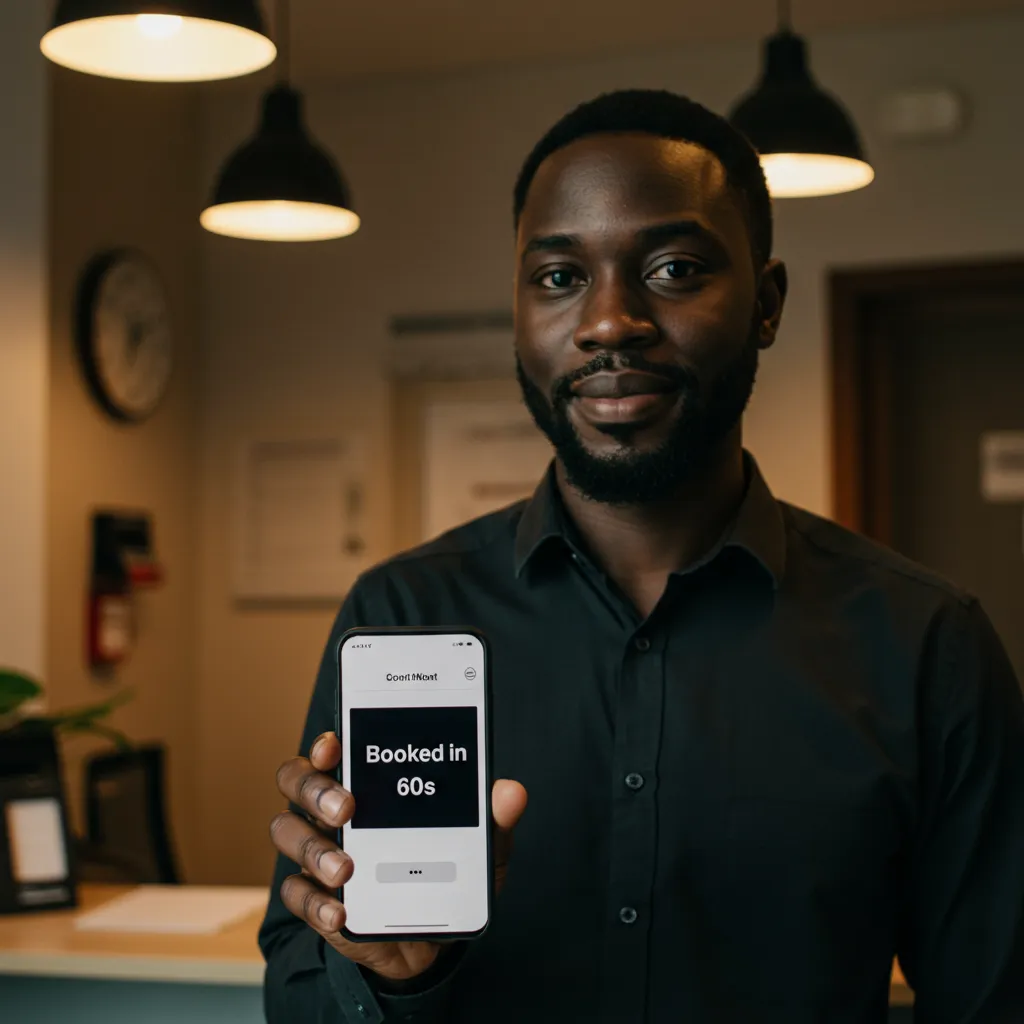
Company B's system sends a personalized text within 60 seconds: "Hi Sarah — got your inquiry. We have Friday at 10 AM or Monday at 2 PM. Tap below to confirm." She taps Friday. A confirmation lands in her inbox seconds later with the technician's name, expected arrival window, and what to expect on the visit.
By the time Company A calls the next morning, Sarah has already mentally hired Company B. Not because of the price. Not because of the reviews. Because Company B had already proven, in less than two minutes, that they were the more competent operation.
The First Touch Is the Interview
Prospects evaluate vendors the moment they first interact. That evaluation is not based on what your service actually does — they have no data on that yet. It's based on what the first interaction reveals about how you operate.
A 60-second confirmation tells them: this business runs on systems. They don't lose track of inquiries. They don't make customers wait. They respect time. They probably do the actual work the same way.
A next-day callback tells them: this business runs on whoever happens to be at a desk that morning. They might be great. They might be flaky. There's no way to know yet, and the prospect has already started looking for alternatives that feel more reliable.
The first impression has nothing to do with the service. It has everything to do with the operational maturity the prospect can verify in the first interaction.
The Psychology of the Receipt
There's a reason serious operations send confirmation receipts for everything. Amazon, Uber, your dentist, a hotel reservation — every modern transaction generates an immediate confirmation. That receipt isn't logistics. It's reassurance.
When a prospect inquires about your service and receives nothing in response, the brain interprets the silence as risk. Did the form go through? Are these people organized? Will they show up when they say they will?
When that same prospect receives an immediate, personalized confirmation, the silence is filled with competence signals. The doubt that would have driven them to a competitor never gets a chance to take root.
What "Personalized" Actually Means
Auto-confirmation only works if it's actually personalized. A generic "thank you, we got your message" does almost nothing. The brain reads it as a templated brush-off.
Effective auto-confirmation references the specific inquiry, the specific service, the specific time slots available, the specific technician or representative. It feels like a human is responding — because the system has been built to deliver that experience, even when no human is in the loop.
Liquid tags, contact field merging, conditional logic on service type, dynamic scheduling links — these are not technical fluff. They are the components that make a 60-second automated response indistinguishable from a thoughtful human reply, except for the speed.
The Operational Math
A service business handling 50 inquiries a month, currently relying on manual phone callbacks during business hours, typically books somewhere between 8 and 15 of those into actual appointments. The rest go cold.
The same business with personalized 60-second auto-confirmation infrastructure typically books 25 to 35 of those 50 — without changing anything else. Same staff. Same pricing. Same services.
The only variable that moved was the first touch.
Diagnostic
Bot-Brand deploys personalized auto-confirmation infrastructure inside GoHighLevel for service businesses ready to stop losing prospects in the first 60 seconds. The free diagnostic shows what your current first-touch experience actually looks like to a prospect.
Diagnostic is at Bot-Brand.com.