Avoid Silent Automation Failures in Business
Automation, Software Reliability, Lead Capture
The Most Dangerous Automation Failure Is the One You Never See
When automation fails loudly, you get an error message, a red banner, or a support ticket. Annoying, yes — but visible. The truly dangerous failures are the silent ones: the web form that quietly stops capturing leads, the follow-up sequence that never fires, the scheduled sync that simply never runs. No error. No alert. Just lost revenue and a pipeline that mysteriously “slows down.”
Why Silence Is Software’s Default Failure Mode
Most digital systems are designed to do something when things work and to do nothing when they do not. A form fails validation? It just does not submit. A webhook times out? The sender gives up after a few retries. A scheduled job crashes mid-run? It simply does not write any output. Unless a team has intentionally engineered feedback, the natural state of failure is silence.
This is especially dangerous for high-volume local service businesses and enterprises, where every lost lead represents not just a missed email, but a missed booking, contract, or long-term account. At Bot-Brand, we see the same pattern repeatedly in new client audits: critical processes fail quietly for days or weeks before anyone notices, because the system was never asked to speak when it stopped working.
Why Silent Failure Looks Identical to Success
On the surface, a broken automation and a healthy one look exactly the same: no errors, no warnings, no obvious symptoms. Your dashboards still load. Your CRM still opens. Your inbox is not flooded with alerts. The absence of noise feels like stability, so teams assume everything is fine — until someone notices the bookings calendar is unusually empty or revenue dips with no clear cause.
The problem is that most systems only confirm activity, not completeness. A follow-up campaign might say “campaign active” while sending zero messages. A form might show as “published” while submissions are being dropped by a misconfigured API. Without deliberate instrumentation, success and failure share the same user interface: a quiet, apparently stable screen. That illusion is what makes silent failure so costly.
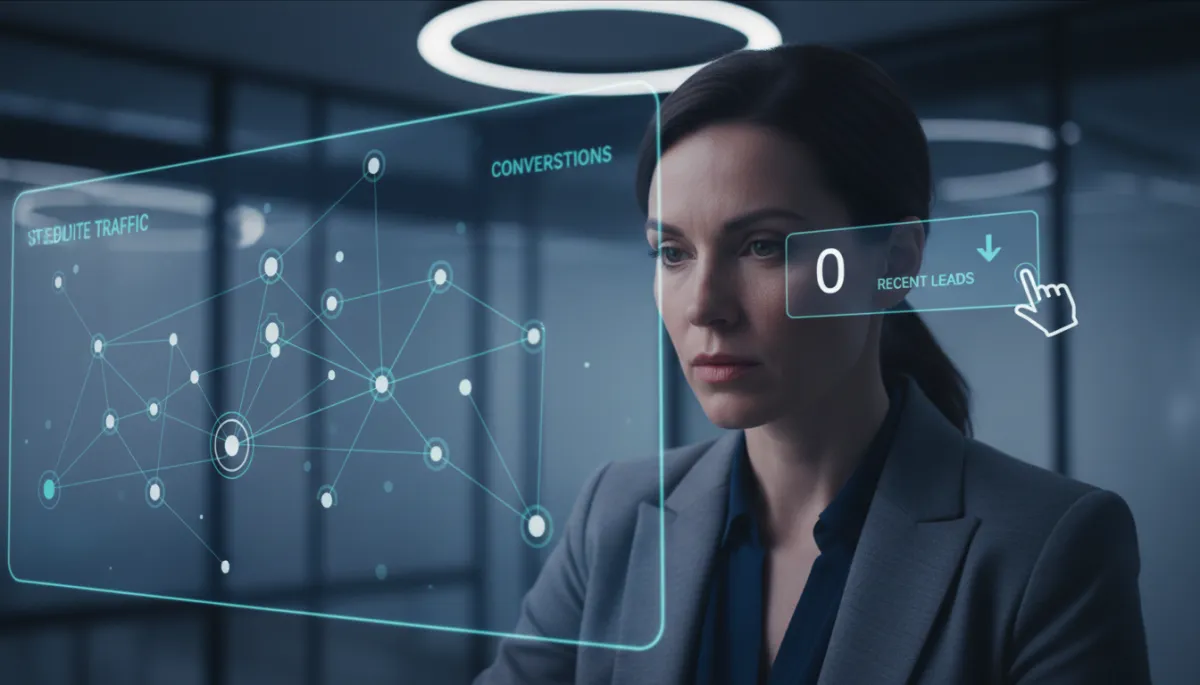
Quiet dashboards often mask broken capture flows until revenue damage is already done.
The Costliest Silent Failures, Ranked
Inbound Capture Breakdowns – A web form, chat widget, or phone capture flow that stops working with no error is the most expensive failure. Traffic keeps coming, ads keep spending, but leads vanish into a black hole. Eleven days of lost inbound leads during a peak season can set a growth trajectory back an entire quarter.
Follow-Up Sequence Failures – When email, SMS, or AI-agent follow-up sequences fail to trigger, leads are technically captured but never nurtured. For high-intent local service leads, the first responder usually wins. A silent follow-up failure lets competitors answer faster and erodes the ROI of every acquisition channel.
System Handoffs and Integrations – Handoffs between landing pages, CRMs, dialers, and billing platforms are another quiet risk. A single broken webhook or expired API token can strand leads in an intermediate system where no one works them. The business sees “leads up, closes flat” and misdiagnoses a sales problem instead of an infrastructure fault.
Infrequent Scheduled Jobs – Monthly or quarterly jobs, such as data hygiene, contract renewal reminders, or long-horizon nurture campaigns, are the easiest to forget and the hardest to detect when broken. By the time anyone realizes renewals were not triggered, contracts have lapsed and reactivation costs multiply.
📌 Key Takeaway: The more upstream the failure — especially at inbound capture — the more every downstream metric is distorted and the harder the damage is to trace.
Five Design Habits That Eliminate Silent Failure
1. Report Success, Not Just Failure
Healthy systems should prove they are working. Instead of only logging errors, configure your automations to emit regular success signals: “127 leads captured today,” “412 follow-up messages sent,” “nightly sync completed in 47 seconds.” When Bot-Brand deploys Neural Intercept landing infrastructure, every intercept and qualification step is logged and summarized, so silence itself becomes suspicious and actionable.
2. Watch Volume Anomalies, Not Just Uptime
Uptime monitoring will not catch a form that submits but never writes to your CRM. What does? Volume baselines. Track expected ranges for key events — form submissions, new opportunities, outbound calls, AI agent conversations — and alert when they drop below (or spike above) normal. An 80% drop in leads with normal traffic is a red alert, even if every server is technically “up.”
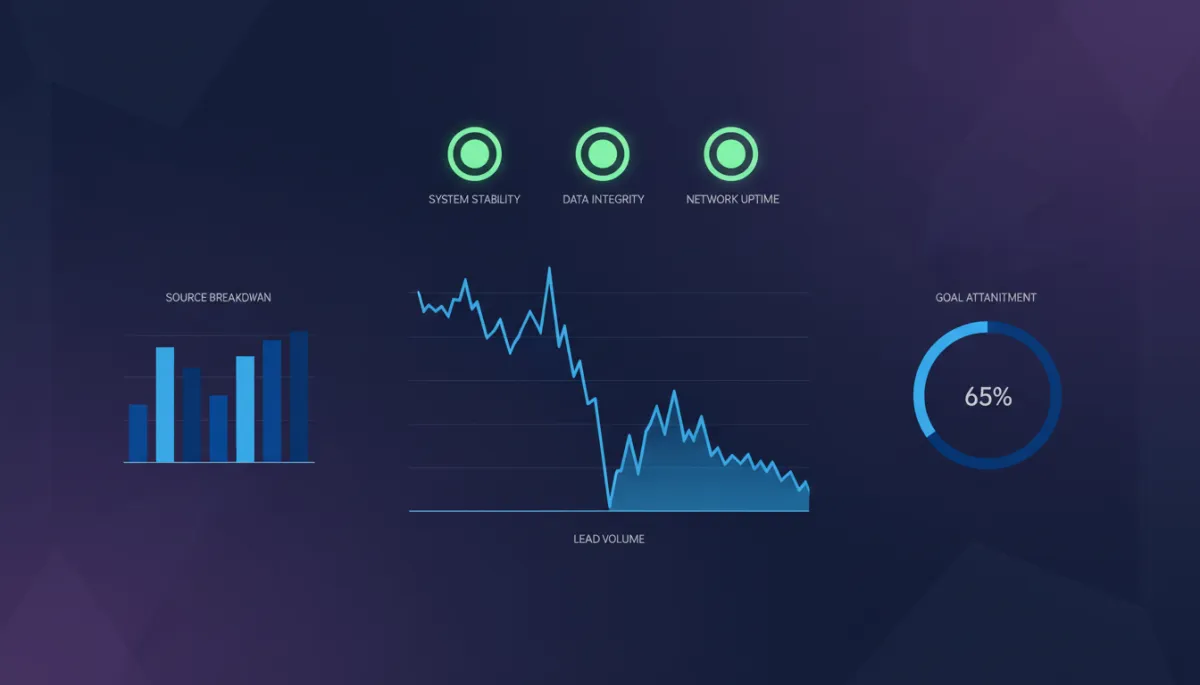
Volume anomaly monitoring exposes hidden failures long before finance feels the impact.
3. Build Human Fallbacks Into Critical Paths
True autonomy does not mean “no humans involved”; it means humans are only involved when something breaks. For mission-critical flows — inbound capture, qualification, booking — design explicit fallbacks: a shared inbox that receives copies of all new leads, a daily digest of “unassigned” records, or a manual call list generated if an AI agent cannot complete its logic. When automation stumbles, a human should have a clear, visible queue to catch the fallout.
4. Test Your Own Entry Points Monthly
Every 30 days, someone on your team should behave like a new lead: submit every form, call every tracking number, start every chat, reply to every automated message. Follow the journey all the way into your CRM and calendar. At Bot-Brand, this is a non-negotiable maintenance ritual during our Architectural Audits — because the fastest way to discover a silent failure is to walk the same path your prospects take.
5. Name Exactly Who Gets the Alert
An alert with no owner is just noise. For each critical automation — especially in the four high-cost categories above — define a specific human owner and a clear response window. “If inbound leads drop by 50% for two hours, send SMS and email to Jane, Automation Lead, and escalate to Operations if unacknowledged.” Ownership turns abstract monitoring into real operational resilience.

Clear alert ownership allows teams to correct silent failures before they become systemic.
From Invisible Risk to Autonomous Reliability
For high-volume service brands, the real threat is not dramatic system outages; it is the quiet, invisible erosion of opportunity when automations fail and no one notices. By assuming that silence is the default failure mode — and designing around that reality — you protect every paid click, every inbound call, and every conversation your AI agents initiate.
Bot-Brand’s Neural Intercept Protocol was built precisely to neutralize these risks: instrumenting every step, surfacing anomalies, and ensuring that your top-of-funnel is handled with human-grade nuance and architectural integrity, 24/7. If you suspect silent failures are hiding inside your current stack, it is time to examine the wiring — not just the dashboards.
Initialize a Secure Uplink for an Architectural Audit and Systems Diagnostic, and transform your automation from a fragile collection of scripts into a truly autonomous business ecosystem that never goes quiet when it matters most.