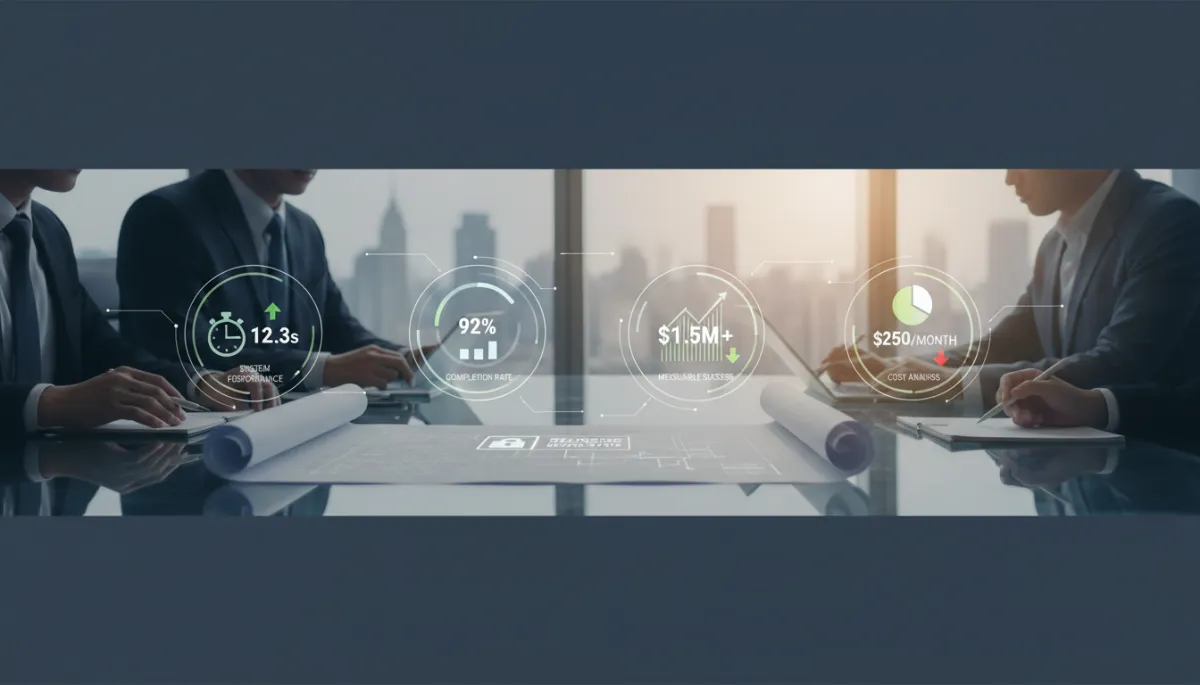
Defining Success Before Building Systems
Business Metrics, Measurable Success, System Performance, Cost Analysis, Recording Before-state
Why Most “Successful” Systems Aren’t: Defining What Worked Before You Build
In many businesses and agencies, new systems quietly go live, the team stops complaining, and leadership assumes the project “worked.” But silence is not a Business Metric. Without clearly defined, measurable success criteria and a recorded before-state, most organizations never actually learn whether what they built delivered Measurable Success—or just moved the bottleneck somewhere harder to see.
The Problem: Silence Gets Mistaken for Success
For high-volume local service businesses and enterprises, operational friction is expensive. Missed calls, slow responses, and manual follow-ups bleed revenue daily. Agencies and internal teams respond by building forms, CRMs, automations, and AI agents. Then, once the noise dies down, everyone assumes the new system is working as intended.
Bot-Brand sees a different reality when we run architectural audits. Systems that were celebrated at launch often: slow customers down, drop leads silently, or shift work to hidden exception handling that no one budgeted for. The root cause is almost always the same: nobody defined “worked” in measurable terms before building, and nobody recorded the before-state. Once a new flow is live, the old numbers are unrecoverable. Missed steps leave no trace in your analytics.
📌 Key Takeaway: If you cannot state, in numbers, how a system will improve performance before you build it, you will not know if it actually did.
The Discipline: Recording the Before-state First
Every meaningful System Performance conversation must start with Recording the Before-state. That means capturing how things work today—warts and all—using the same metrics you will apply after deployment. For high-volume service environments, Bot-Brand treats this as a non-negotiable architectural step, not a “nice to have” report.
Measure how long key steps take now, from the customer’s perspective.
Quantify how many steps are missed, forgotten, or done late.
Identify one downstream Business Metric that should move if the system works.
Capture the true ongoing cost of the current way of working, including rework and exceptions.
Once a new AI agent, automation, or workflow is live, the old world disappears. You cannot go back and reconstruct how long it used to take for a lead to get a callback, or how many quotes never went out because someone forgot. That is why Bot-Brand’s methodology locks in the before-state first, then designs systems to move four specific, measurable numbers.
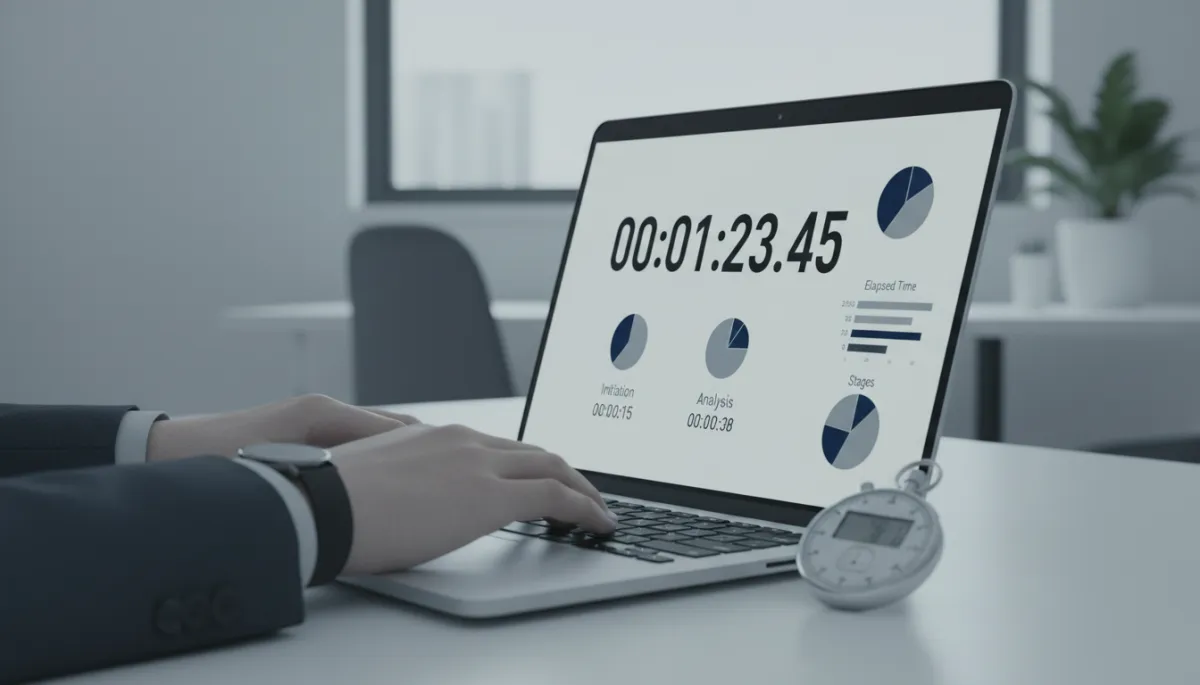
Capturing the before-state turns vague operational pain into measurable baselines.
Metric 1: Median Elapsed Wall-clock Time at the Step
Most teams talk about “effort” instead of time. They say, “It only takes five minutes to send a quote.” That may be true for the human, but from the customer’s perspective, the quote might arrive two days later. The relevant measure of System Performance is median elapsed wall-clock time at the step—how long it takes in real-world time from trigger to completion.
For example, consider a high-volume HVAC company:
Before automation, median time from inbound call to confirmed booking might be 3 hours, because calls are missed, voicemails wait, and staff batch callbacks.
After Bot-Brand deploys a neural voice agent and scheduling flow, the median elapsed time might drop to 2 minutes.
That number—minutes instead of hours—is not about human effort. It is about the customer’s lived experience. Recording the before-state for wall-clock time lets you prove that your new system is not just “easier for staff,” but faster for revenue.
Metric 2: Completion Rate for Steps People Used to “Remember”
Every business has critical steps that happen “when someone remembers.” Follow-up quotes, review requests, warranty registrations, and check-in calls all fall into this bucket. They are rarely measured, because when they do not happen, there is no record. The absence of a task is invisible in most systems.
To establish Measurable Success, you must define and track the completion rate for a step that used to happen only when someone remembered. Before you deploy automation, sample a period and manually count:
Out of 100 closed jobs, how many actually received a review request?
Out of 50 proposals, how many got a follow-up within 48 hours?
After Bot-Brand deploys a Neural Intercept Protocol that automatically triggers follow-ups and reviews, that completion rate should move from, say, 22% to 96%. Without Recording the Before-state, you would never know you were leaving 78% of those touchpoints—and the revenue they unlock—on the table.

Automations turn “when we remember” tasks into consistently executed workflows.
Metric 3: One Downstream Business Metric Chosen Before the Build
Dashboards can drown leaders in vanity metrics. To avoid this, Bot-Brand insists on selecting one single Business Metric immediately downstream from the system we are designing—before any architecture work begins. This metric must be:
Directly influenced by the new flow (e.g., lead-to-booking rate, show-up rate, average ticket size).
Already understood and valued by leadership.
Measurable both before and after deployment.
For a neural lead-capture engine intercepting web leads, the chosen metric might be: percentage of inbound leads that convert to a scheduled appointment within 24 hours. Recording the before-state might reveal that only 18% of leads hit that mark. After deploying a 24/7 autonomous agent that qualifies and books in real-time, you may see that figure climb to 45% or more.
That single metric becomes the anchor for your Measurable Success story. It lets you say, with precision: “This system increased our booked appointments per lead by 27 percentage points,” instead of “the new bot seems to be helping.”
Metric 4: True Ongoing Cost, Including Exceptions and Maintenance Drift
Many projects are justified with a simple Cost Analysis: “We’ll save 40 hours a month.” But that ignores the messy reality of operations: edge cases, exceptions, retraining, and gradual maintenance drift. To understand whether a system truly worked, you must account for the true ongoing cost including exception handling and maintenance drift.
Before deployment, document:
How many tickets, emails, or Slack messages are generated by process failures each week.
How often humans need to intervene to fix something “the system should have handled.”
How frequently workflows are changed, and how long those changes take to propagate.
After deployment, track the same indicators. In a well-architected autonomous ecosystem, exception volume and maintenance overhead should fall sharply, even as throughput increases. Bot-Brand designs for absolute digital autonomy, so that your Neural Intercept Protocol handles the top of the funnel without spawning a long tail of manual cleanup.

True ROI emerges only when exceptions and maintenance drift are counted as costs.
Putting It All Together: A Simple Framework for Measurable Success
Before you greenlight your next system, automation, or AI initiative, align your team around a simple, disciplined framework:
Record the before-state for the four metrics: median wall-clock time, completion rate of “remembered” steps, one downstream Business Metric, and true ongoing cost.
Design the system explicitly to move these numbers, not just to “automate” tasks.
Measure after deployment using the same definitions and time windows as the before-state.
Iterate based on evidence, not anecdotes or perceived quietness in the inbox.
💡 Pro Tip: If a proposed project cannot state its target movement on these four metrics, postpone the build. Clarify success first.
From Guesswork to Architectural Integrity
High-velocity operational scaling demands more than tools. It requires precision logic and technical architectural integrity. When you define “worked” in advance and ground it in Business Metrics, you transform new systems from hopeful experiments into accountable infrastructure. You stop mistaking silence for success and start demanding proof that your investments deliver Measurable Success.
This is the standard Bot-Brand applies when we engineer autonomous ecosystems, from AI voice agents to neural lead-capture engines. Every deployment is designed to compress wall-clock time, drive completion rates toward 100%, move a clearly defined downstream metric, and lower total ongoing cost—including the messy edges most teams ignore.
If your organization is ready to move beyond “we think it’s working” and into verifiable, metric-driven autonomy, it starts with a clear-eyed look at your current state. Record the numbers, define what “worked” means, and then architect systems that can prove they delivered.
Bot-Brand can help you do exactly that. Initialize a Secure Uplink for an Architectural Audit and Systems Diagnostic, and we will map your before-state, identify the four critical metrics for your environment, and design autonomous infrastructure that proves its value in your own data.