How to Turn a Single Housing Addition Into a Fully Booked, Self-Running Service Territory
A field service crew that works a housing addition and moves on is leaving the majority of the revenue that addition will ever generate on the table. The first pass is the easiest money. What comes after it — the recurring maintenance, the referrals, the word-of-mouth in an HOA group, the seasonal reminders that convert without a sales call — is where the real value is. Getting that value requires infrastructure. Most field service businesses do not have it.
What Happens Without a System
A crew runs a clean-out on one property. The homeowner is happy. They mention it to two neighbors. The neighbors mean to call. One of them does, two weeks later, and gets voicemail. They do not leave a message. The other one forgets. The original customer needs a power wash in the fall but nobody followed up, so they search for someone else when the need comes back.
That sequence — good work, no system, lost revenue — is the default mode for most small service operations. It is not a crew problem or a quality problem. It is an infrastructure problem. The work was done right. The follow-up infrastructure was not in place to capture what the work created.
How the Bot-Brand Infrastructure Runs Behind CES
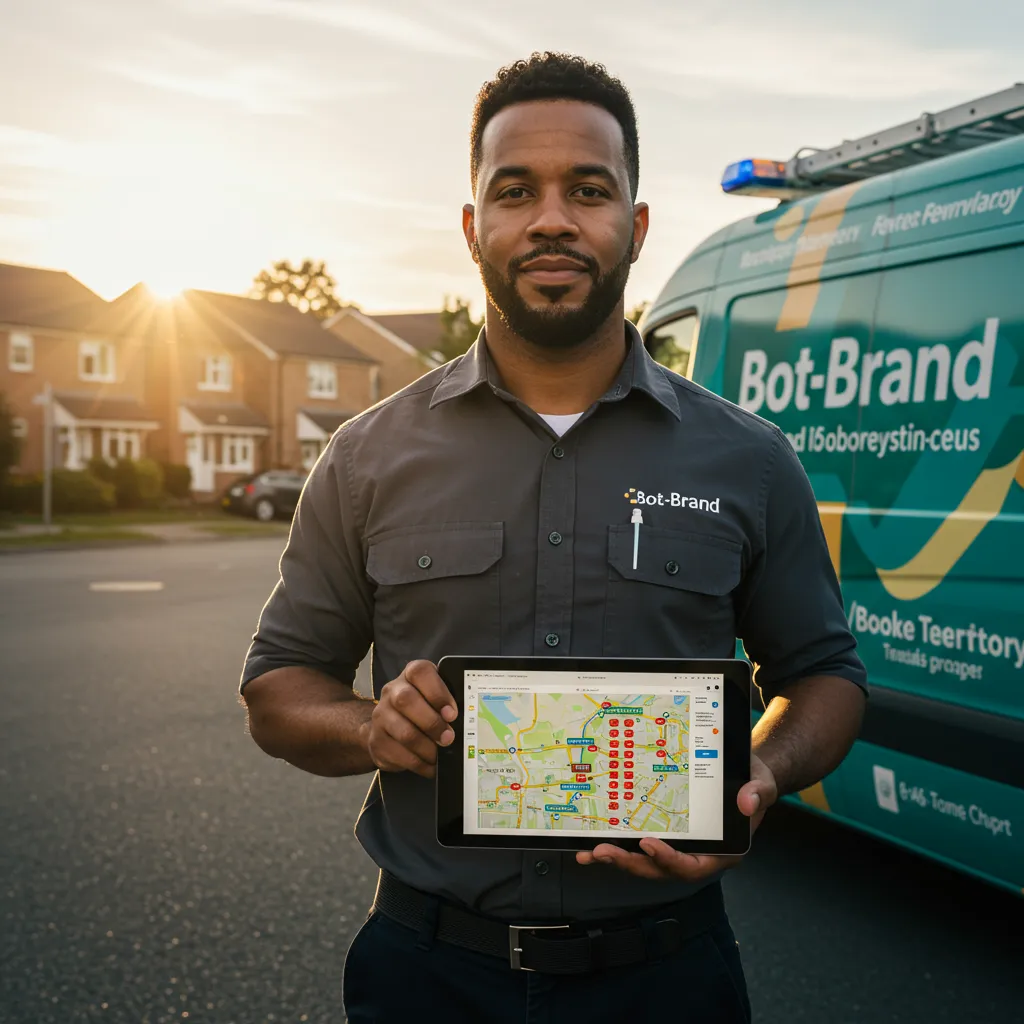
When Curb Elite Solutions runs a job in a new housing addition, the Bot-Brand system activates behind it. The moment a contact is created — whether from a form submission, a text inquiry, a referral, or a direct call — the infrastructure takes over.
The contact record is built immediately. Name, address, service type, source, date of first contact, and any notes from the initial inquiry are logged and tagged. This is not a spreadsheet. It is a live contact record inside a CRM that connects to every subsequent touchpoint — automated and manual.
A pipeline stage is assigned based on where the contact is in the process. An inquiry that has not been quoted yet sits in one stage. A quoted job that has not been confirmed sits in the next. A confirmed job sits in the next. A completed job moves to the follow-up stage, where the automation takes over.
What the Automation Does After the Job
The job is complete. The crew leaves. The homeowner is satisfied. At that point, most service businesses have no further contact with that customer until the customer reaches back out.
The Bot-Brand workflow does not wait. Within twenty-four hours of the job being marked complete, a follow-up message goes out — a thank you, a request for a review, and a note that their property is now on the seasonal maintenance list. If the customer responds positively, a tag is applied and they are entered into the recurring maintenance workflow. If they do not respond, a second touchpoint goes out at the thirty-day mark. If they do not respond to that, a seasonal reminder goes out before the next service window — fall before the freeze cycle, spring before the heat builds.
None of this requires the owner to remember who was serviced when. The system holds the schedule. The system sends the reminders. The owner sees the booked appointments.
How the Calendar Fills
The calendar is the output of every system working correctly upstream. Contacts are logged. Contacts are tagged. Pipeline stages are current. Follow-up workflows are running. Seasonal reminders are scheduled.
When all of that is in place, the calendar does not fill because the owner worked harder to fill it. It fills because the infrastructure converted the contacts that were already in the system — the customers from the last job cycle, the neighbors who got referred, the prospects who filled out the form at 9 PM on a Friday and received a response within seconds.
By the time a competitor in the same addition is sending their first follow-up, a Bot-Brand client has already confirmed three return appointments, added two new contacts from referrals, and moved four prospects through the pipeline without making a single manual call.
The Compound Effect in a Single Addition
The economics of a properly managed housing addition compound over time. The first wave of jobs establishes presence. The follow-up system converts satisfied customers into recurring customers. The referral tracking identifies which customers are generating new contacts so the highest-value relationships can be prioritized. The pipeline makes visible which properties in the addition have not been touched yet, so outreach can be targeted rather than random.
A housing addition that was a dozen one-time jobs in year one becomes a self-sustaining service territory in year two — because the infrastructure that was built behind the first wave of work is still running, still following up, still keeping the calendar full.
That is not hustle. That is a system. And systems do not take weekends off.
Inquiries: [email protected] | (405) 955-2437