Integrated vs Automated: Hidden Costs Unveiled
Business Automation, Data Integration, Process Efficiency
Integrated Is Not Automated: The Hidden Cost of “Screen-Dependent” Operations
Many businesses proudly claim they are “automated” because their tools talk to each other. In reality, most are only integrated: data moves cleanly, but nothing progresses until a human looks at a screen and decides what to do next. For high-volume local service businesses and fast-scaling agencies, this distinction quietly drives up Operational Costs and caps Process Efficiency. Bot-Brand exists specifically to remove that dependency on human attention and decision-making.
Integration vs. Automation: Where the Line Really Is
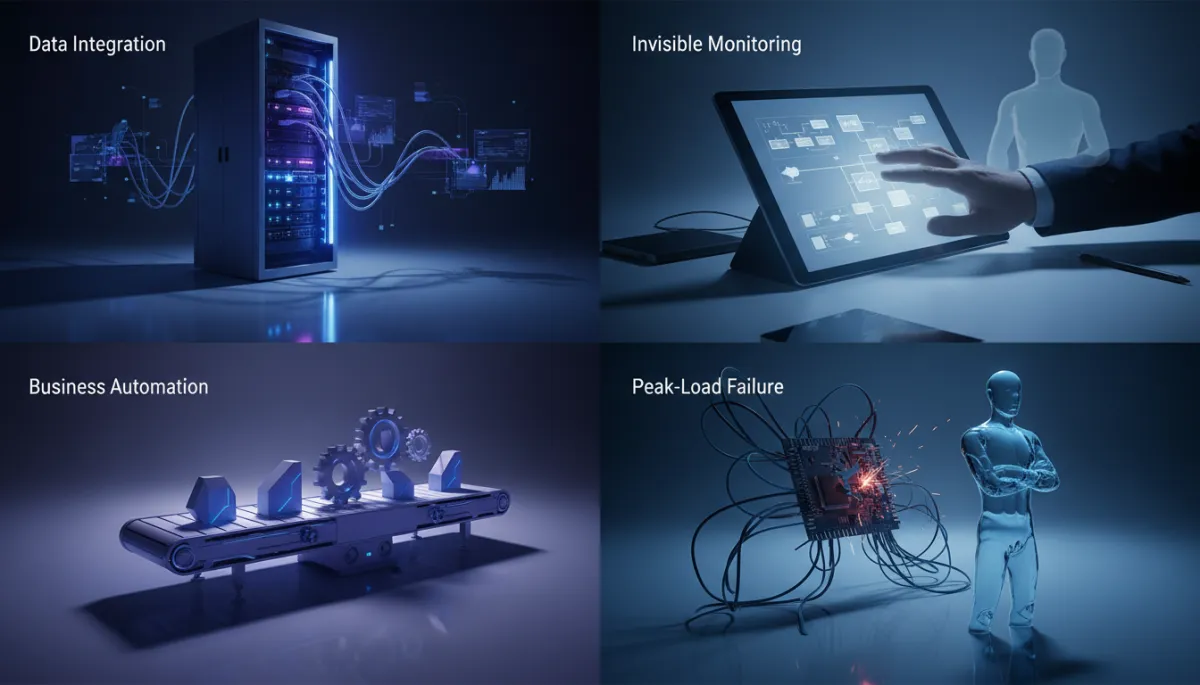
Data Integration connects systems so information flows without manual retyping. Your CRM receives form submissions, your calendar creates appointments, your ticketing system logs new issues. Integration removes transcription, reduces obvious errors, and keeps records synchronized. It is essential infrastructure, but it is not Business Automation on its own.
True Automation goes further. It:
Interprets incoming data against defined logic (Decision-making)
Chooses the next action without waiting for a human to review a screen
Executes the follow-through steps automatically and confirms completion
In other words, integration moves data; automation moves the work itself. Bot-Brand’s Neural Intercept Protocol is designed around this difference: it does not just capture and route leads, it qualifies them, responds, schedules, and synchronizes outcomes with zero human intervention.

When every workflow waits for a human glance, integration alone becomes an invisible bottleneck.
The Cost of Invisible Monitoring Work
In screen-dependent operations, someone is always “just checking”: refreshing dashboards, scanning inboxes, watching Slack channels, and hovering over CRMs. None of this appears on an invoice, yet it is real labor. This Invisible Monitoring is the tax you pay for stopping at Data Integration instead of full Business Automation.
For agencies and high-volume local service businesses, this often means:
A coordinator whose day is consumed by “keeping an eye on things”
Managers who spend prime thinking time triaging tasks instead of improving systems
Owners who log in after hours to make sure nothing slipped through
This monitoring work adds up to thousands of dollars per month in hidden Operational Costs, while also draining the attention you need for growth. Bot-Brand’s mission is to convert that constant vigilance into autonomous, verifiable workflows that do not require a human babysitter.
Peak-Load Failure: When “It Works Most of the Time” Is Not Enough
Screen-dependent processes fail hardest under peak load. When call volume spikes, campaigns launch, or seasonality hits, the people who usually advance the work simply cannot keep up. Integrated tools keep receiving and organizing data, but no one has the bandwidth to make the next decision or execute the follow-through. The result: missed calls, stale leads, and broken customer experiences exactly when demand is highest.
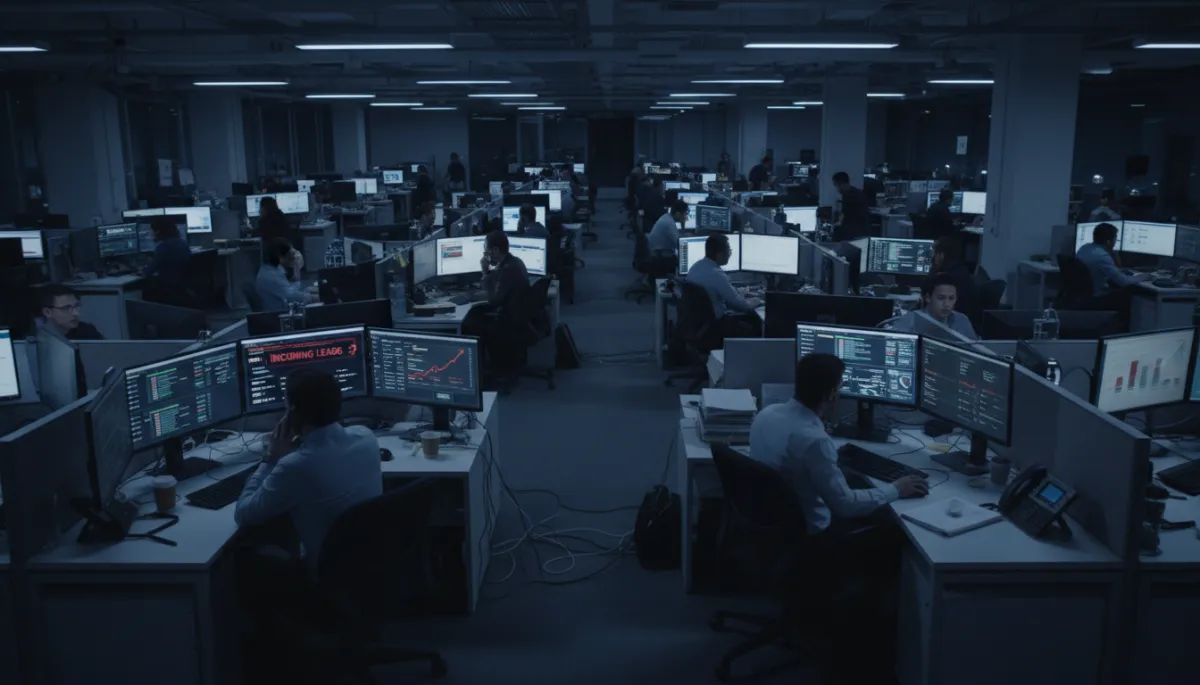
Peak-load exposes every place where humans, not systems, are carrying the workflow.
True Process Efficiency requires that core workflows scale without adding more eyes and hands. Bot-Brand’s autonomous voice and chat agents, backed by the Neural Intercept Protocol, are engineered precisely for these peak scenarios—intercepting, qualifying, and scheduling around the clock, without fatigue or queue collapse.
The Danger of False Confidence in “Set-and-Forget” Integrations
Integrated dashboards look impressive. Data appears instantly, charts update in real time, and notifications fire on schedule. This can create false confidence: the belief that because everything is connected, everything is handled. But if each critical path still relies on a human to interpret and act, you are only as reliable as the busiest person on your team on their most distracted day.
False confidence is especially dangerous for enterprises and agencies managing multiple locations or clients. Small breaks in monitoring—someone on vacation, a missed shift handoff, a muted notification—can silently stall revenue-driving processes for days. Automation that includes Decision-making and follow-through replaces this uncertainty with verifiable, auditable logic.
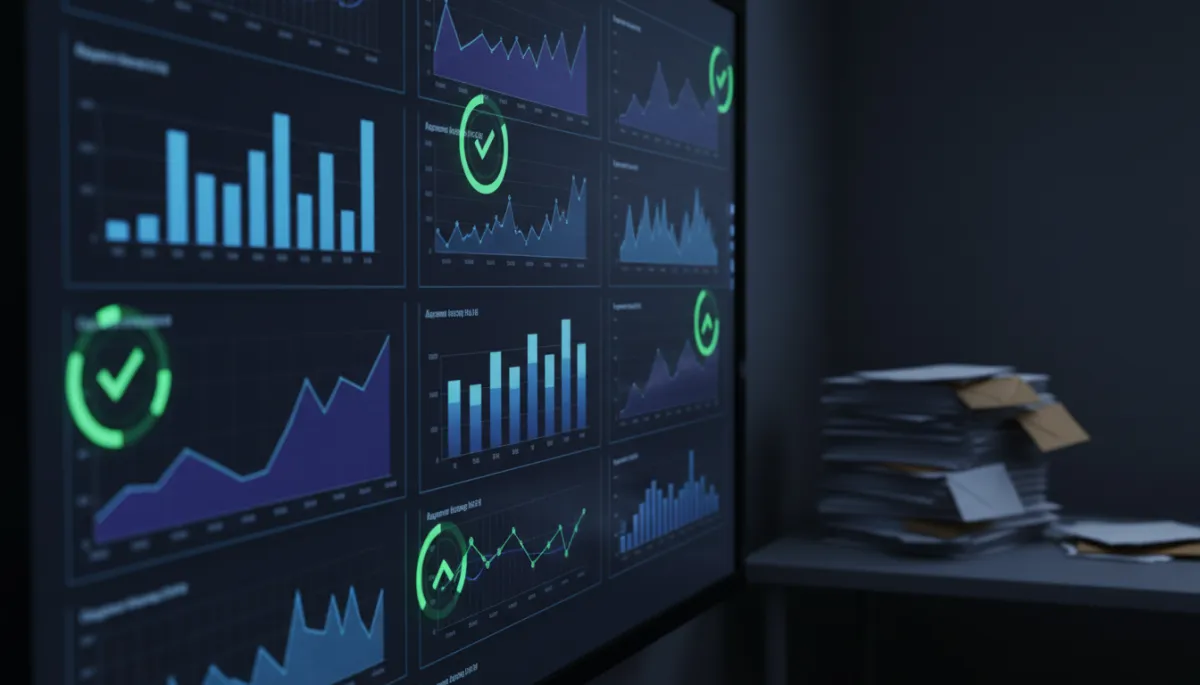
Clean dashboards can mask the reality that no one is advancing the work.
A Concrete Audit: Trace Every Step and Ask, “Who Moved This Forward?”
To see where your organization truly stands on Business Automation, run this simple but rigorous audit on any critical process—lead capture, booking, onboarding, or support escalation:
Map the process end to end. From first trigger (e.g., ad click, phone call, web form) to final outcome (e.g., booked job, closed ticket, paid invoice).
List every step as a separate line. “Form submitted,” “record created,” “email sent,” “appointment confirmed,” and so on.
For each step, answer one question: “Would this step still occur if no one looked at a screen today?”
Count the human-dependent steps. Any step that advances only because someone noticed something and decided what to do is not automated, regardless of how many tools are integrated.
📌 Key Takeaway: If more than a few steps in a revenue-critical flow depend on human attention, you are running an integrated system, not an autonomous one—and paying for it in Invisible Monitoring, peak-load failures, and stalled growth.
From Integration to Autonomy with Bot-Brand
Bot-Brand’s architectural philosophy is simple: precision logic, absolute digital autonomy, and high-velocity scaling. We design AI-driven ecosystems—voice agents, chat agents, and landing-page infrastructure—that do not merely pass data between tools, but own the Decision-making and follow-through required to complete the work 24/7.
If your current stack feels “connected” yet still demands constant supervision, it is time to redraw the line between integration and automation inside your organization. Replace screen-dependent workflows with systems that intercept, qualify, and synchronize leads autonomously, and reserve your team’s attention for strategy, not surveillance.
Initialize a Secure Uplink for an Architectural Audit and Systems Diagnostic with Bot-Brand, and turn your invisible monitoring work into a genuinely autonomous operational backbone.