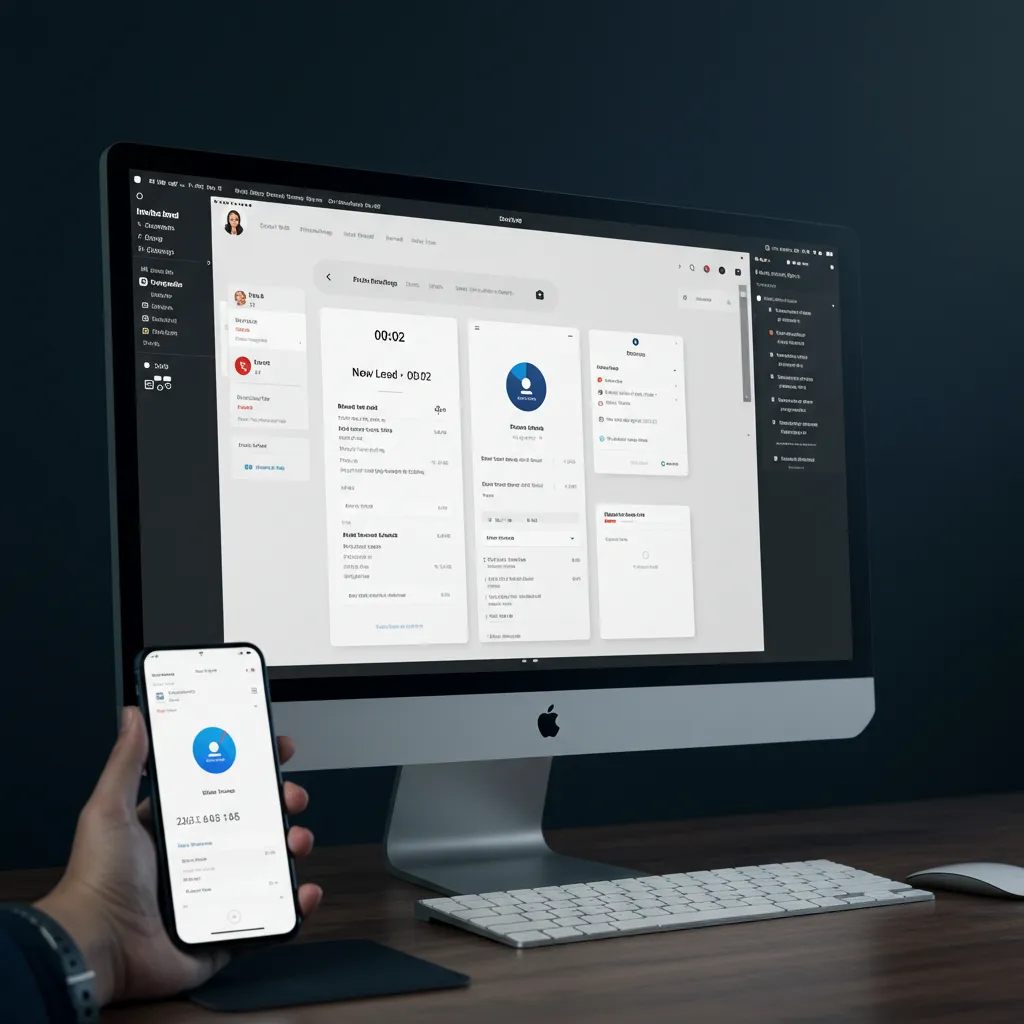
Lead Response Time Is an Infrastructure Problem
When an inbound lead goes unconverted, the usual diagnosis is effort — the team didn't follow up fast enough, didn't try hard enough, didn't want it enough. That diagnosis is wrong, and it's expensive, because it sends owners looking for a motivation fix when the actual failure is structural.
A lead that arrives at 9:14 and gets a response at 11:40 wasn't lost to laziness. It was lost to the absence of a system that responds at 9:14:30.
## Why the First Five Minutes Decide the Outcome
The behavior of an inbound lead is time-sensitive in a way most operations underestimate. A prospect who just submitted a form or called is, in that moment, actively thinking about their problem. Minutes later they are back to their day. Hours later they have contacted two of your competitors.
The well-documented pattern is steep: the probability of making meaningful contact drops sharply when response stretches from minutes into hours, and most businesses — measuring honestly — respond in hours, or not at all after the first attempt. The gap between the businesses that win inbound and the ones that don't is rarely talent. It's latency.
## Latency Is an Architecture, Not an Attitude
Here is the part that reframes the whole problem: response time at scale cannot depend on a human being available and willing in the exact moment a lead arrives. Humans take lunch, sleep, drive, and work on other accounts. Any system that requires a person to notice and react instantly will fail at the edges — nights, weekends, and the busy stretches when the leads are most valuable.
The fix is an intercept layer that fires the instant a lead enters, with no human in the critical path:
- Missed-call text-back — an unanswered call triggers an immediate text so the contact is engaged within seconds instead of going to a dead voicemail box.
- Instant form acknowledgment — every submission gets an immediate, specific response that opens the conversation and buys time before a human takes over.
- Routing and escalation logic — the inbound is simultaneously assigned, logged, and queued to the right person with a time-based escalation if it isn't picked up.
None of this is about messaging harder. It's about removing the human bottleneck from the one window where speed is everything.
## Putting a Number on the Leak
Before rebuilding anything, quantify the current state. Pull the last 90 days of inbound and measure two things: median time-to-first-response, and the percentage of leads that received exactly one contact attempt before going silent. In most operations, the median is measured in hours and the single-touch rate is high. Each of those is a contact you already paid to generate, lost at the threshold.
That number is the real case for an intercept layer — not a productivity slogan, but a measurable volume of captured demand currently expiring on the doorstep.
If you don't know your median response time, that's the place to start. We'll audit how inbound is actually handled across calls, forms, and after-hours, and map where an automated intercept layer closes the five-minute window your current setup is missing.