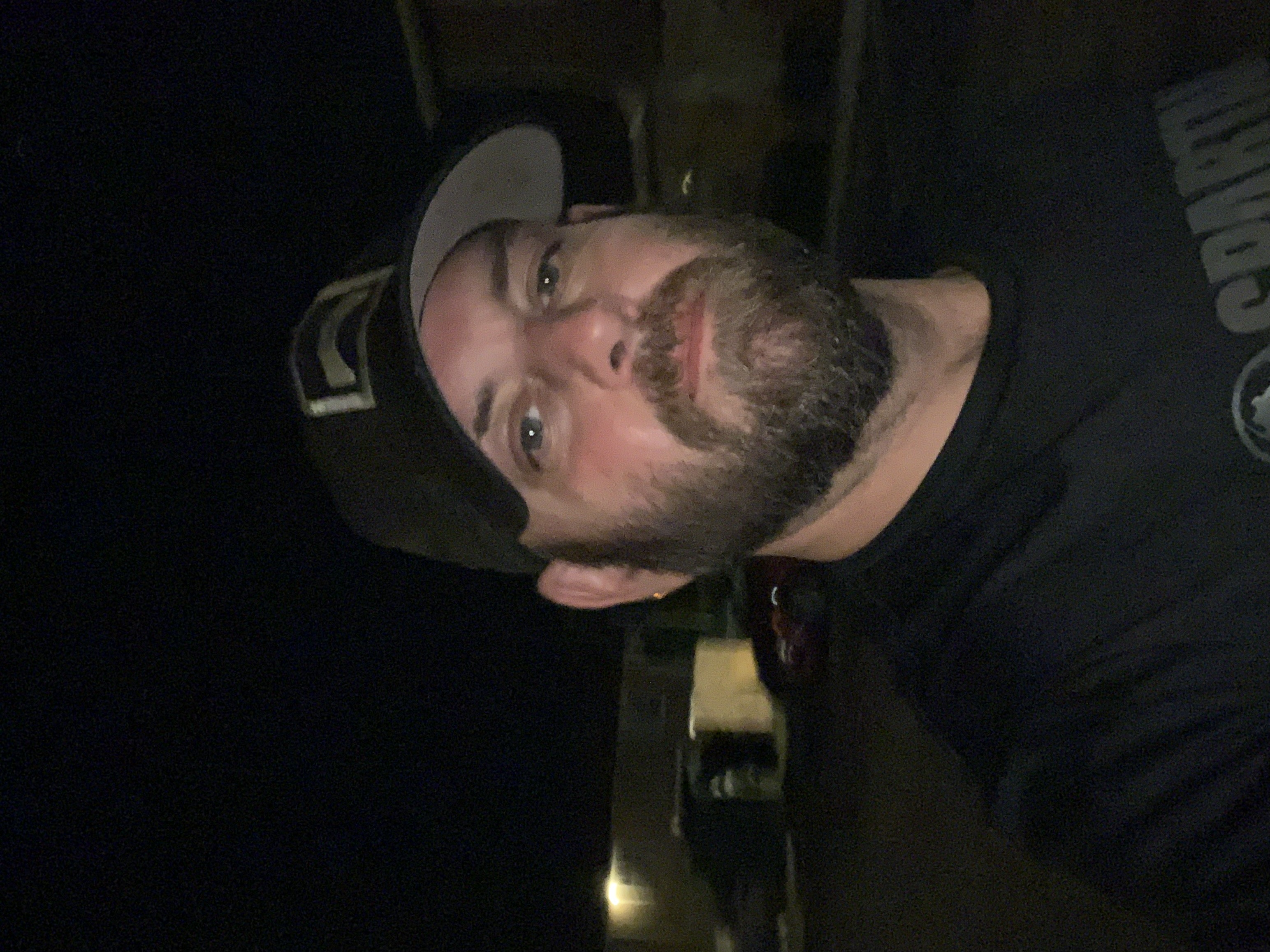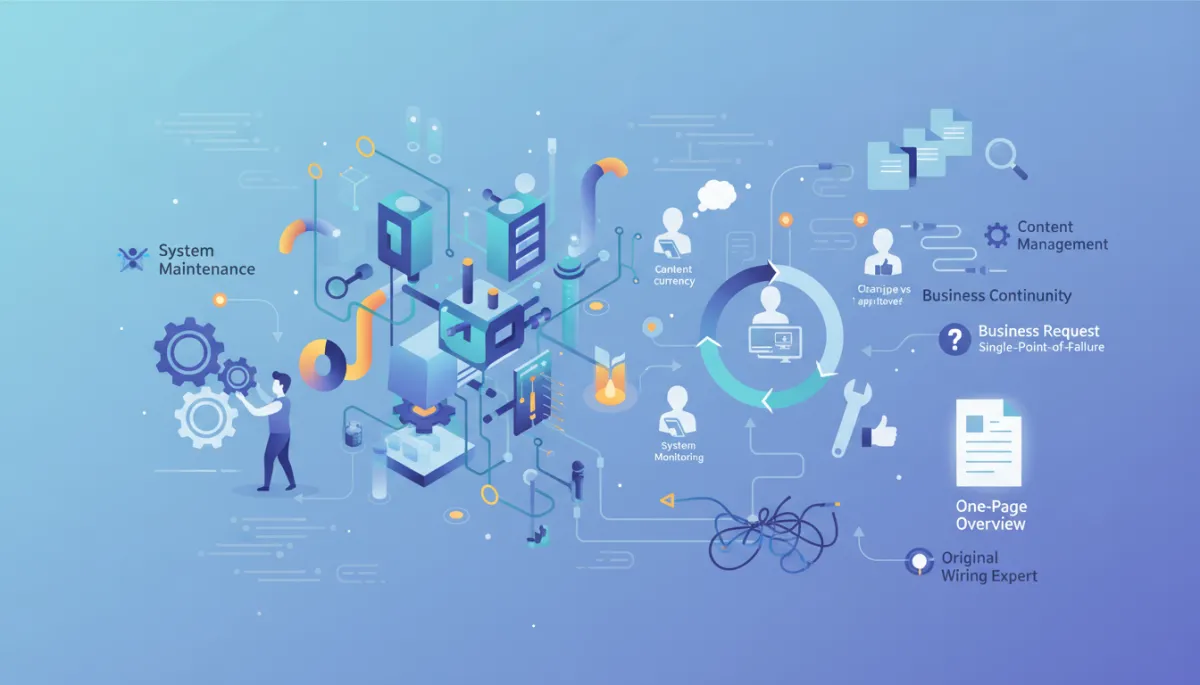
Maintain Your Business Systems Effectively
Business Systems, Maintenance, Content Management, Business Continuity
One Year Later: Keeping Your Complex Business System Alive, Accurate, and Under Control
After twelve months in the wild, even the cleanest system architecture starts to fray. For high-volume service businesses running AI-driven funnels and automation stacks from Bot-Brand, the difference between a scalable asset and a silent liability comes down to how you manage maintenance, content, and change once the launch dust settles.
The Year-One Reality: Prices Shift, Services Change, People Leave
Picture your system twelve months after deployment. Your Neural Intercept funnels, AI voice agents, and landing page clusters are live. The phones are ringing. But in that same year:
Your prices have changed twice to keep up with costs and competitors.
Services have come and gone—new add-ons launched, low-margin offers retired.
The original “wiring expert” who understood every connection has left the business.
Responsibility is foggy—everyone assumes “someone” is keeping it all accurate.
The infrastructure still runs. Calls still come in. But under the surface, misalignment is quietly eroding conversion, customer trust, and your ability to scale with confidence. This is where system maintenance, content management, and business continuity stop being theoretical and start being existential.
The Only Documentation Left: A One-Page Lifeline
In too many organizations, the only surviving documentation one year in is a single, plain-language page—if you are lucky. It usually covers:
A high-level overview of the system (“website > chatbot > CRM > booking app”).
Where core content lives (landing pages, scripts, email sequences, ad copy).
The main integrations and connections (webhooks, APIs, payment links, phone routing).
Who to contact when something breaks (usually a single person or vendor).
That one page is better than nothing—but it is not a continuity plan. It is a map to the maze, not a manual for running it when the original architect is gone. Bot-Brand sees this pattern across enterprises and high-volume local service brands alike: launch documentation decays, and what remains is too shallow to protect the business when people move on.
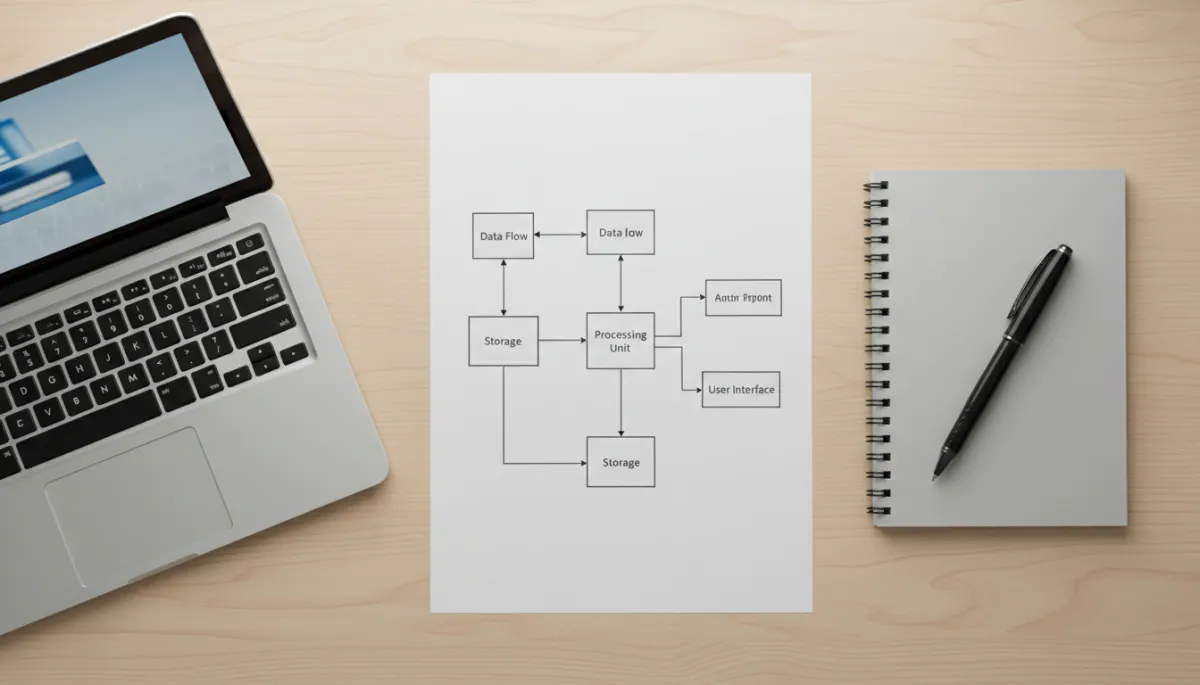
A single overview page helps orientation but cannot replace true continuity planning.
Assign the Three Critical Roles Before Anything Else
The fastest way to stabilize an unclear responsibility structure is to define three non-overlapping roles. They can be people, teams, or vendors—but they must be explicit and written down:
Content Owner – keeps content current. This role owns prices, services, offers, FAQs, scripts, and legal language. If a price changes, this is the person who triggers updates across all touchpoints: landing pages, bots, emails, ads, and call scripts.
System Steward – monitors functionality. This role watches the health of the stack: forms, automations, AI agents, integrations, uptime, and error logs. They are accountable for making sure leads are captured, routed, and synchronized with zero human intervention—Bot-Brand’s promise in practice.
Change Authority – approves and governs change. This role decides what can change, when, and under what conditions. They do not click every button, but they say “yes” or “no” to structural changes that could impact revenue, compliance, or data integrity.
💡 Pro Tip: One person can wear two of these hats, but never all three. Separation of content, monitoring, and approval is what protects you from accidental self-sabotage.
Why Single-Point-of-Failure Handoffs Break Under Pressure
Many businesses rely on a single “system person” who knows every workaround and exception. That feels efficient—until it does not. Single-point-of-failure handoffs create several predictable risks:
Hidden logic: Critical knowledge lives in one person’s head, not in documentation or configuration comments.
Unverifiable assumptions: When that person leaves, new teams guess why things were built a certain way—and often guess wrong.
Frozen change: Fear of “breaking something” leads to stalled improvements and workarounds outside the system.
Research on maintenance and reliability shows that execution discipline—consistent, shared procedures—matters more than heroics. In 2026, only about a quarter of maintenance teams operate mostly proactively; the rest are reactive because too much knowledge is tribal, not institutional (UpKeep, 2026).
Why “Routine” Knowledge Transfers Quietly Fail
Most organizations try to solve this with a quick handoff: a recorded Loom, a shared drive folder, a rushed walkthrough in someone’s last week. On paper, that is a knowledge transfer. In reality, it fails because:
No one maintains the materials; they age faster than the system itself.
The receiver is passive—watching, not doing—so nothing becomes muscle memory.
Edge cases and “weird exceptions” never make it into the docs, only into conversations.
Effective knowledge transfer is not an event. It is a process where a second person routinely performs real maintenance tasks while the primary expert is still present. That is how you surface missing steps, clarify assumptions, and turn undocumented instincts into explicit procedures.
The Insurance Policy: A Second Person Doing Routine Maintenance
In high-velocity environments, the cheapest insurance you can buy is this: have a second person perform routine maintenance at least once a month, supervised but not rescued. That includes:
Updating prices and service descriptions across all touchpoints.
Testing lead flows from ad click to CRM and calendar.
Checking logs, error reports, and AI agent transcripts for anomalies.
When the “backup” person does the work, gaps in documentation and process become obvious. Those gaps can then be fixed before you are in crisis mode. This aligns with 2026 best practices that emphasize technician-centered workflows and institutional knowledge, not just tools (Maintainly, 2026).
When “Reasonable” Exceptions Turn a Clean System Into Spaghetti
No system breaks because of one big exception. It breaks because of twenty small, reasonable ones:
“This location uses a slightly different price list; we’ll hard-code it on that page.”
“This sales rep wants leads by text instead of CRM; we’ll add a parallel flow.”
“This promo is ‘temporary’; we won’t document it in the main process.”
Each exception feels harmless. Together, they create a system where no one can say with confidence which prices are live, which services are still sold, or which automations are safe to touch. For an AI-first stack like Bot-Brand’s, this erodes the very promise of precision logic and absolute digital autonomy.
📌 Key Takeaway: Every exception must be either absorbed into the standard or explicitly documented with an owner and an expiry date. Otherwise, it becomes invisible technical debt.
The Three Friction Questions for Every Change Request
High-volume businesses hate friction. But a tiny, intentional friction layer in your change request process is what protects revenue and reputation. Before any change is approved—whether it is a new offer, a pricing tweak, or a routing adjustment—require the requester to answer three questions that add about ninety seconds of thought:
Where does this change need to live? List every location: landing pages, bots, email sequences, ads, call scripts, invoices, internal SOPs. This forces visibility into the full content footprint.
How long should it stay in effect? Is this permanent, seasonal, or experimental? Set a review or expiry date so “temporary” changes do not become permanent ghosts in the machine.
What could break if we do nothing or do this poorly? Capture the risk: mispriced quotes, compliance issues, confused customers, missed leads. This aligns the Change Authority’s decision with business continuity, not just convenience.
Those ninety seconds of friction dramatically reduce sloppy requests, clarify impact for the System Steward, and create a lightweight audit trail that supports continuity and compliance expectations highlighted by modern frameworks like FedRAMP and NIST.
Documentation That Actually Works: Beyond the One-Pager
You do not need a 200-page manual. You do need documentation best practices that align with how people really work:
Keep the one-page overview, but link from it to short, task-based SOPs (“Update prices,” “Add new service,” “Pause a campaign,” “Roll back a change”).
Store docs where work happens: inside your CMS, CRM, or automation platform, not in a forgotten folder. Modern content systems are moving toward being “content operating systems” precisely for this reason—they centralize structure and governance (Brightspot, 2026).
Make ownership explicit on every page: “Content Owner,” “System Steward,” and “Change Authority” with names, not roles only.
The 20-Minute Monthly Review: Your Continuity Safety Check
A simple, disciplined twenty-minute review each month keeps your autonomous infrastructure truly autonomous. Bring together the Content Owner, System Steward, and Change Authority—plus your Bot-Brand partner if applicable—and cover five items:
Price and service alignment (5 minutes). Confirm that current prices and services in your operational reality match what appears in every customer-facing touchpoint. Note any upcoming changes early.
System health snapshot (5 minutes). Review key KPIs: lead capture rate, routing success, booking completion, and any error logs. This mirrors 2026 best practices of using a small set of standardized metrics to drive maintenance decisions (UpKeep, 2026).
Exception review (3 minutes). Look at all active exceptions: special offers, unique routing rules, location-specific logic. Reconfirm whether each is still needed or can be folded back into the standard.
Change log and risk scan (5 minutes). Quickly review changes made in the last month. Did any skip the three friction questions? Did any introduce new single points of failure or undocumented dependencies?
Documentation touch-up (2 minutes). Identify one doc to update or clarify based on what you just discussed. Small, continuous updates beat big, infrequent overhauls.
💡 Pro Tip: Put this review on the calendar as a non-negotiable maintenance window. Protect it the way you protect revenue-generating time—because it is.
From Fragile to Future-Proof: Your Next Step
Your system’s first year exposes every weakness in maintenance, content management, knowledge transfer, and business continuity. You can either let those cracks widen—or treat them as a blueprint for a more resilient, autonomous operation.
Bot-Brand’s architectural philosophy is simple: precision logic, zero unnecessary human intervention, and clear governance. If your current stack relies on guesswork, single experts, and outdated content, it is time to re-align the system with the business it is meant to serve.
Initialize a Secure Uplink for an Architectural Audit and Systems Diagnostic, and we will help you map your current reality, harden your change process, and design a continuity plan that keeps your Neural Intercept ecosystem accurate, autonomous, and ready to scale—no matter who comes or goes in year two and beyond.