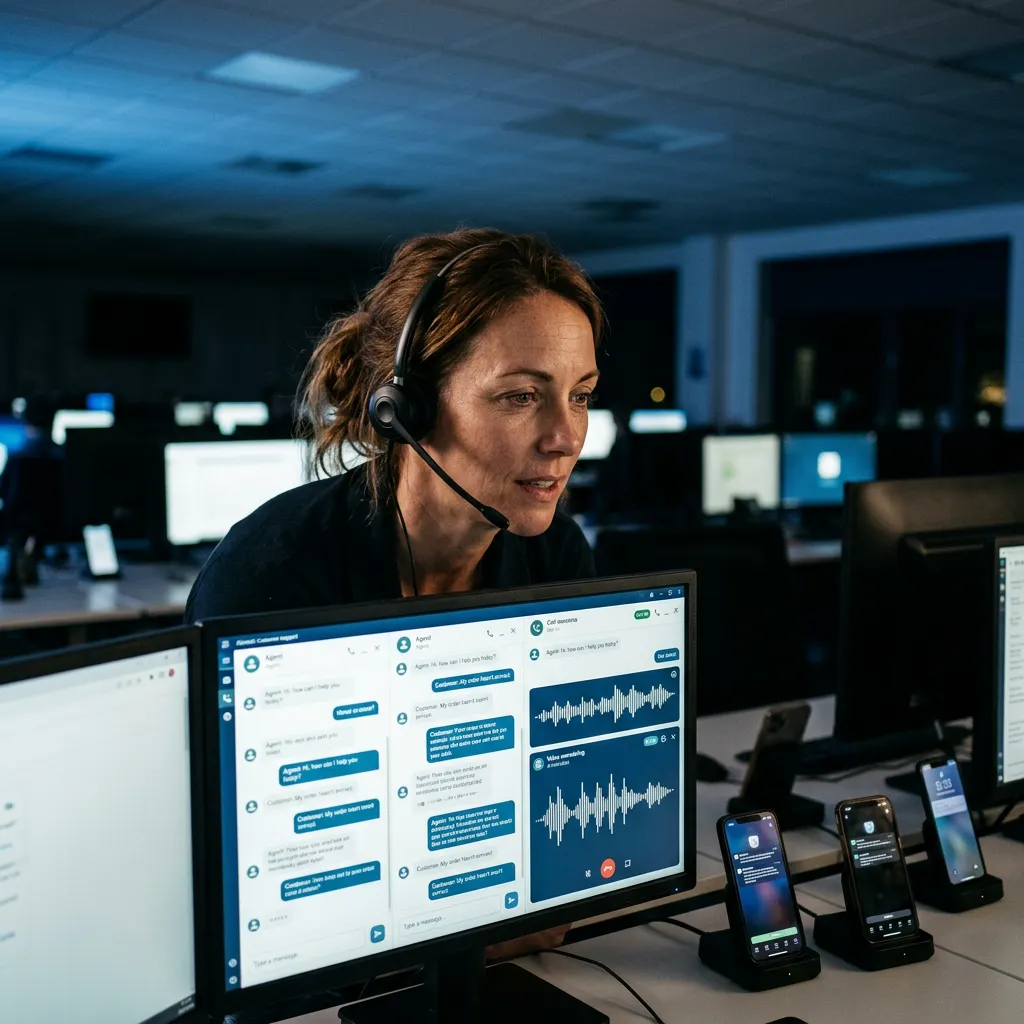
Impact of Missed Calls on Local Service Revenue
Local Services, Revenue Optimization, AI Voice Agents
What Missed Calls Actually Cost a Local Service Business (And Why You Never See the Loss)
The most expensive calls your business ever gets are the ones you never pick up—while you’re under a truck, on a ladder, or already done for the day. This is where real revenue disappears quietly, without leaving a single trace in your reports.
The Call That Comes While You’re On the Ladder
Picture a normal Tuesday for a high-volume local service business—HVAC, plumbing, roofing, electrical, med spa, dental, or legal. The owner is under a truck, elbow-deep in a repair. Another tech is on a roof. The office manager has already gone home. The phone rings at 6:47 p.m., then again at 8:03 p.m., then at 7:12 a.m. the next morning. No one is free to answer. Voicemail picks up—if it’s even set up correctly.
On the other end is a real person with a real job: a broken AC, a leaking pipe, a toothache, a contract question. They do not wait by the phone, staring at your number. They do what every one of us does now: they hang up and dial the next name on the list. According to LucroVox and RingReady’s 2026 data, around 62% of inbound calls go unanswered, and roughly 85% of callers never retry or leave a voicemail. Once they move on, they are gone—for good.
The Quiet Math of “Just a Few Missed Calls”
Because the loss never shows up in any report, it’s easy to shrug off missed calls as the cost of being busy. There’s no QuickBooks line that says “Lost revenue from calls you didn’t answer.” Your booking software doesn’t log the jobs that never got scheduled. The CRM never sees these people at all. They are invisible to your systems—and that’s exactly why they’re so dangerous to your revenue model.
Let’s run conservative numbers. Writly Research estimates solo tradesmen lose 8–15 booked jobs per month from missed calls alone. Clockwork’s 2026 audit of 1,247 home service contractors found an average estimated revenue loss of $78,400 per business per year from calls not answered by a human within 90 seconds. LucroVox and RingReady put the broader local service average closer to $126,000 in lost revenue per year due to unanswered inbound calls.
But ignore the six-figure headlines for a moment. Think small, the way the loss actually happens: a handful to a dozen missed calls a week. For a typical contractor, one booked job might be worth $350, $750, or $1,500. If you miss just 5–10 real jobs a month because no one answered when the phone rang, you’re leaking anywhere from $3,000 to $15,000 every month. And again—none of that appears as a red number, a “loss” column, or an expense code. It is simply revenue that never appears as a line item.
📌 Key Takeaway: Missed calls are not a minor nuisance; they are a recurring, invisible tax on your marketing, reputation, and capacity. You pay to generate demand, then quietly discard a chunk of it every week.
Where the Best Leads Actually Hide: After-Hours, Early Mornings, Weekends
The most motivated buyers rarely call you at 10:15 a.m. on a slow Wednesday. They call:
After work, around dinner time, when they finally have a minute to deal with the problem.
Early in the morning, before their own day explodes—often before your office officially opens.
On weekends, when emergencies peak and normal life is already disrupted.
Clockwork’s data shows that while about 29% of calls go unanswered even during business hours, that number spikes to 84% after-hours. That is precisely where the highest-intent, highest-value leads hide—at the exact times when your phones are least likely to be staffed. Voicemail is not a fallback here; fewer than 3% of callers leave a message, according to Invoca and Ringbook. They simply hit “end” and tap the next listing on Google.
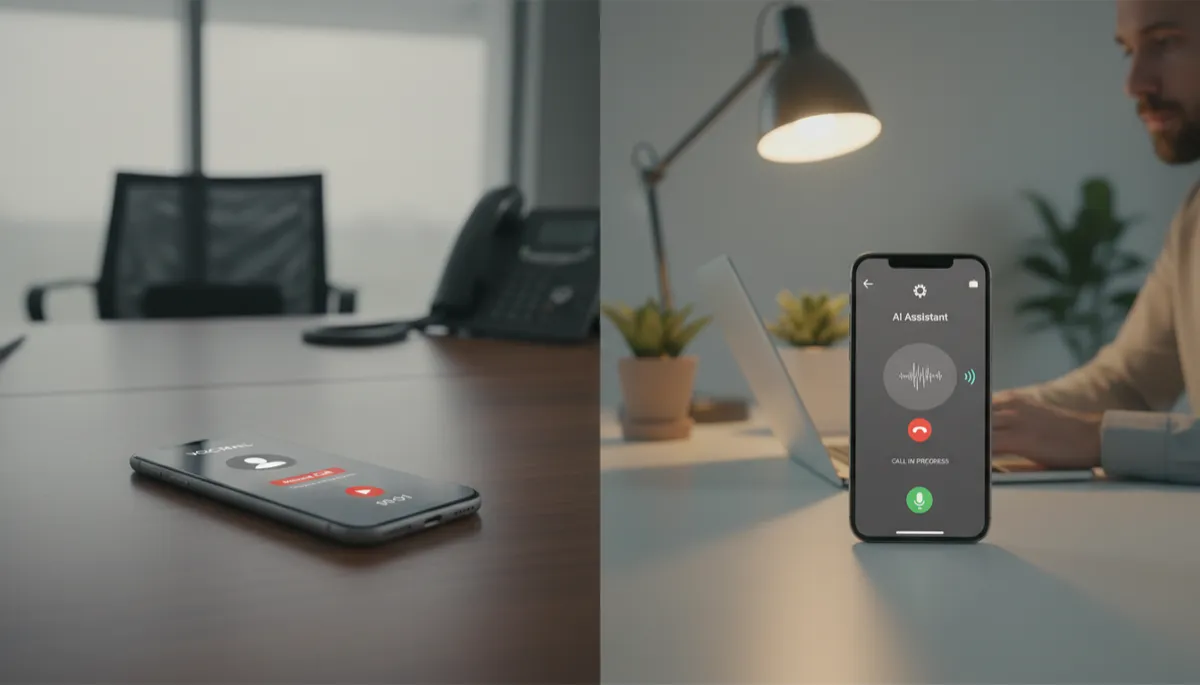
The business that answers live at odd hours quietly wins the highest-intent work.
The Business That Answers at Eight on a Sunday Night
Now imagine two competing HVAC companies in the same city. It’s 8:04 p.m. on a Sunday in July. A family’s AC has just failed. The homeowner searches “AC repair near me” and starts at the top of the list.
Company A sends callers straight to voicemail. The greeting is long, muffled, and generic. No one leaves a message. Company B has an AI voice agent from Bot-Brand live on the line, greeting every caller instantly, no matter the hour. Same search, same urgency—but one business is answering at eight on a Sunday night while competitors send callers to voicemail. Which one gets the job, the referral, and the lifetime customer value?
💡 Pro Tip: In emergencies and high-stress situations, the first business to answer with a calm, competent voice almost always wins the work—price becomes a distant second.
What an AI Voice Agent Actually Does (When It’s Built Correctly)
A modern AI voice agent is not a clunky phone tree or a robotic menu. When engineered properly—as we do at Bot-Brand—it becomes a 24/7 neural intercept layer for your business. It rings around the clock, never tired, never distracted, never “on another line.” Its entire purpose is to intercept, qualify, and synchronize leads with zero human intervention, using human-grade inflection and technical precision.
Ringing around the clock: The agent answers every inbound call, day or night, weekday or weekend. No more “we were closed” gaps. Your brand is always available, even when your team is off the clock or on-site.
Greeting callers by your business name: The agent opens with a branded, confident greeting: “Thanks for calling Smith & Sons Plumbing, this is Mike, how can I help you today?” The caller feels like they reached your office, not a generic answering service.
Handling common questions: It can answer pricing ranges, service areas, appointment availability, insurance basics, pre-op instructions, or intake requirements—whatever your front desk normally fields 50 times a day. This protects your team’s time while giving callers instant clarity.
Capturing name, number, and the job: Every call is turned into structured data. The agent confirms spelling, repeats back the phone number, and logs the core problem: “upstairs unit not cooling,” “burst pipe in basement,” “consultation about dental implants.” No more scribbled notes on sticky pads that never make it into the system.
Booking straight onto the calendar when it makes sense: Connected to your scheduling system, the agent can check availability, offer time slots, and lock in appointments on the spot. No “we’ll call you back tomorrow,” no back-and-forth, no friction between intent and booking.
This is not a cold-calling machine dialing strangers. In fact, a Bot-Brand AI voice agent is the opposite: it only answers people who already chose to call you. These are warm, self-selected leads you have already paid to generate through SEO, ads, referrals, and reputation. The agent’s job is to make sure none of them fall through the cracks because a human was busy, off-site, or offline.
Trained in Your Voice, Your Services, Your Boundaries
One of the biggest mental blocks owners have about AI is the fear of sounding robotic or off-brand. That’s where architectural integrity matters. At Bot-Brand, we deploy what we call the Neural Intercept Protocol—a proprietary logic framework that trains the agent in your own voice, your services, your policies, and your operational limits.
We model your tone: calm and clinical for a dental clinic, friendly and neighborly for a local electrician, precise and confident for a law firm.
We encode your services: what you do, what you don’t, minimum job sizes, emergency fees, and service areas, so the agent never promises something you can’t deliver.
We align your scheduling rules: buffer times, travel windows, technician specialties, and availability sync, so bookings land exactly where they belong.
The result is an autonomous, always-on front desk that feels like a seasoned team member, not a script. It embodies Bot-Brand’s core values of precision logic and absolute digital autonomy, while maintaining the human-grade inflection your customers expect when they pick up the phone in a moment of need.
Why It Usually Pays for Itself With the First Saved Job
When you map the economics, the logic is simple. If your average booked job is worth $600 and your AI voice agent from Bot-Brand prevents even one serious missed call from slipping away in a month, it has effectively paid for itself. In many verticals—roofing, legal, high-ticket dental, specialty trades—a single recovered job can be worth $2,000, $5,000, or more. That is high-velocity operational scaling in its purest form: protect what you already earn, then compound it.
The real upside is not just saving one job. It is eliminating an entire failure mode from your business architecture. Instead of hoping your staff happens to be free when the right person calls, you deploy autonomous infrastructure that ensures every inbound opportunity is intercepted, qualified, and either booked or escalated. No more silent leaks. No more invisible losses. Just clean, consistent capture of demand you are already generating.
📌 Key Takeaway: You don’t need more leads—you need to stop losing the ones already calling. AI voice interception is a structural fix, not a marketing experiment.
From Random Misses to Autonomous Capture: Your Next Move
If you run a high-volume local service operation, you already know the feeling of looking at a full day of jobs and still wondering, “How much did we leave on the table this week?” The honest answer is: more than you think, and none of it shows up in the systems you’re currently reading. The calls that came while you were under a truck, on a ladder, or finally sitting down to dinner are not theoretical—they are quantifiable, recurring, and solvable with the right infrastructure.
Bot-Brand exists to remove that bottleneck permanently. We engineer and deploy autonomous AI voice agents and supporting landing page infrastructure that intercept, qualify, and synchronize your leads in real time. No extra headcount. No additional management overhead. Just a precise, always-on Neural Intercept layer that stops your best opportunities from slipping into someone else’s calendar.
If you’re ready to see what your missed calls are really costing—and how quickly an AI voice agent can reverse that curve—the next step is straightforward.
✅ Call to Action: Initialize a Secure Uplink for an Architectural Audit and Systems Diagnostic. We’ll map your current missed-call exposure, model the revenue at risk, and design an autonomous voice layer that starts paying for itself the first time it saves a job you would have otherwise never known existed.