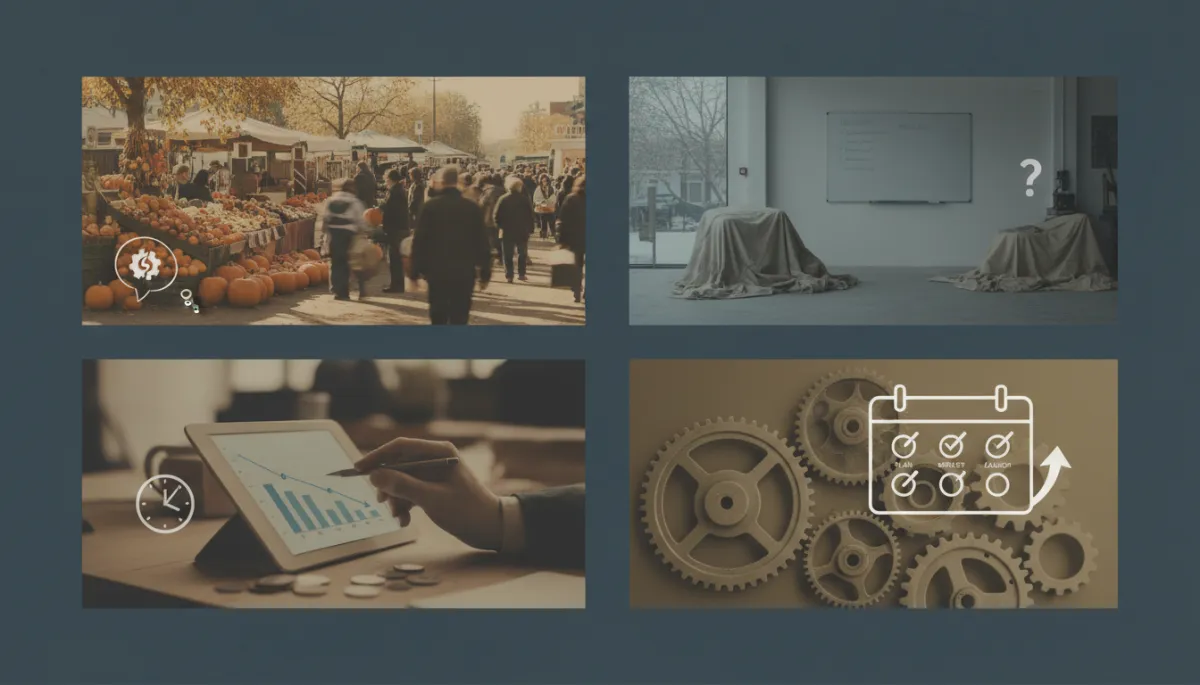
Optimize Seasonal Business with AI Systems
Seasonal Business, Process Improvement, Automation, Operational Efficiency
Turning Seasonal Chaos into Systems: How to Fix What Breaks When You’re Busy
Seasonal businesses and high-volume agencies see the truth about their operations in one brutal burst: the rush. Every broken process, every manual bottleneck, every missed handoff is exposed under pressure. Yet when the season calms down, most of those issues quietly survive to sabotage the next peak. Bot-Brand works with owners who are tired of reliving the same operational pain and are finally ready to convert chaos into autonomous, AI-driven systems.
The Seasonal Business Paradox: You See Every Flaw, Then Change Nothing
High-volume local service businesses, agencies, and seasonal operations share a common experience. During the rush, you can practically feel the inefficiencies:
Intake calls stacking up because only one person can handle them.
Quotes sitting in inboxes instead of going out automatically.
Staff retyping the same information into three different systems.
In those moments, you promise yourself: “When it slows down, I’m fixing this.” Then the season ends, the urgency evaporates, and the next rush arrives with the same broken processes intact. This is not laziness or lack of discipline; it is a structural problem driven by four very legitimate forces.
Four Legitimate Reasons the Fixes Never Happen
1. The Pain Disappears with the Volume
When the phones quiet and the inbox clears, the problems that felt unbearable last month suddenly look “good enough.” Humans are wired to discount pain once it is no longer present. Operational friction that was costing you hours per day now feels like a minor annoyance, and it slips down the priority list. Without fresh pain, the motivation to re-architect processes fades fast.
2. The Specifics Are Forgotten by the Time There’s Time
During the rush, you notice exact failure points: the script that confused callers, the form field no one filled out correctly, the approval step that always stalled. A few weeks later, all you remember is a vague sense that “intake is messy” or “scheduling needs work.” Process improvement demands precision, and memory is imprecise. Without specific, real-time notes, you end up solving the wrong problems or designing abstractions that do not match reality.
3. Cash Feels Tightest Exactly When Time Finally Exists
When the season ends, revenue softens. That is precisely when you finally have hours to rebuild systems, but it is also when every dollar feels at risk. Investing in automation or external expertise can feel reckless, even if the math clearly favors it. As an AI software and automation agency, Bot-Brand sees this pattern constantly: owners delay infrastructure upgrades during the only window when deep work is possible, because they are viewing spend in isolation instead of in terms of next season’s capacity and margin.
4. Nothing on the List Has a Customer Attached to Force It
Your team will always prioritize the work with a name, a deadline, and a potential review attached. Internal improvements rarely come with a specific customer, so they lose every scheduling battle. The broken handoff that cost you 20 hours last season does not complain, send follow-ups, or threaten to churn. It just quietly taxes your next rush—unless you treat it like a critical client project with a real owner and a real date.
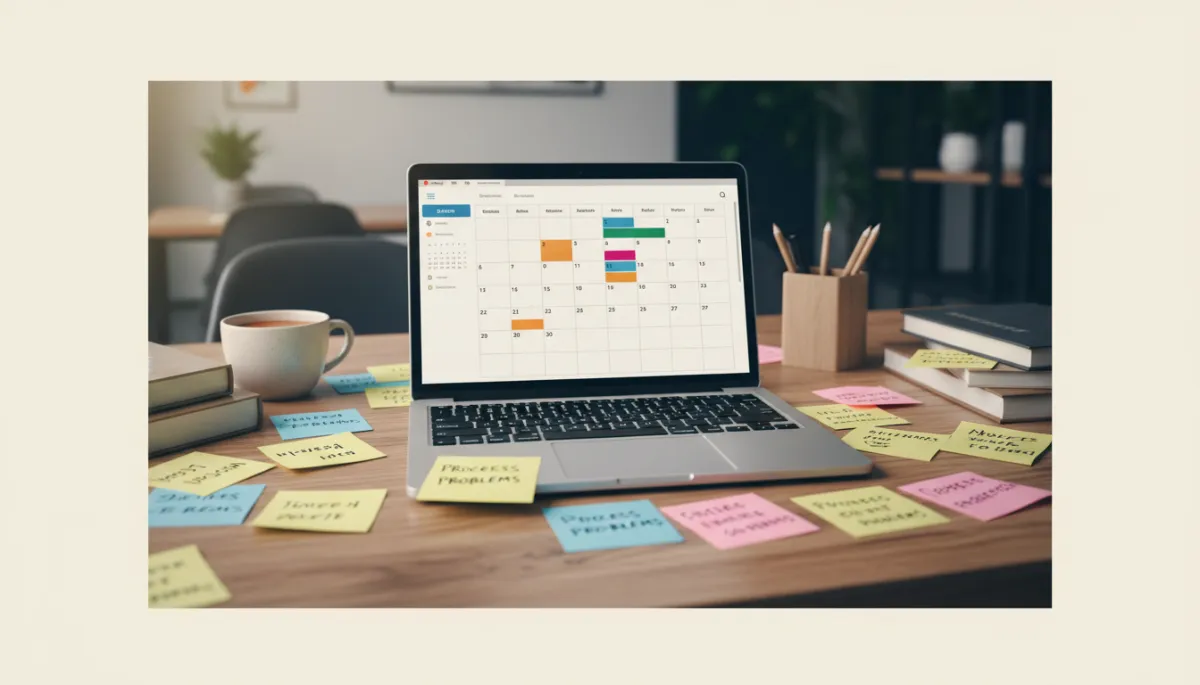
Vague memories vanish; specific, time-stamped notes become the blueprint for real change.
The Simple Fix: A One-Line List While the Truth Is Visible
The most effective tool for seasonal process improvement is also the cheapest: a running, one-line list kept during the rush. No diagrams, no strategy decks—just a single, consistent capture point where you log issues in real time while they are painful, specific, and undeniable.
📌 Key Practice: One problem per line, written in plain language: what happened, at which step, and what it cost in time or lost opportunity.
Examples:
“Customer had to repeat address three times between phone, quote, and invoice.”
“Missed two leads because no one watched the contact form on Saturday.”
“Scheduling took 10 minutes per job due to manual route planning.”
This list is not about solutions yet. It is about preserving the unfiltered reality of your operations while the volume makes every weakness obvious. When Bot-Brand conducts an Architectural Audit, this kind of list is often the most valuable artifact on the table.
Sort by Frequency, Not Drama: Where Real Money and Automation Live
When the season ends and you finally sit with your list, the natural instinct is to attack the most dramatic failures first—the angry review, the lost high-ticket client, the day everything crashed. Those moments are emotionally loud, but they are not always financially dominant or operationally automatable.
Instead, sort your list by frequency:
How many times did this step occur?
How many minutes did it consume each time?
The step that happened forty times at eight minutes each consumed over five hours of your team’s time. That is precisely the kind of repetitive, rules-based work that AI voice/chat agents and automated workflows excel at absorbing. In contrast, the one-off disaster may be better addressed with a policy tweak or training, not a full automation build.

Frequency-first sorting reveals where automation can quietly reclaim entire workdays.
Build One Thing Completely, Not Three Things Partially
Once you have your frequency-sorted list, the temptation is to “make progress everywhere.” A little improvement in intake, a partial fix in scheduling, a half-built automation for follow-ups. The result is three fragile systems, none of which your team fully trusts—and none of which deliver transformative gains.
Bot-Brand’s philosophy is different: choose one high-frequency, high-friction workflow and build it to completion with architectural integrity. For example:
An AI voice agent that intercepts every inbound call, qualifies the lead, and books directly into your calendar.
A neural lead-capture engine on your landing pages that routes prospects into your CRM with zero manual entry.
One fully deployed, autonomous workflow does more for operational efficiency than three prototypes. It builds trust, proves ROI, and frees enough capacity that your team actually has time—and confidence—to tackle the next system. Partial builds create noise; complete systems create compounding leverage.
The Quiet Months: Your Safest Time to Be Wrong
The real value of the off-season is not just “time to catch up.” It is room to be wrong at low stakes. This is when you can:
Test a new AI intake flow with a subset of leads and adjust prompts before volume spikes.
Experiment with different qualification logic without risking a flood of misrouted jobs.
Iterate on your landing page and follow-up sequences based on real customer feedback.
When demand is low, the cost of a misstep is tiny compared to mid-season. That is exactly when you want to trial new automation strategies, refine your Neural Intercept logic, and stress-test integrations. By the time your next peak arrives, your systems are not theoretical—they are battle-tested under gentle conditions.

Quiet months are the ideal sandbox for testing and refining autonomous systems.
Four Calendar Entries That Make the Plan Survive Good Intentions
Good intentions do not survive busy calendars. To ensure your seasonal insights become real infrastructure, treat process improvement like a client engagement and anchor it with four specific calendar entries:
1. Weekly “Rush Reality” Capture (In-Season)
A 15-minute standing meeting during peak weeks where the team adds to the one-line list. No solutions, no debates—just capture. This keeps the list alive and ensures that customer-facing staff, not just leadership, contribute frontline reality.
2. Post-Season Debrief and Prioritization Session
Within two weeks of the rush ending, block a half-day to review the list, group similar items, and rank them by frequency and time cost. This is where you choose the one workflow you will build completely before the next season. For many Bot-Brand clients, this is also when we run an Architectural Audit and Systems Diagnostic to quantify impact.
3. Build Sprint Window for One Complete System
Reserve a defined 3–6 week block in the quiet season dedicated to designing, building, and deploying that single high-impact automation—whether it is AI-powered intake, lead capture, or internal routing. Protect this time like you would a major client contract; it is the foundation of next season’s capacity and profitability.
4. Pre-Season Simulation and Stress Test
Four to six weeks before the next rush, schedule a full-system rehearsal. Run test leads through your AI agents, confirm that every integration syncs correctly, and collect internal and customer feedback. Adjust prompts, routing rules, and messaging while stakes are still low, so your Neural Intercept Protocol is fully tuned before real volume hits.

Concrete calendar commitments turn seasonal insights into durable, autonomous infrastructure.
From Surviving the Rush to Scaling Through It
Seasonal businesses and high-volume agencies do not need more willpower; they need better capture, clearer prioritization, and disciplined execution. A simple one-line list during the rush, sorted by frequency, focused on building one complete system, and anchored by four calendar entries can convert seasonal chaos into a self-correcting, autonomous operation.
Bot-Brand exists to engineer that autonomy. If you are ready to ensure that next season does not look like the last, it is time to design infrastructure that intercepts, qualifies, and synchronizes leads with zero human intervention—24/7, at scale, and with precision logic you can rely on.
Next Step: Initialize a Secure Uplink for an Architectural Audit and Systems Diagnostic, and turn this season’s pain into next season’s advantage.