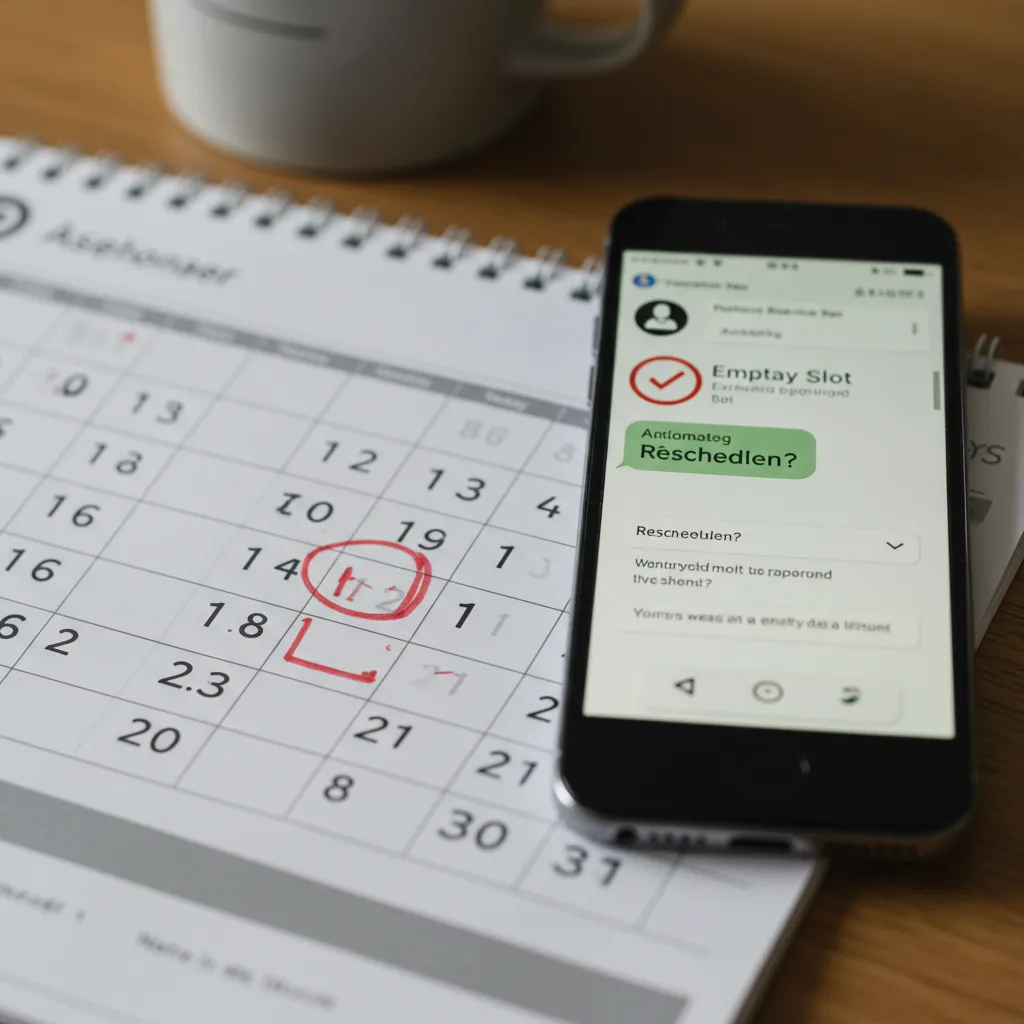
Every No-Show Is a System Failure
When a booked appointment doesn't show, the reflex is to blame the customer. Unreliable, didn't care, wasted the slot. That framing feels satisfying and changes nothing, because it points at the one variable you can't control. The variable you can control is the system that was supposed to keep that appointment on the books — and in most operations, that system doesn't exist.
A no-show is rarely a character flaw. It's a confirmation architecture that was never built.
## What's Actually Happening Between Booking and Appointment
A customer books on Monday for a Thursday appointment. In the seventy-two hours between, life happens — they forget, double-book, or quietly lose the intent that made them schedule in the first place. If nothing in that window re-engages them, the appointment decays. The slot that could have been revenue sits empty, and the time your team reserved is gone.
Manual confirmation — a staffer calling the day before — partly works, but it's inconsistent, eats labor, and collapses the moment things get busy. Which is exactly when your calendar is fullest and no-shows cost the most.
## The Confirmation Architecture
The fix is a sequence that runs automatically off the booking, with no one having to remember:
- Immediate confirmation the moment the appointment is set, so it's real in the customer's mind.
- A reminder cadence — typically a day out and again a couple hours before — by text, where it actually gets seen.
- A one-tap reschedule path. This is the piece most systems miss. A customer who can't make it will usually rebook if it's effortless — but if the only options are show up or ghost, they ghost. Give them the reschedule link and you convert a dead slot into a moved one.
- Two-way handling. When they reply to confirm, cancel, or reschedule, the system updates the calendar and triggers the next step — including offering the freed slot to a waitlist.
## The Math Makes the Case
Put a number on it before you build anything. Count your no-shows over the last month and multiply by the average value of a booked appointment. That's the revenue your missing confirmation layer is costing — every month, on repeat. Against that number, an automated sequence isn't an expense; it's recovering money that's currently walking out the door, while taking the day-before phone calls off your team's plate.
If you're writing off no-shows as flaky customers, you're leaving the fixable part untouched. Let's map your booking flow and deploy a confirmation and reschedule system that keeps appointments on the books automatically.