Reputation Is a System, Not an Accident
For a local service business, the public review profile is one of the highest-leverage assets it has — and one of the most poorly managed. Most owners treat reviews as something that happens to them: a great job sometimes produces a review, a bad one reliably does, and the ratio drifts wherever it drifts. That's not a reputation strategy. That's leaving the most-read signal about your business to chance.
Reputation is an output. And every reliable output is produced by a system.
## Why Manual Review Requests Fail
The standard approach is to ask for a review when someone remembers to — a staffer mentioning it at the end of a job, an owner sending the occasional text. It fails for predictable reasons: it's inconsistent, it happens at the wrong moment, and the people most motivated to leave an unprompted review are disproportionately the unhappy ones. The result is a profile that under-represents your actual quality, because your satisfied majority stayed silent while your rare bad experience went straight to public.
The fix is not asking harder. It's removing the human memory from the loop.
## The Architecture of a Review System
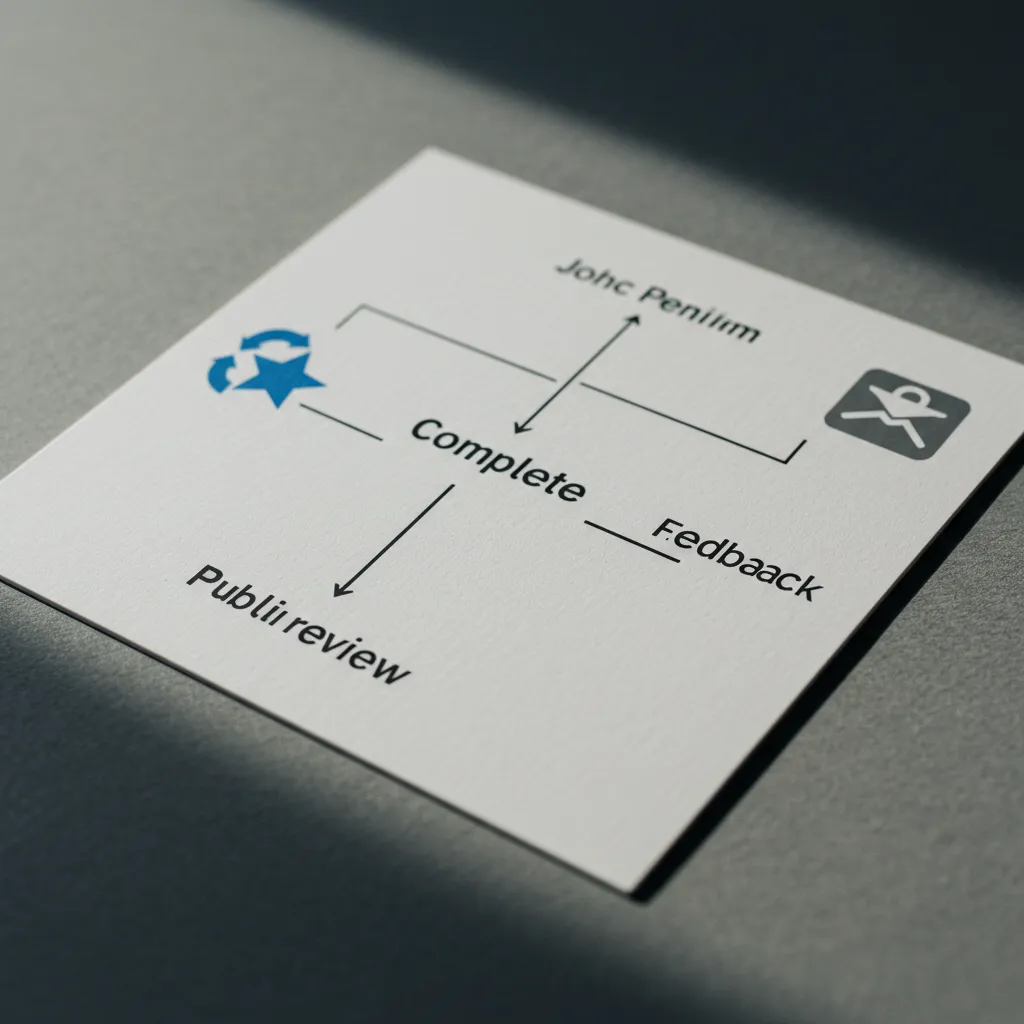
A properly configured review workflow triggers automatically off the event that signals a completed job — a status change in the pipeline, an invoice marked paid, an appointment closed out. From there it branches on sentiment before anything reaches a public page:
- The completion event fires the request automatically, within the window where the experience is freshest, with no one having to remember.
- Sentiment gate first. The contact is asked about their experience privately. A positive response is routed directly to your public review profile with a one-tap link. A negative response is routed to a private feedback channel that reaches the owner immediately.
- That intercept is the critical piece. It surfaces the unhappy customer to you privately — where the problem can actually be solved — instead of letting it post publicly as the first thing the next prospect reads.
This is not about hiding bad feedback. It's about routing it to the place where it can be addressed, while making it effortless for your genuinely satisfied customers to do the thing they were already willing to do.
## Cadence and Channel
The mechanics matter. Requests sent by text are seen far more reliably than email. A single well-timed ask outperforms repeated nagging. And a light, automated follow-up to non-responders — once, not endlessly — recovers a meaningful share of reviews that would otherwise never have been left. Configured once, the system runs on every job after that without further input.
The compounding effect is the real return. A steady, automated flow of recent, positive reviews lifts your local ranking, and it does so continuously rather than in the occasional burst a manual effort produces.
If your review profile is whatever happened to land there, it's running on chance. We'll map your job-completion events and deploy a sentiment-gated review workflow that routes happy customers to your public profile and unhappy ones to you — automatically, on every job.