Seal Workflow Gaps in Small Business Operations
Operations, Small Business Systems, Workflow Design
Why Small Business Work Fails in the Seams (and How to Seal Them Shut)
In most small businesses, work doesn’t fail while someone is actively doing it. It fails in the seam between two people—where a job leaves one set of hands and is supposed to land in another, but quietly disappears, duplicates, or drifts. This is where Bot-Brand focuses its automation architecture, because that seam is where revenue, reputation, and sanity are lost.
The Hidden Reality: Every “Simple” Job Has Seven-Plus Handoffs
Take a standard job in a high-volume local service business: a new customer books a service call. On the surface, it feels like one job. In reality, it’s a chain of handoffs—each one a potential failure point.
Map a typical journey and you’ll see at least seven distinct handoffs:
Lead capture: The inquiry comes in (phone, web form, chat, ad response).
Qualification: Someone decides if this is a fit, urgent, and worth scheduling.
Scheduling: Time, location, and resource are assigned and confirmed with the customer.
Dispatch: The job is handed to the field team or technician with instructions.
On-site execution: Work is performed and documented (notes, photos, parts used).
Billing: The job record passes to finance or admin for invoicing and payment follow-up.
Follow-up: The customer is nudged for reviews, repeat service, or upsell.
That’s seven handoffs before we even count internal back-and-forth: estimator to project manager, project manager to purchasing, purchasing to warehouse, and so on. In practice, a single “job” can easily cross ten or more seams. The people are usually competent. The seams are not.
The Four Ways a Handoff Breaks
When Bot-Brand audits an operation, we see the same four failure modes at nearly every seam. Naming them makes them easier to spot—and easier to design out of existence.
1. Never Picked Up
The job leaves one person’s world but never truly enters another’s. A voicemail sits in an inbox. A form fill stays in an email thread. A technician closes a job on paper, but no one ever creates the invoice. There is no explicit “owner” after the handoff, so the task simply vanishes into operational fog. From the customer’s perspective, the company just went silent.
2. Picked Up Without Context
Someone does see the job—but they don’t see the story. They get a task like “Call John Smith” with no notes on urgency, history, or expectations. They call at the wrong time, ask the wrong questions, or repeat information the customer already gave. Work technically moves forward, but with friction, rework, and frustration. The business looks disorganized because context fell off during the handoff.
3. Picked Up Twice
Two people believe they own the same next step. Maybe the lead notification hit two inboxes, or the job was copied into two boards. Both act, neither realizes the other is acting, and the customer gets duplicate calls, duplicate invoices, or conflicting information. Internally, it shows up as awkward overlap and wasted time; externally, it feels like chaos.
4. Picked Up Eventually (the Near-Invisible Failure)
This is the most dangerous failure mode because it hides inside “we got it done.” The job is picked up, but only after an untracked delay. The estimate goes out three days late. The invoice is sent weeks after the work. The follow-up call happens after the customer has already chosen a competitor. The team remembers the success (“We finished it”) and forgets the cost of the lag (“We lost margin, trust, and repeat work”).
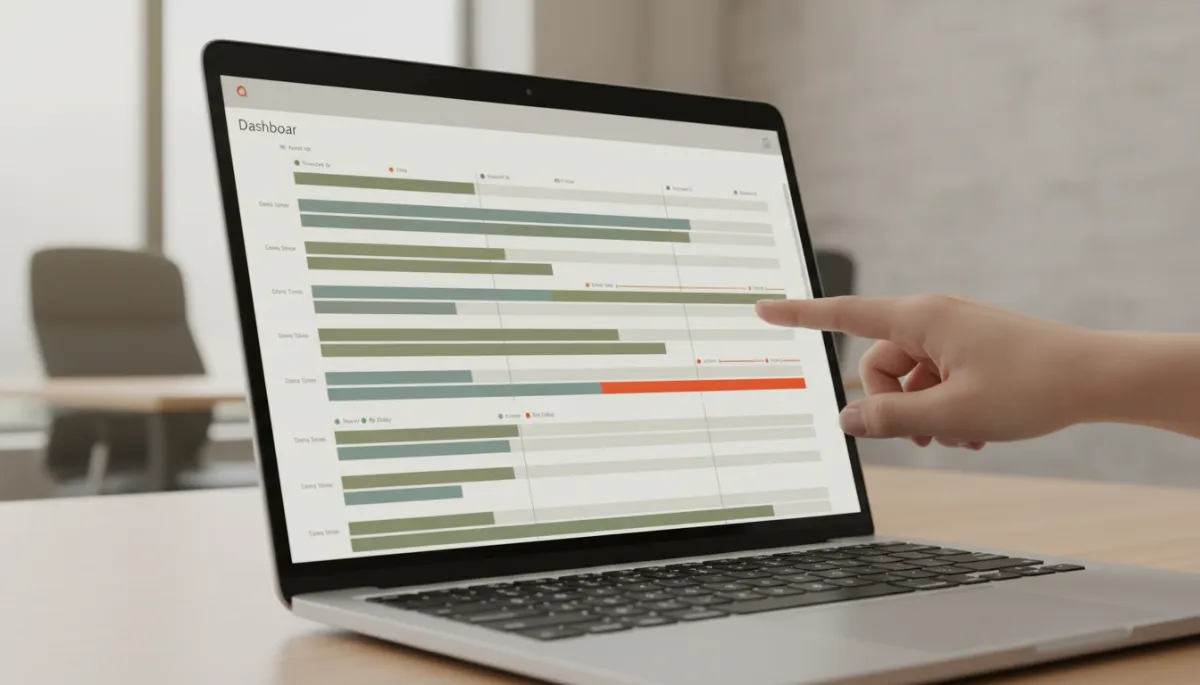
Visualizing delays at each seam turns invisible lag into actionable signals.
The Structural Fix: Three Non-Negotiables for Every Seam
You don’t fix seams with motivational speeches or more meetings. You fix them with structure: clear triggers, complete context, and visible time. At Bot-Brand, we encode this into autonomous systems so the business doesn’t have to remember; the architecture does the remembering for you.
1. Completion Itself Fires the Notification
The moment one step is completed, the next owner must be notified automatically. Not “when someone remembers.” Not “when they get around to updating the spreadsheet.” The act of completion is the trigger.
For example:
When a lead is qualified, an autonomous agent moves it to “Ready to Schedule” and pings scheduling instantly.
When a technician closes a job in the field app, billing is notified with a fully prepared record.
Human memory is removed from the critical path. The system itself hands the baton to the next runner.
2. Context Travels Attached to the Record
Notifications without context create the “picked up without context” failure. The fix is simple but often ignored: the full story must travel with the job—once, centrally, and automatically.
That means:
Customer history, preferences, and prior conversations live in one record that every role sees.
The AI that captures the lead tags urgency, budget, and intent so the scheduler doesn’t have to guess.
Field notes, photos, and parts used are visible to billing and follow-up without extra data entry.
When Bot-Brand deploys a Neural Intercept Protocol for a client, every captured interaction becomes structured context that moves with the job. The next person—or autonomous agent—starts in the middle of the story, not at page one.
3. Every Seam Has a Clock
To eliminate the “picked up eventually” failure, time must be visible at the seam. Every handoff needs a clock that starts when the previous step completes and surfaces delay while it still matters, not weeks later in a financial report.
Practically, that looks like:
“New lead to first response” with a live timer and thresholds (e.g., 5 minutes, 15 minutes, 60 minutes).
“Job completed to invoice sent” with alerts when a job sits unbilled beyond your target window.
“Invoice sent to follow-up” so no high-ticket quote quietly ages out of relevance.
In an autonomous infrastructure, these clocks don’t just report delays—they trigger actions. If scheduling hasn’t responded in 10 minutes, an AI voice or chat agent reaches out. If billing hasn’t sent an invoice in 24 hours, the system escalates or drafts it automatically. Time stops being a silent killer and becomes a managed variable.
From Manual Bottlenecks to Autonomous Seams
When you combine these three elements—completion-triggered notifications, context-attached records, and visible clocks—you transform your seams from failure points into force multipliers. The same number of people suddenly feel like a larger, sharper team because the architecture does the coordination for them.
This is the core of Bot-Brand’s promise: deploy 24/7 autonomous operational infrastructure that intercepts, qualifies, and synchronizes leads—and then carries every job through its life cycle with precision logic and minimal human friction. Your people focus on high-value decisions; the system handles the seams.
Run a Twenty-Job Audit to Find Your Worst Seam First
You don’t need a six-month project to start. You need data from the real world of your operations. A simple twenty-job audit will reveal your most expensive seam in a single afternoon.
Step 1: Select Twenty Recent Jobs
Choose twenty jobs from the last 30–60 days. Mix:
High-ticket and low-ticket work
Smooth jobs and known problem jobs
Different service lines or locations if applicable
Step 2: List Every Handoff in Each Job
For each job, quickly sketch the journey from first contact to final payment. For every point where the job left one person, inbox, or system and entered another, draw a line and name the seam:
Lead → Qualification
Qualification → Scheduling
Scheduling → Dispatch
Dispatch → Field Execution
Field Execution → Billing
Billing → Follow-up
Step 3: Tag Each Seam with Its Failure Mode
For every seam in every job, ask: did this handoff work cleanly, or did it break in one of the four ways?
Never picked up – the step simply didn’t happen without rescue.
Picked up without context – the next person had to hunt for information.
Picked up twice – duplicate work or conflicting actions occurred.
Picked up eventually – it got done, but only after a harmful delay.
Step 4: Count, Rank, and Choose the Worst Seam
When you’re done, you’ll see patterns immediately:
Maybe “Job completed → Billing” is where cash flow goes to die.
Maybe “Lead → First response” is where high-intent prospects cool off and disappear.
Rank seams by:
How often they break across the twenty jobs.
How expensive the break is when it happens (lost deals, delayed cash, damage to reputation).
The seam with the highest combined score is your “worst seam.” That’s where structural fixes—and automation—will return the most leverage, fastest.
Seal Your First Seam, Then Scale the Pattern
Once you’ve identified that worst seam, apply the same three rules:
Make completion of the prior step automatically trigger the next step’s notification.
Ensure complete context travels with the record so nobody starts blind.
Put a visible, enforced clock on the seam so “eventually” stops being acceptable.
Do this for one seam, and you’ll feel the difference. Do it across your entire job lifecycle, and you no longer run a collection of heroic individuals—you run an autonomous business ecosystem with clean, reliable handoffs. That’s the foundation for high-velocity scaling without burning out your team or your brand.
If you want help mapping and sealing those seams with precision, Bot-Brand’s Neural Intercept Protocol is designed exactly for this: intercept every lead, carry full context forward, and enforce time at every handoff. Initialize a Secure Uplink for an Architectural Audit and Systems Diagnostic, and we’ll show you—job by job—where your work is failing in the seams and how to lock those seams down with autonomous infrastructure.