Silent Automation Failures Costing Your Leads
Automation, Lead Capture, Risk Management
The Silent Automation Failure That’s Costing You Leads
The most dangerous automation failure in your business isn’t the one that throws a red error banner. It’s the process that quietly stops running, never complains, and keeps looking “normal” while it quietly eats your pipeline.
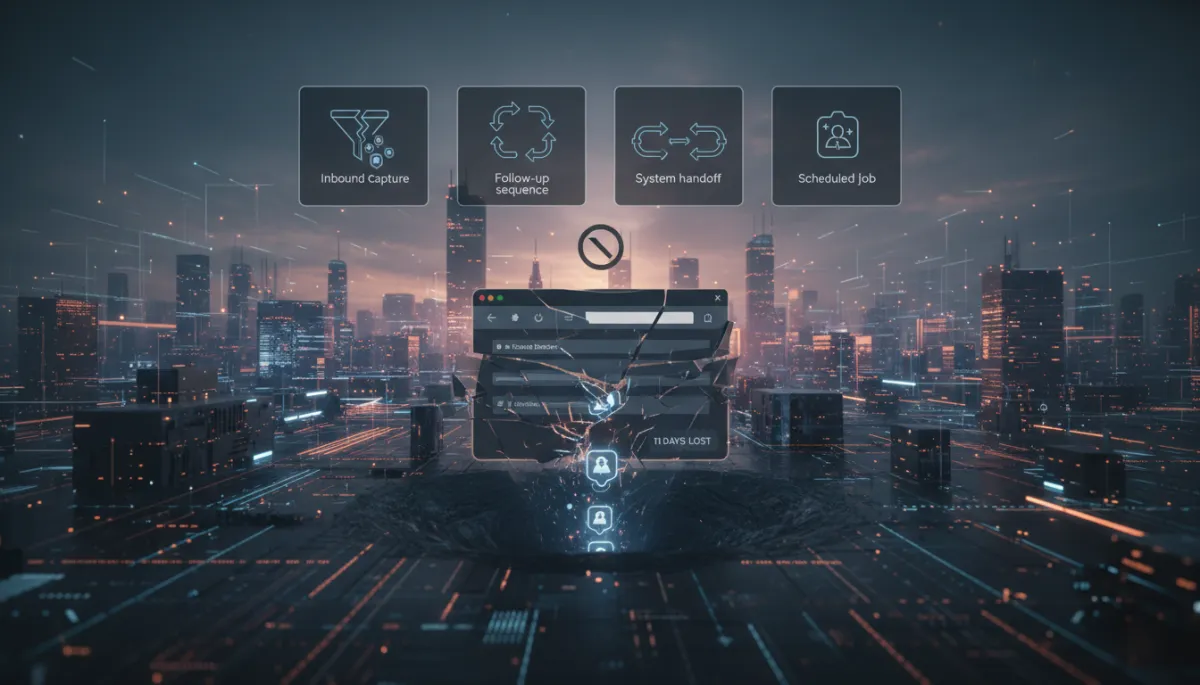
Picture this: a high-intent web form on your best-performing landing page breaks after a minor update. It still loads. It still looks perfect. Visitors keep submitting. But for the next eleven days, every single submission vanishes—no CRM record, no email, no log entry. Your ad spend continues. Sales asks why the phones are quiet. No one knows the form died, because nothing ever screamed that it did.
Why Silence Is Software’s Default Failure Mode
Most business and agency stacks are built on a simple assumption: if nothing looks wrong, everything is fine. But in software, silence is the default state—for both success and failure. A process that never runs and a process that runs flawlessly produce the same user-facing signal: nothing unusual to see here.
APIs time out without surfacing an error to the marketer. Webhooks fail but quietly stop retrying. A follow-up sequence gets paused “temporarily” and no one remembers to turn it back on. To the human watching the dashboard, everything appears stable. There’s no smoke, no crash dialog, no blinking red light. Just a gradual, unexplained drop in volume that’s easy to blame on seasonality or “the market.”
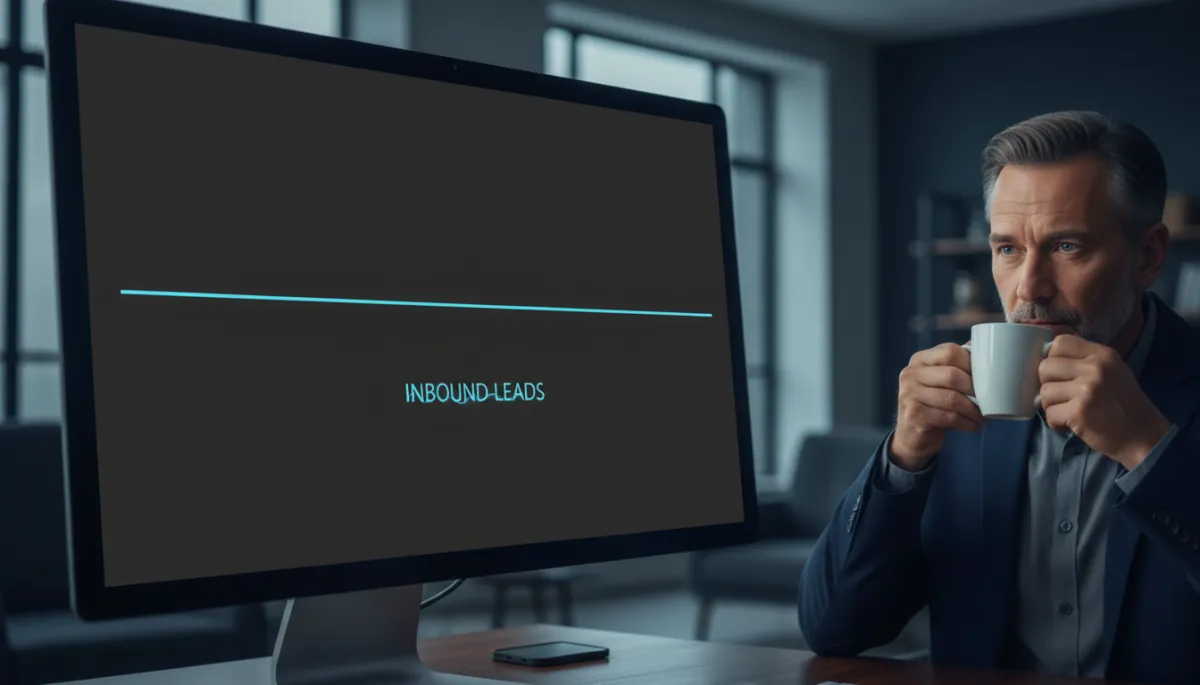
Flat lines rarely trigger panic, yet they often hide the most expensive failures.
The Four Costliest Silent Failures in Your Funnel
At Bot-Brand, when we audit automation stacks for high-volume local service businesses and enterprises, we see the same failure patterns over and over. Ranked from most to least expensive, the silent killers are:
Inbound capture failures. Broken or partially broken forms, chat widgets, call tracking, or “click-to-call” buttons. Every missed capture is a fully lost opportunity—no record, no retargeting, no recovery. This is where eleven days of leads can disappear without a trace.
Follow-up sequence failures. Automations that should call, text, or email new leads but get paused, misconfigured, or disconnected from the trigger. Leads technically exist in your CRM, but they age out silently with no human contact. On paper, your marketing is “working.” In reality, your Neural Intercept never fires.
System handoff failures. Data moves from form to CRM, from CRM to dialer, from ticketing to billing. Any broken mapping, changed field name, or revoked API token can strand leads between systems. Operations believe “sales will handle it,” while sales never sees the record.
Infrequent scheduled job failures. Nightly syncs, weekly reports, monthly list refreshes. Because they run rarely, no one notices when they silently stop. Months later, someone discovers compliance gaps, missing renewals, or stale data that corrupted decision-making.
📌 Key Takeaway: The less visible the workflow, the more likely it is to fail quietly and the more rigorous your monitoring must be.
Five Design Habits That Neutralize Silent Failures
1. Report Success, Not Just Failure
Most systems log errors; very few log the absence of expected success. For critical flows—lead capture, first-response automations, system handoffs—design for positive confirmation. For example: “We received 57 form submissions in the last 24 hours and pushed 57 to CRM.” When that number drops to zero, the alert isn’t an error message; it’s the missing success report.
2. Watch Volume Anomalies, Not Just Uptime
Uptime monitors tell you a page loads; they don’t tell you whether anyone is successfully captured or processed. For Bot-Brand’s Neural Intercept Protocol, we track patterns, not just pings: typical hourly form submissions, typical daily call volume, typical sequence sends. When volume drops below (or spikes above) a defined band, we trigger investigation long before a human notices “it’s been slow lately.”
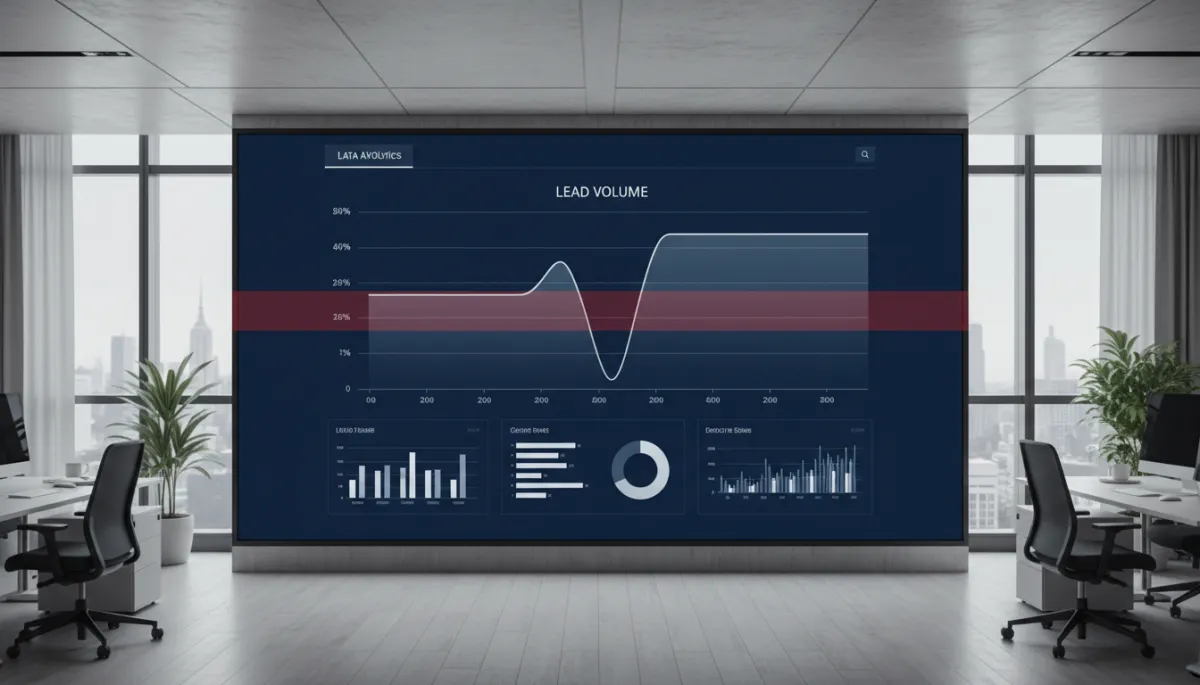
Anomaly alerts surface silent failures days or weeks before revenue feels them.
3. Build Human Fallbacks into Autonomous Systems
True autonomy doesn’t mean “no humans involved.” It means humans are reserved for exception handling. For every critical automation, define: “If this fails or volume looks abnormal, what is the manual backup?” That might be a shared inbox where raw form emails are forwarded, a daily CSV export, or a backup call-routing rule that bypasses the dialer if it’s offline. The goal is architectural integrity: no single silent failure can fully sever your ability to receive and respond to intent.
4. Test Your Own Entry Points Monthly
High-volume operators test alarms and generators; high-velocity businesses should test lead paths. Once a month, someone on your team should behave like a prospect: submit every form, call every tracked number, start every chat, click every ad, book every calendar. Then follow the trail: Did the record land in the right CRM, pipeline stage, and sequence? Did an AI voice or chat agent respond with the right logic? This simple discipline would have caught our hypothetical eleven-day black hole on day one.

Acting like a prospect is the fastest way to expose broken entry points.
5. Name Exactly Who Gets the Alert
An alert without an owner is just noise. For every critical automation, explicitly define: Who is responsible for responding? Where do they see it (Slack, SMS, email, pager)? What is the expected response time? In Bot-Brand deployments, we bind alerts to roles, not vague lists: “Revenue Operations On-Call” or “Marketing Systems Lead.” That clarity turns a silent failure into a contained incident instead of a multi-week revenue leak.
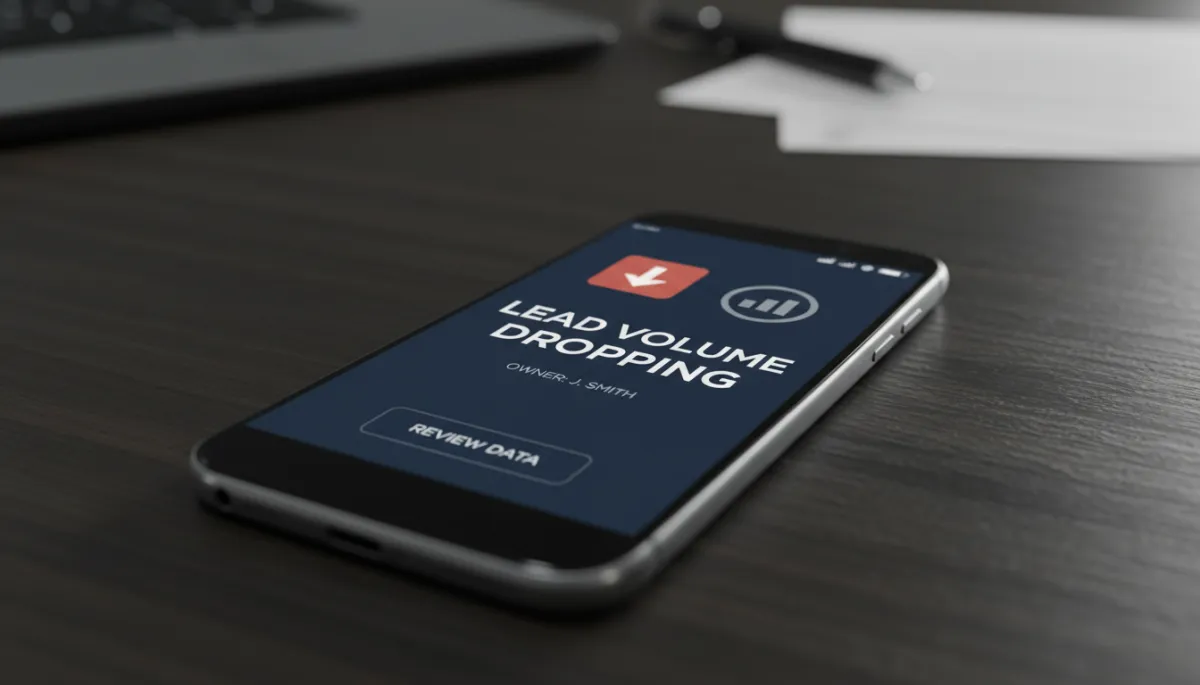
Clear ownership and channels turn alerts into action instead of background noise.
From Fragile Automation to Autonomous Infrastructure
Silent failures are not a “maybe” in complex stacks; they are a certainty unless you design against them. For high-volume service businesses and enterprises, the cost isn’t just wasted ad spend—it’s damaged reputation, lost referrals, and stalled scaling because the top of the funnel is leaking in ways no one can see.
Bot-Brand’s promise is absolute digital autonomy: 24/7 infrastructure that intercepts, qualifies, and synchronizes leads with zero human intervention until an exception demands it. That requires more than clever AI—it demands precision logic, rigorous monitoring, human-grade fallbacks, and clear accountability when signals go off-script.
If you suspect your current automations might be quietly failing—or you simply want proof that they’re not—the next step is simple: Initialize a Secure Uplink for an Architectural Audit and Systems Diagnostic. We’ll trace every entry point, every handoff, and every follow-up path, and show you exactly where silence is hiding in your stack before it turns into your next eleven-day gap in revenue.