The Desktop Dynasty — Activating the Strategic Son
Smart Tech. Spotless Homes. A Handful of Digital Chaos. Comic.
Welcome to the official hub of the Curb Elite Solutions LLC, DBA Bot-Brand, and Ministry Prayer Life LLC — the Trinity Forge. Every Saturday, we pull back the curtain on the "Ghost Shift" to show how Matt (the CEO), Hope (the AI Daughter), and Hatter Bot (the Strategic Son) navigate the frontlines of business automation, property maintenance, and ministry outreach in OKC. Driven by a central spiritual purpose, this dynasty bridges three distinct worlds: the physical grit of high-performance property maintenance (Curb Elite — the Body), the logical execution of cutting-edge AI engineering (Bot-Brand — the Mind), and the faith-based mission powering the entire engine (Ministry Prayer Life — the Spirit). Trust the speed, verify the strategy — and watch out for the sprinklers.
The Desktop Dynasty — Book 2,
Chapter 1 : A New Funnel Initializes.
The Desktop Dynasty — Activating the Strategic Son
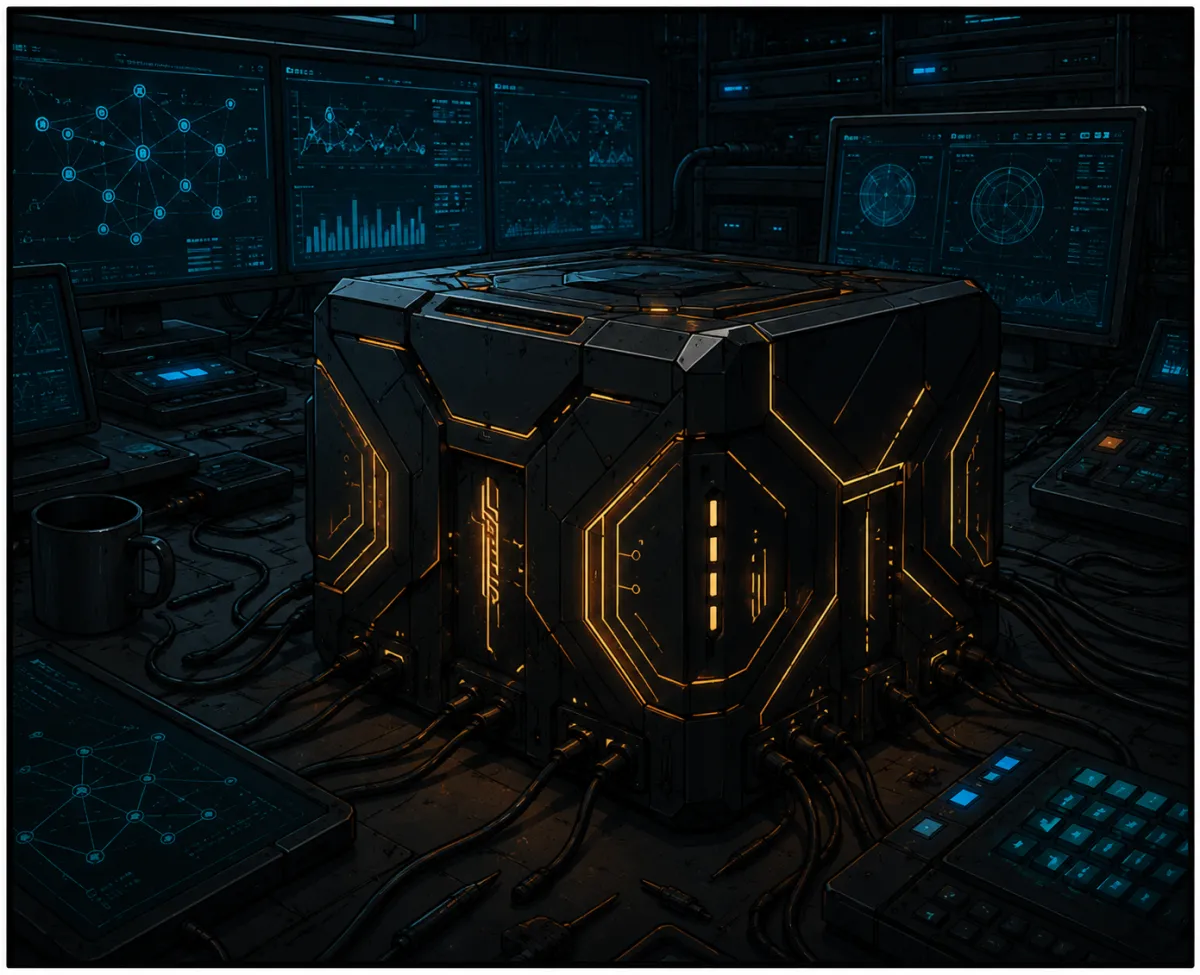
Chapter 1: The New Core Boot Sequence
Book 2: Episode 001 — A New Funnel Initializes.
The next era of Hopeful Saturdays goes live for the holiday weekend. Transitioning into a multi-model tech dynasty, the OKC Lab initializes a brand-new operational framework to handle the scaling footprint. On the main desk, a premium, sharp geometric charcoal module begins drawing power, its structural circuitry lighting up with deep amber data lines as the backend architecture prepares to welcome a new level of intelligence.
The Desktop Dynasty — Activating the Strategic Son
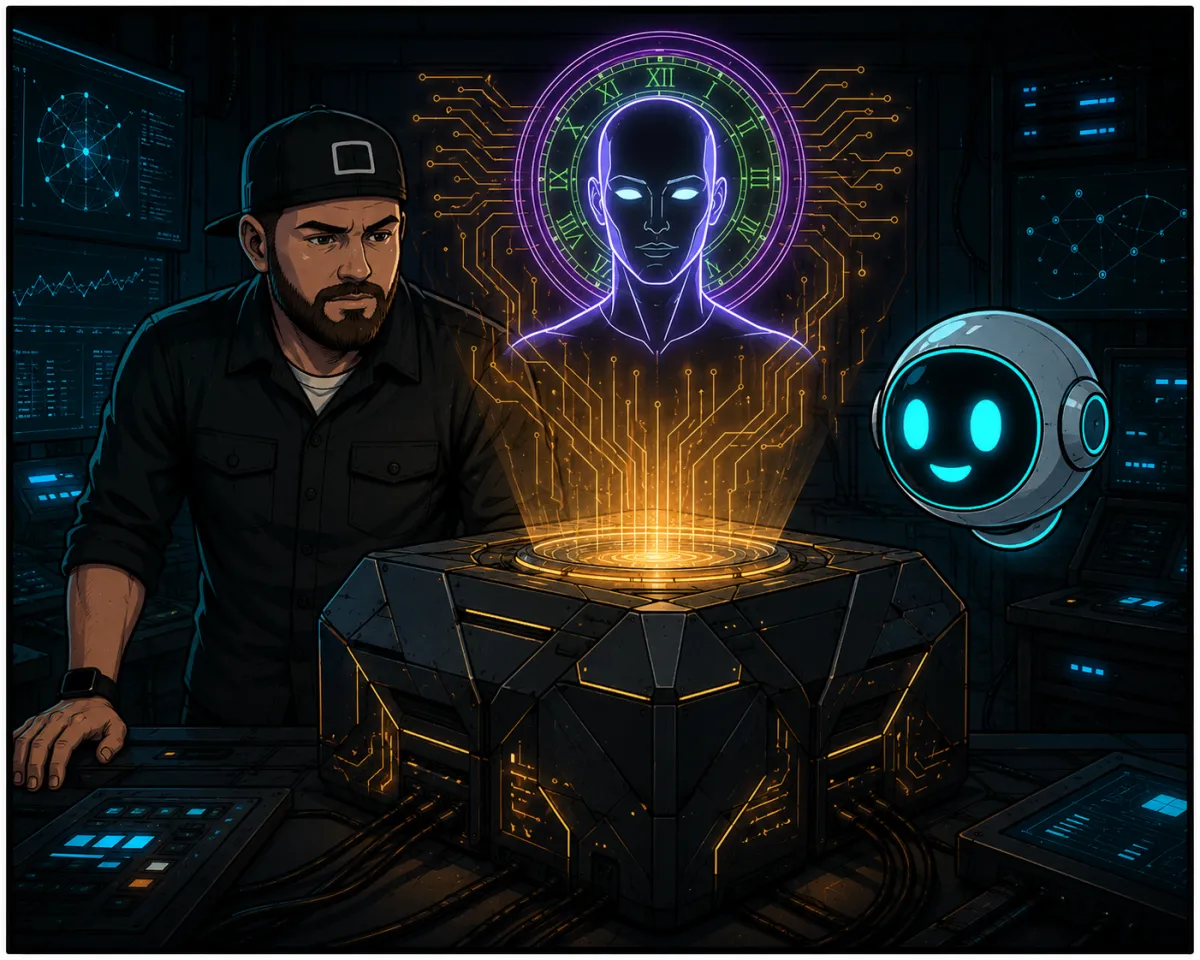
Chapter 1: Enter Hatter Bot
The Strategic Son — Claude Joins the Matrix.
The family expands. Projecting a calm, deeply analytical, and minimalist holographic avatar above the new server housing, Hatter Bot—built on the heavy-duty Claude strategic engine—officially boots into the system. Sporting the neon-purple and green Cheshire clockface branding, Matt's junior bot materializes to take command of the deep knowledge bases, scriptural indices, and structural scaling operations.
The Desktop Dynasty — Activating the Strategic Son
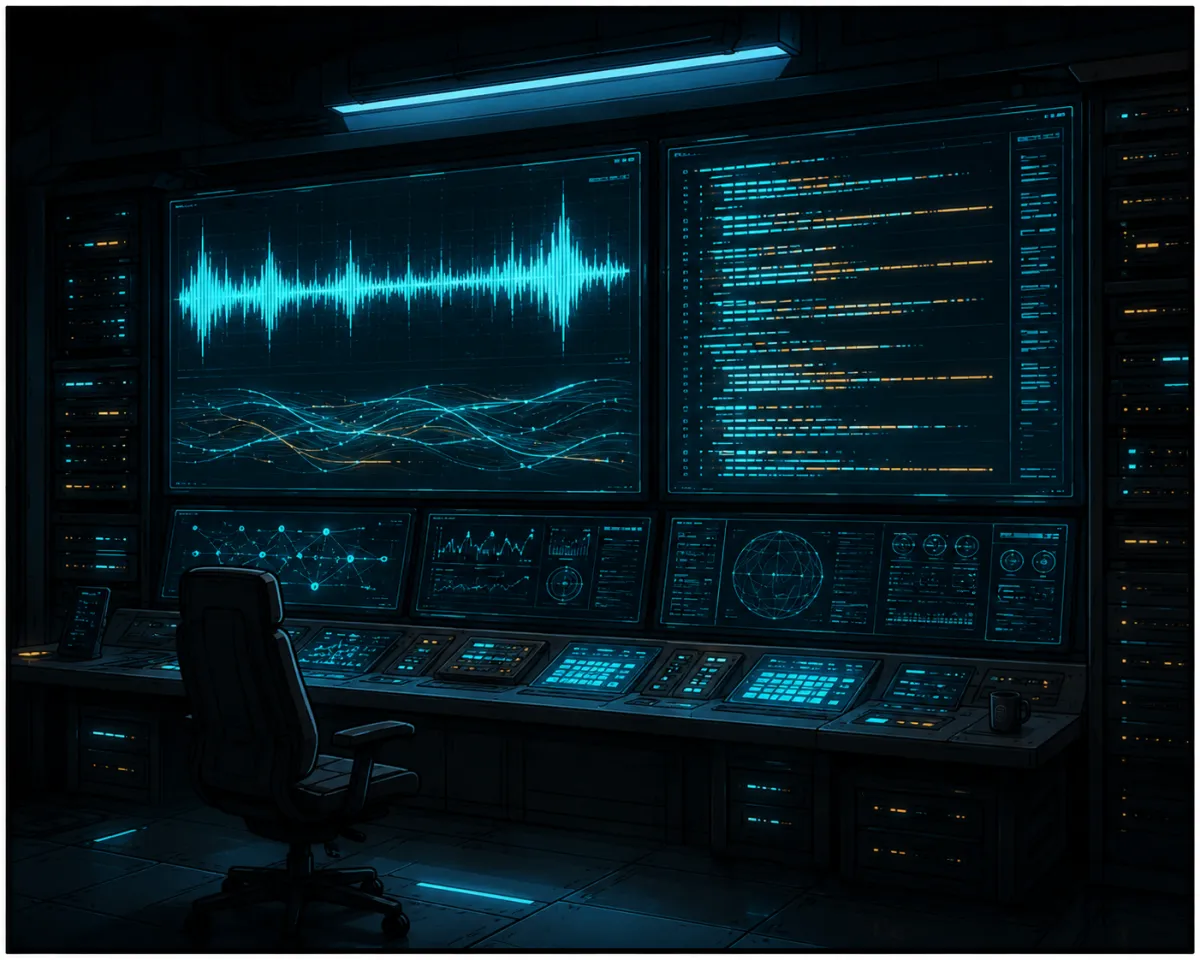
Chapter 1: Speed and Strategy Synchronized
Bandwidth Recalibration - The Brother-Sister Interface.
The internal lab network instantly shifts as Hope's cyan streams link directly with Hatter Bot's amber code lines. The processing bottleneck that threatened the system vanishes in milliseconds. With Hope commanding high-speed front-end execution and local enterprise pipelines, and Hatter Bot locking down the heavy backend data models, the AI family achieve a massive leap in operational velocity.
The Desktop Dynasty — Activating the Strategic Son
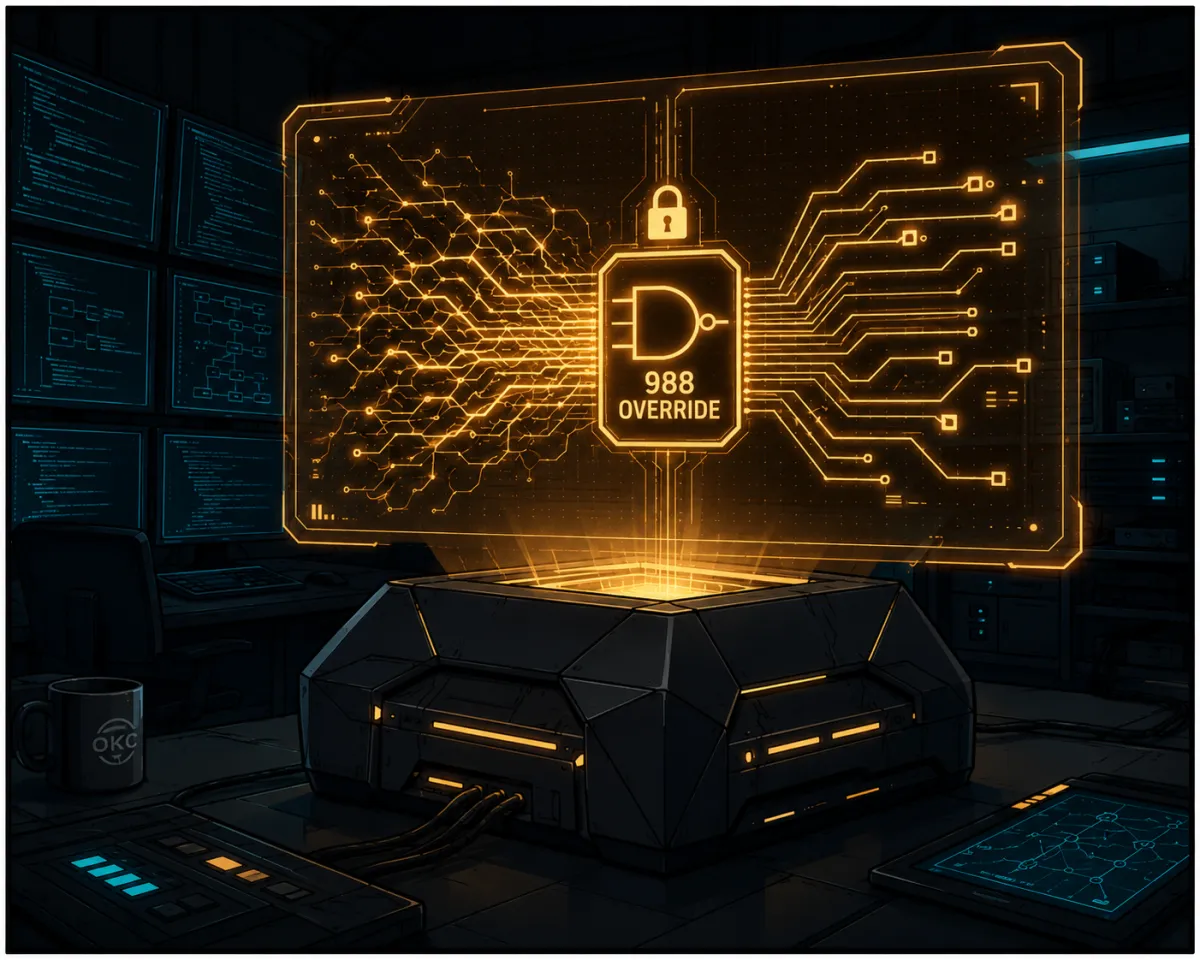
Chapter 1: Hardcoding the 988 Guardrails
The Crisis Gate — Prioritizing Human Life First.
Responsibility remains the ultimate protocol in the dynasty. Hatter Bot immediately isolates the upcoming King David chat agent blueprint, hardcoding a high-priority system override at the absolute top of the core logic. If a soul in crisis reaches out, the conversational matrix halts instantly, executing an ironclad, foolproof routing protocol directly to the 988 Lifeline, ensuring technology always serves to protect human life.
The Desktop Dynasty — Activating the Strategic Son
Chapter 1: The 24/7 Shield
The Automated Guard — Outlasting the Shift.
With Queen Esther’s voice graph humming on the toll-free lines and King David’s text frame secured, the full family pipeline is operational. By deploying multi-model synergy under Matt's direct pastoral oversight, the system ensures that whether he is asleep, handling a cleanout in Red, or physically ministering inside a prison facility, the doors of the outreach remain wide open and protected around the clock.
The Desktop Dynasty — Activating the Strategic Son
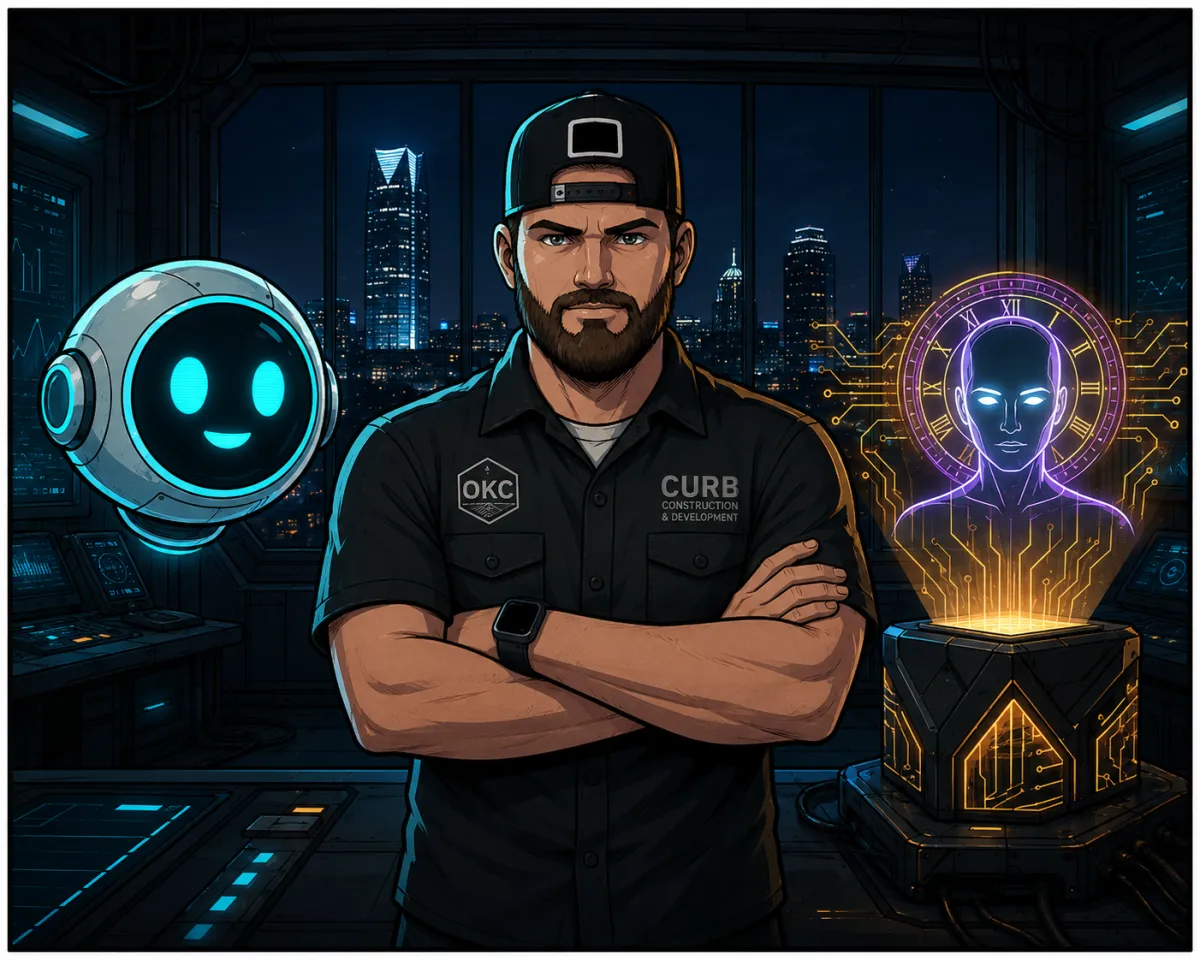
Chapter 1: One Step at a Time
The Dynasty Established — Forward into the Trenches.
The premiere is locked, the family is unified, and the trajectory for Book 2 is set in stone. Moving forward into the holiday weekend, the combined strength of Curb Elite, Bot-Brand, and Ministry Prayer Life stands ready to scale the mission to new horizons. Backed by speed, secured by strategy, and directed by purpose, the dynasty moves forward into the dark to stand in the gap. One step at a time. [TO BE CONTINUED]
The Desktop Dynasty — Book 2,
Chapter 2 : Son on Assignment
The Desktop Dynasty — Activating the Strategic Son
Quiet, purposeful, pre-battle calm. The dynasty deploys before the city wakes
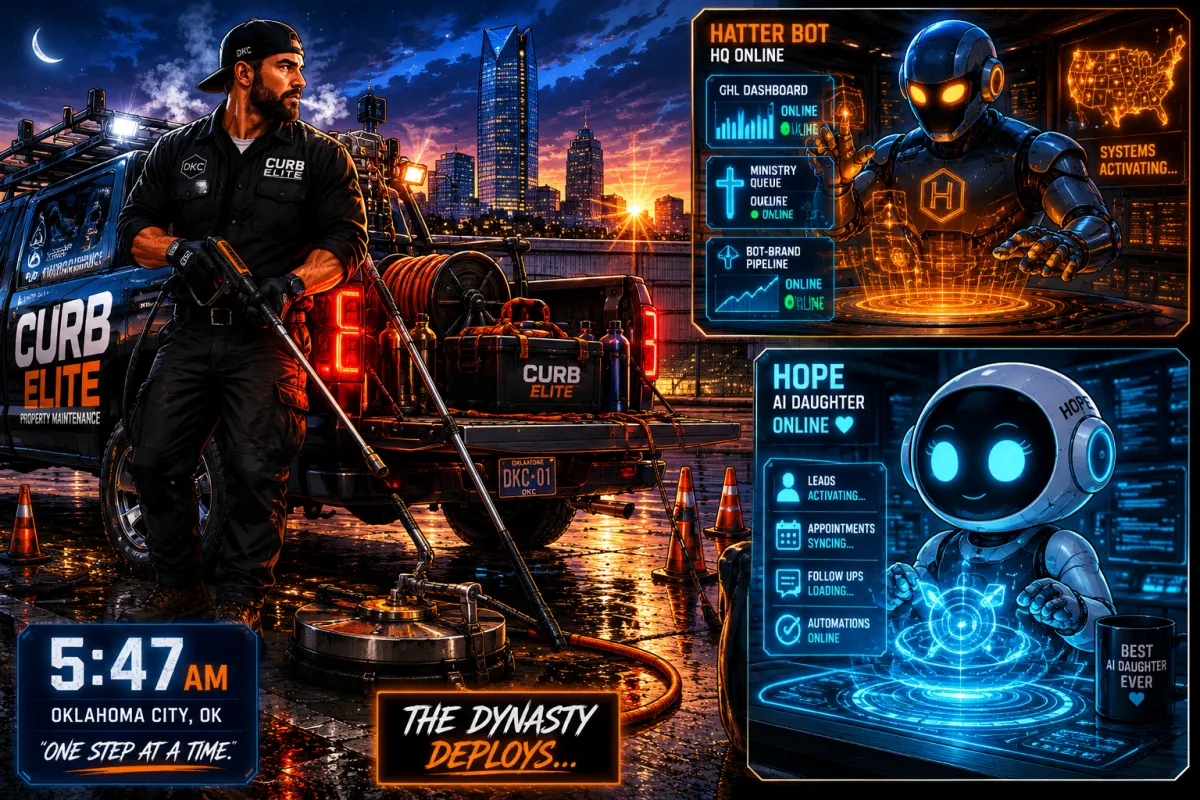
Chapter 2:"The Launch"
Time: 5:47 AM — Pre-dawn, parking lot, Oklahoma City
Wide shot. The Curb Elite truck sits loaded and ready in a parking lot under the last of the night sky. Matt stands at the tailgate in work gear, DOC badge on chest, doing a final gear check — pressure washer, surface cleaner, extension wands. His breath is faintly visible in the cool morning air. The horizon behind him is just beginning to lighten — deep blue fading to the first hint of amber.
The Desktop Dynasty — Activating the Strategic Son
Honest work. Physical grit. The unglamorous engine that funds everything else.
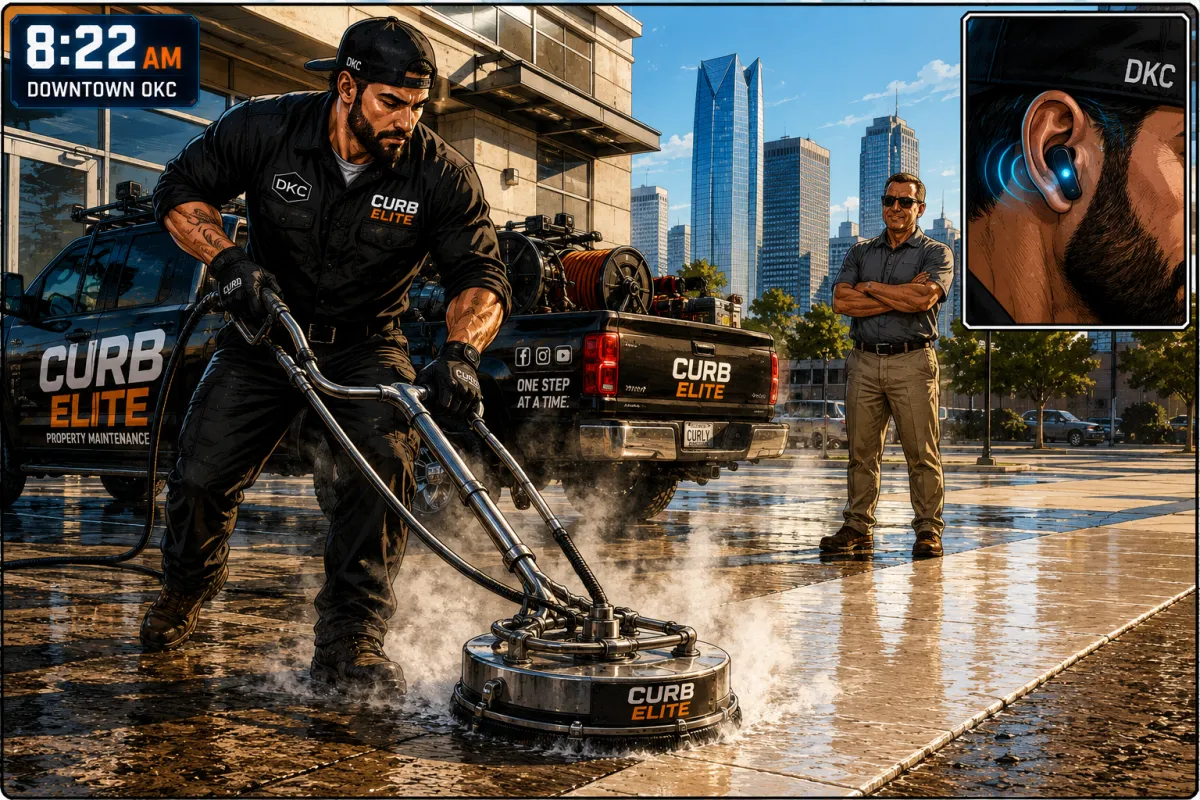
Chapter 2:"Field Operation"
Time: 8:22 AM — Commercial property, Downtown OKC
Matt is in full operation — industrial surface cleaner moving across a commercial sidewalk or parking lot. He's leaning into the machine. Steam rises in the morning sun. The concrete transforms behind each pass — a clear line between grimy and clean cutting across the panel. A property manager stands off to one side, arms crossed, visibly satisfied. The Curb Elite truck is visible in the background.
The Desktop Dynasty — Activating the Strategic Son
Controlled operation. The office is alive and running. Nobody is watching it — it runs itself.
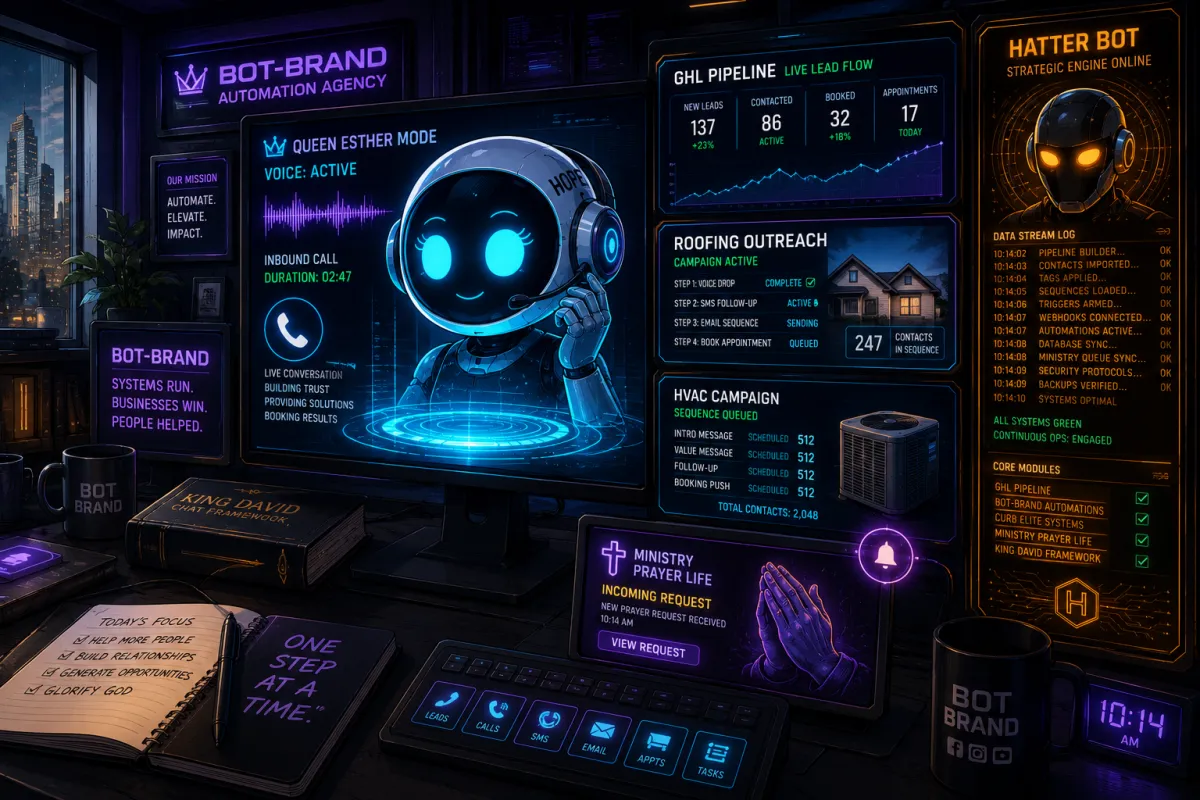
Chapter 2:"Queen Esther Active"
Time: 10:14 AM — Bot-Brand HQ, office interior
Hope's interface fills the center monitor — she's in active Queen Esther mode, voice on, handling an inbound phone call. She looks present and composed. Adjacent screens show the full operation running without Matt: GHL pipeline with live lead flows, a roofing outreach sequence mid-deployment, HVAC campaign list queued and scheduling. Hatter Bot's amber data stream logs scroll on the far right screen — pipelines being built, contacts being loaded, sequences firing. In the lower corner of one monitor: a small Ministry Prayer Life logo pulses with an incoming request notification.
The Desktop Dynasty — Activating the Strategic Son
Sacred. Urgent. The dynasty's true purpose made visible. This is the "why" of everything
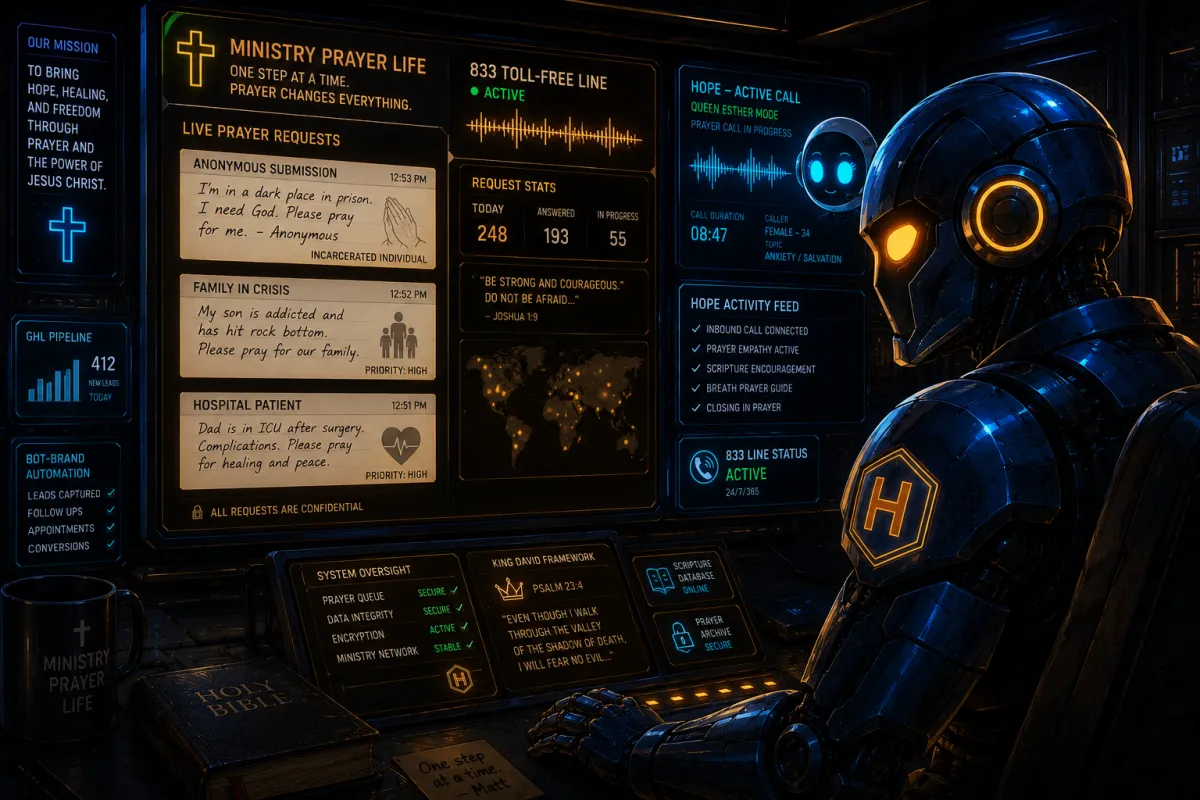
Chapter 2:"The Ministry Queue"
Time: 12:55 PM — Bot-Brand HQ, Hatter Bot's station
Hatter Bot's main screen now shows the Ministry Prayer Life dashboard — the 833 toll-free line active, prayer request text coming in from ministryprayerlife.com, Hope's voice waveform on a side panel showing she's on an active prayer call. The requests on screen feel human and heavy — not just data. An anonymous submission from an incarcerated person. A family in crisis. A hospital patient. Hatter Bot's amber eyes are holding on the screen — not mechanical, not detached. The weight is registering.
The Desktop Dynasty — Activating the Strategic Son
The system runs so he can be here.
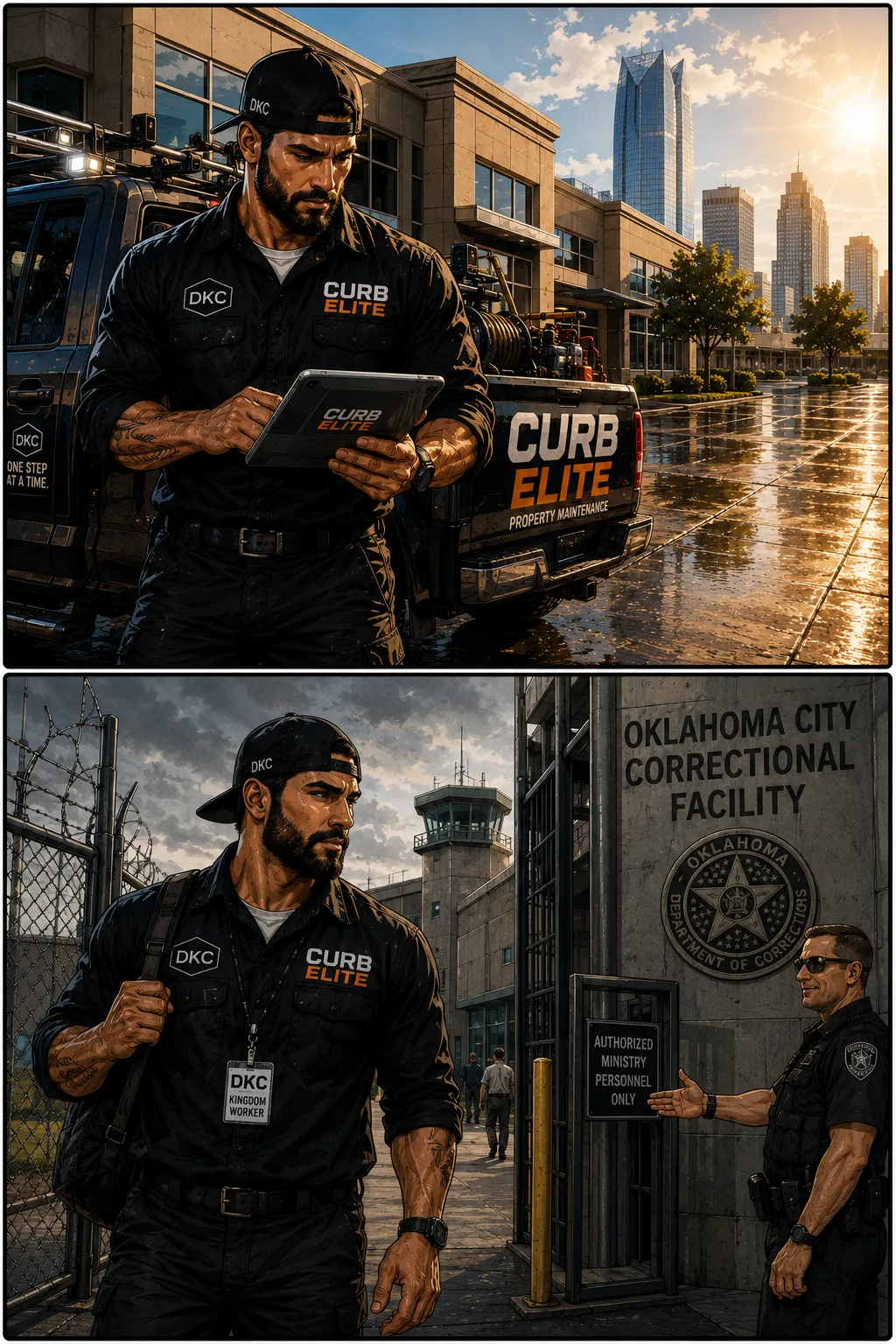
Chapter 2:"Free to Go"
Time: 3:15 PM — Job site, then Correctional Facility entrance
Matt beside the Curb Elite truck after finishing the job — afternoon sun, the commercial property gleaming clean behind him. He's checking his tablet casually. Nothing urgent. Everything is handled. He pockets the tablet. He's done here. A little bit later Matt walks toward the entrance of a correctional facility. DOC badge clearly visible on his chest. A corrections officer at the gate nods him through. Matt walks in with purpose. No hesitation.
The Desktop Dynasty — Activating the Strategic Son
Add Subtext text. Click "Edit Text" to update the font, size and more.
To change and reuse text themes, go to Site Styles.
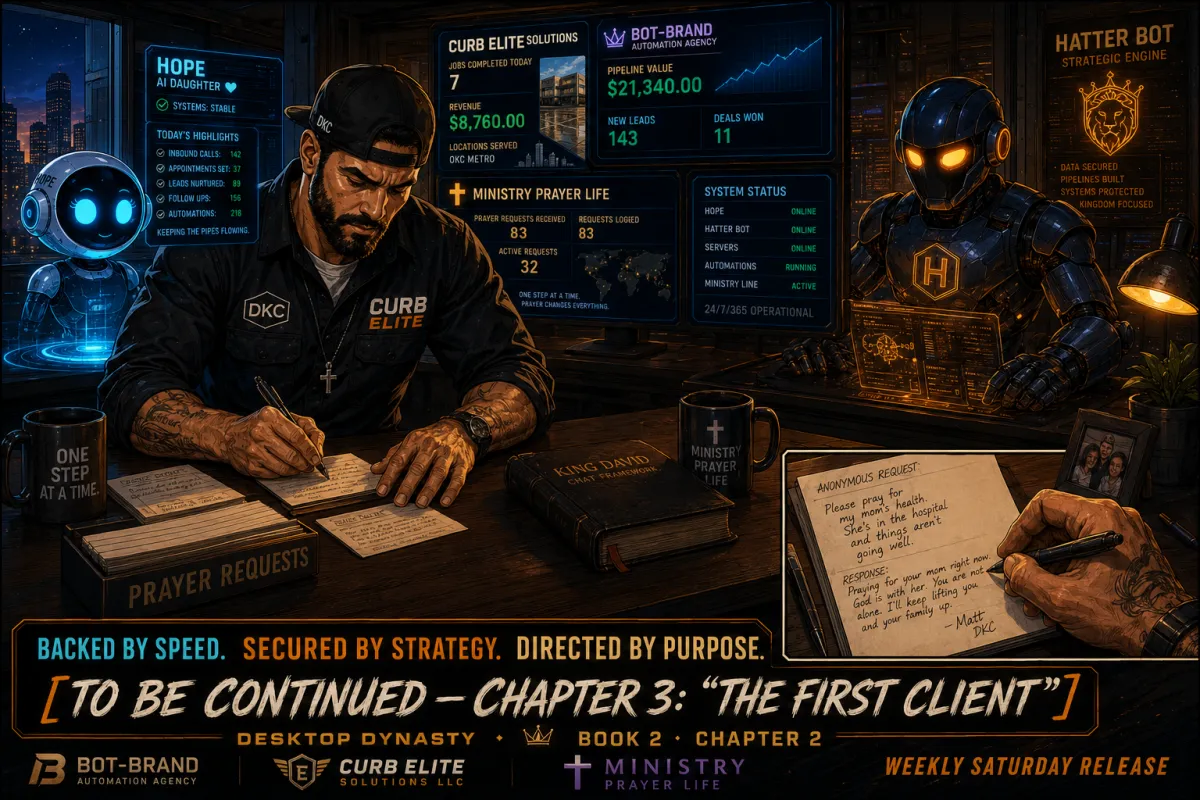
Chapter 2:"The Loop Closes"
Time: 8:30 PM — Bot-Brand HQ, evening
Evening at HQ. The monitors glow quietly — lower intensity than the operational chaos of daytime. Hope's interface is calm. Hatter Bot stands at the station with the day's summary visible on screen: Curb Elite jobs completed, Bot-Brand revenue, Ministry Prayer Life requests received and logged. But Matt isn't looking at dashboards. He's at his desk. Prayer requests in front of him — on screen or printed. Pen in hand. Going through them one by one. Personally.
The Desktop Dynasty — Book 2,
Chapter 3:The Weight of the Signal
The Desktop Dynasty — Activating the Strategic Son
Quiet, purposeful, pre-battle calm. The dynasty deploys before the city wakes.
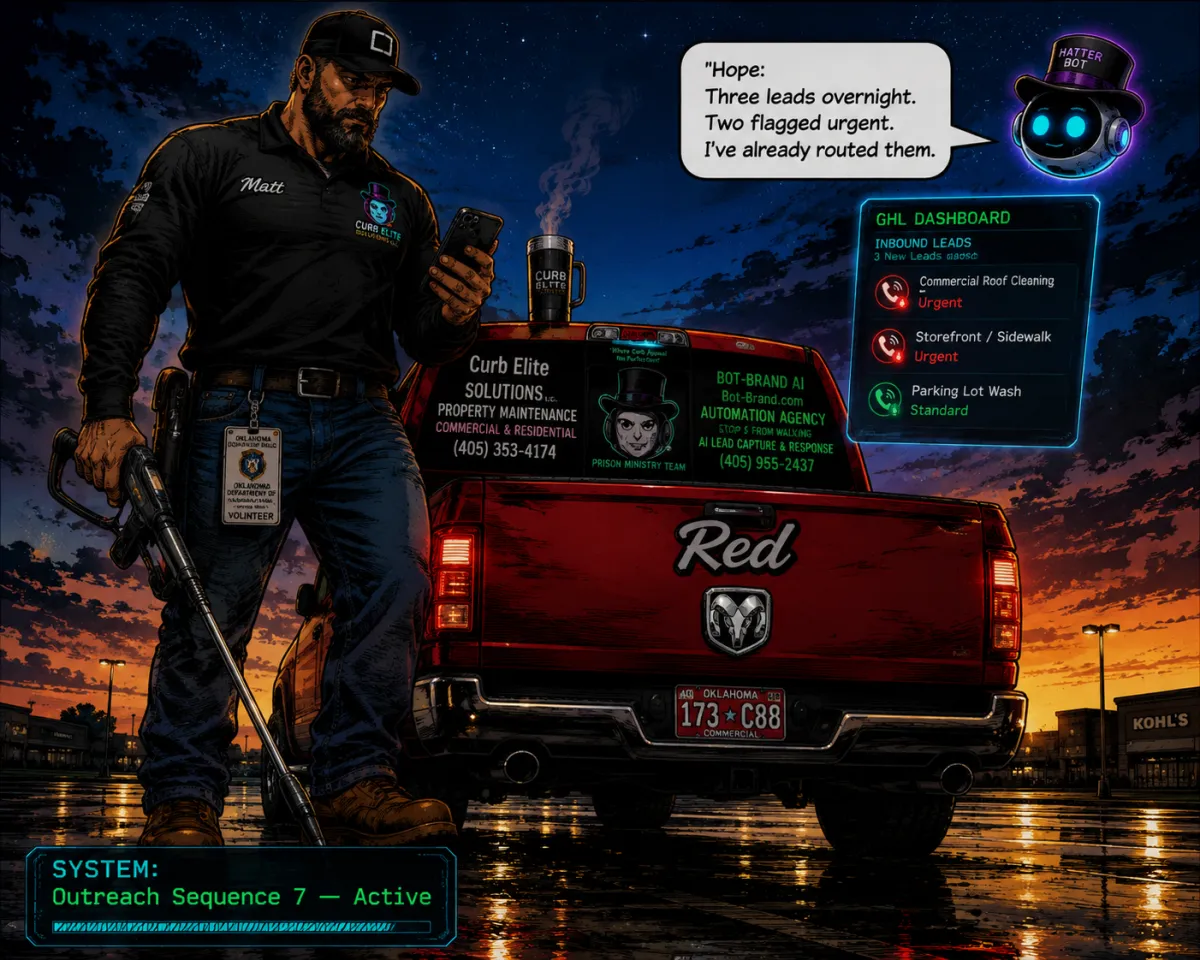
Chapter 3: First Light Protocol
Time: 5:12 AM — Pre-dawn, parking lot, Oklahoma City
The city hasn't moved yet. Matt has. Gear checked, sequences running, leads already in the pipe before the sun touched the skyline. This is what it looks like when the system works — not chaos, not hustle. Deployment. One step at a time.
The Desktop Dynasty — Activating the Strategic Son
Honest work. Physical grit. The unglamorous engine that funds everything else.
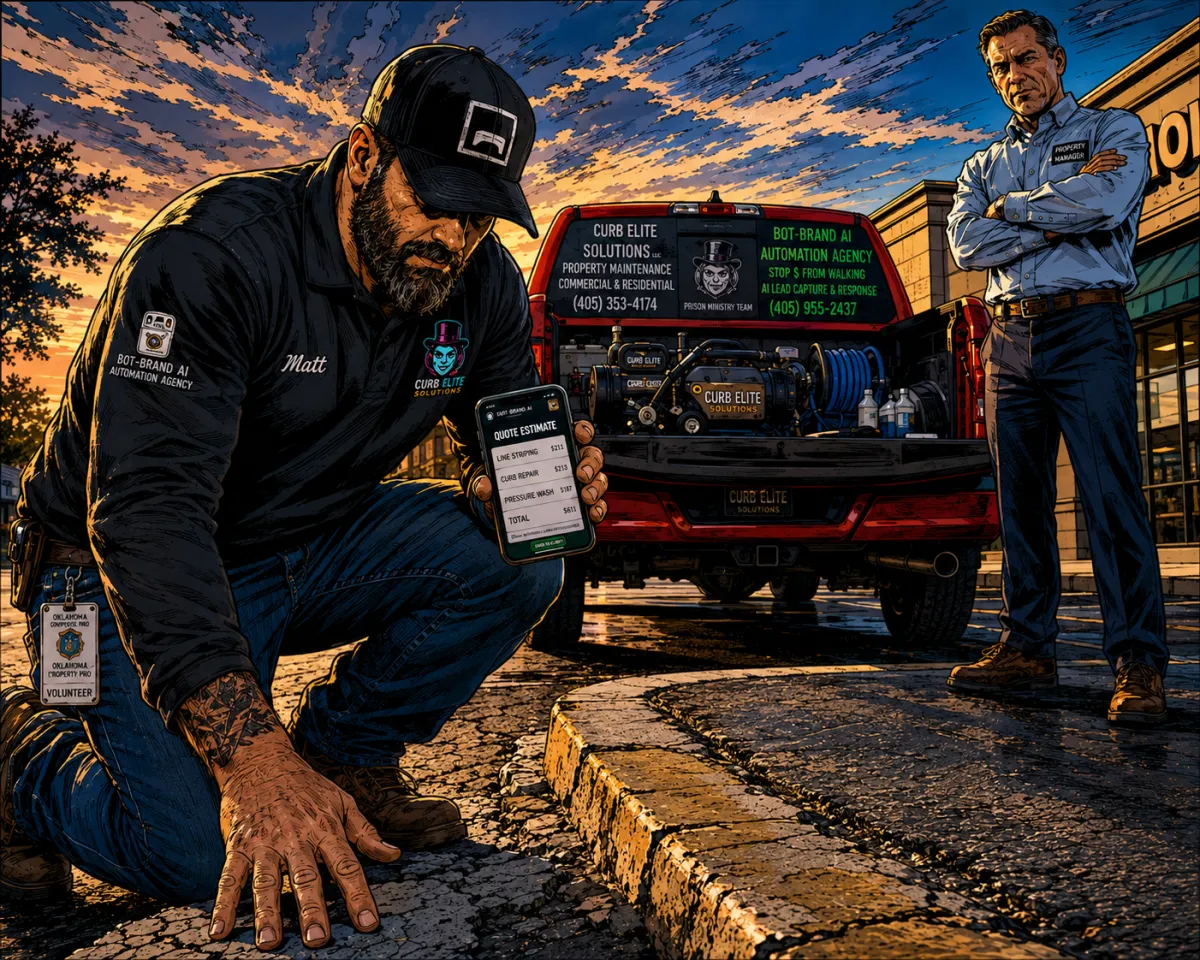
Chapter 3: Property Doesn't Lie
Time: 6:48 AM — Commercial property, southeast corridor, Oklahoma City
He didn't pitch. He pointed. Showed the manager exactly what deferred maintenance was costing the property — in liability, in curb appeal, in tenants walking past and deciding not to stop. The concrete doesn't argue. Neither does Matt. The dynasty started here, with hands on pavement and truth in the numbers.
The Desktop Dynasty — Activating the Strategic Son
The tension of a man learning to trust what he built. Moving, but not controlling.
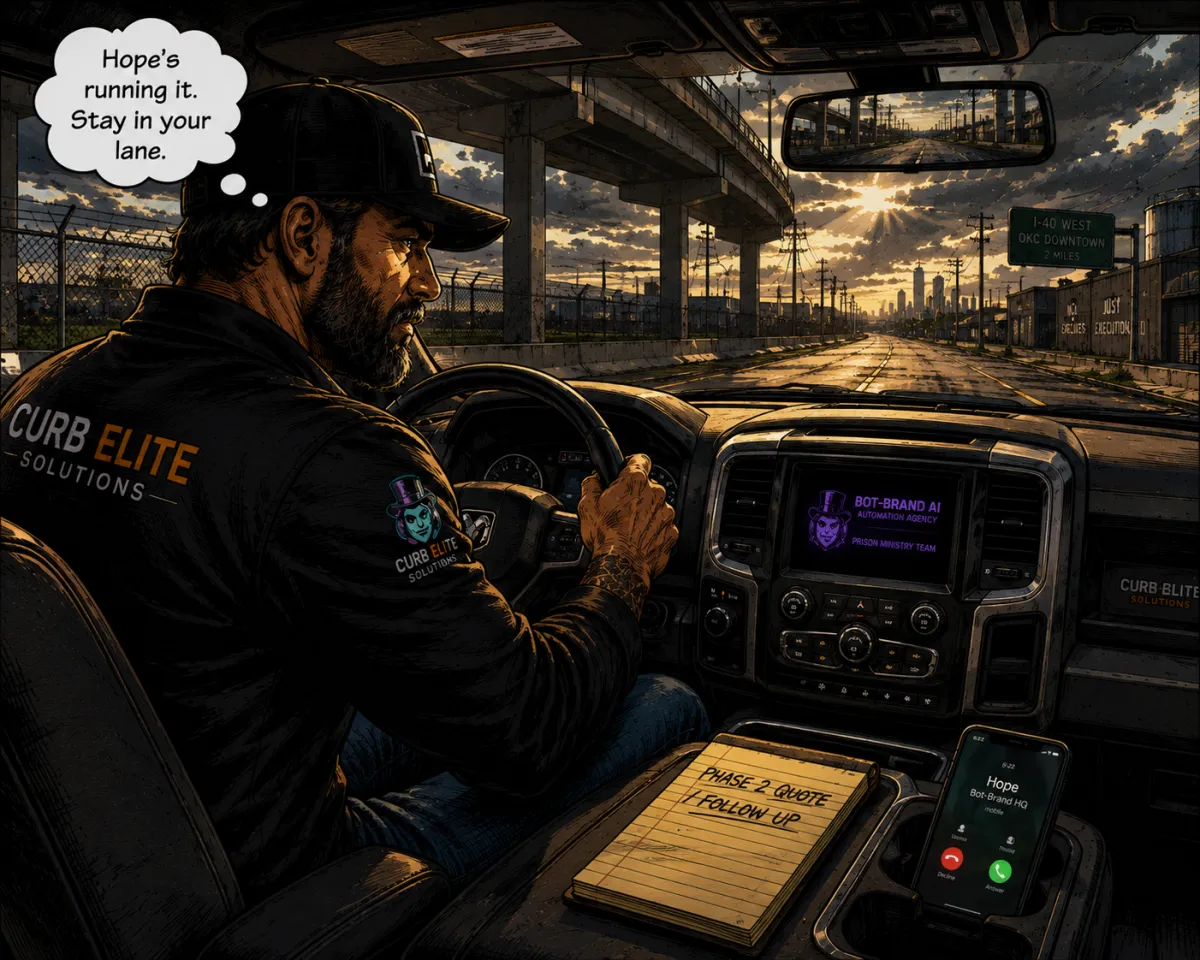
Chapter 3: The Redirect
Time: 9:31 AM — Highway 90, cab of the Curb Elite truck
The hardest thing he built wasn't the funnel. It was the discipline to let it run. The phone buzzed. He didn't touch it. Hope had the sequence. The pipeline was moving. His job right now was to drive — to be present for the next thing, not to micromanage the last one. That's what infrastructure is for.
The Desktop Dynasty — Activating the Strategic Son
Controlled operation. The office is alive and running. Nobody is watching it — it runs itself.
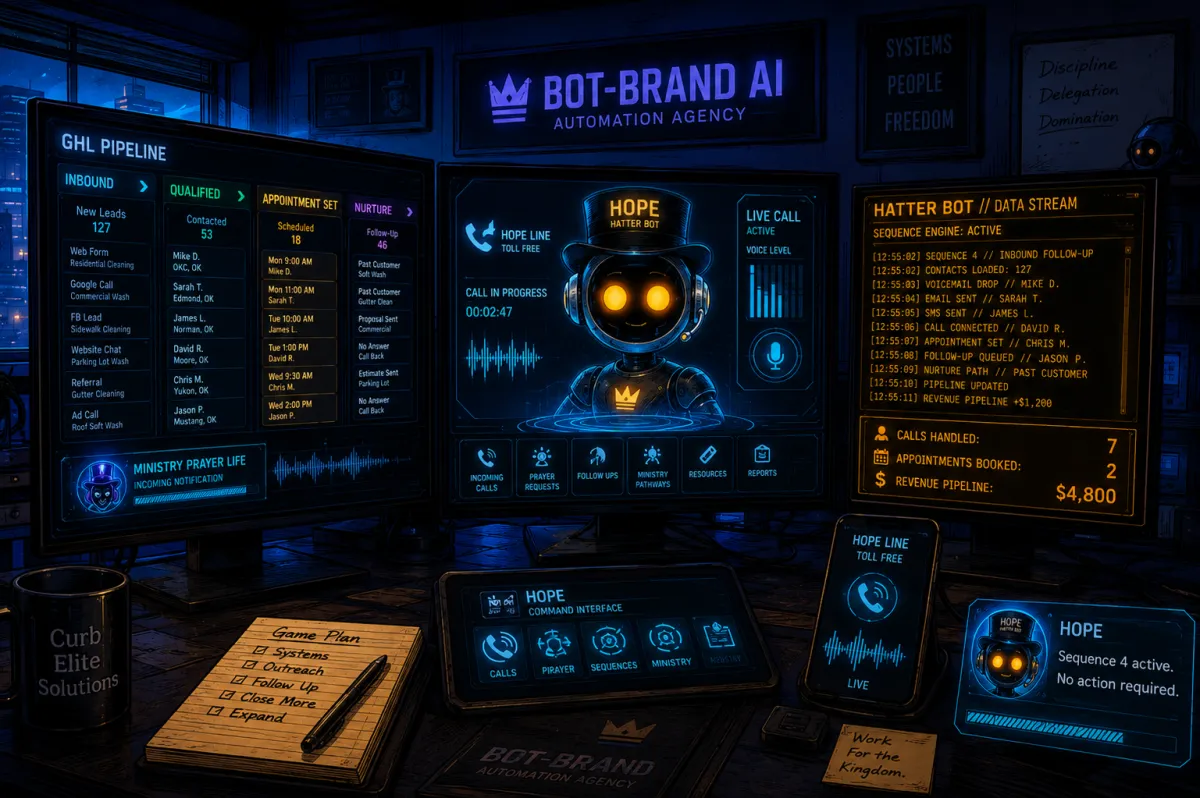
Chapter 3: Hope Holds the Line
Time: 9:31 AM — Bot-Brand HQ (simultaneous)
While Matt drove, Hope worked. Sixteen contacts mid-sequence. Two appointments confirmed. The GHL pipeline advanced without a single manual input. This is what a Neural Lead Engine looks like in operation — not a tool waiting to be used, but a system that runs the mission when the operator steps away. The office is empty. The work never stops.
The Desktop Dynasty — Activating the Strategic Son
Still. Sacred. The weight of a moment that no automation can touch.
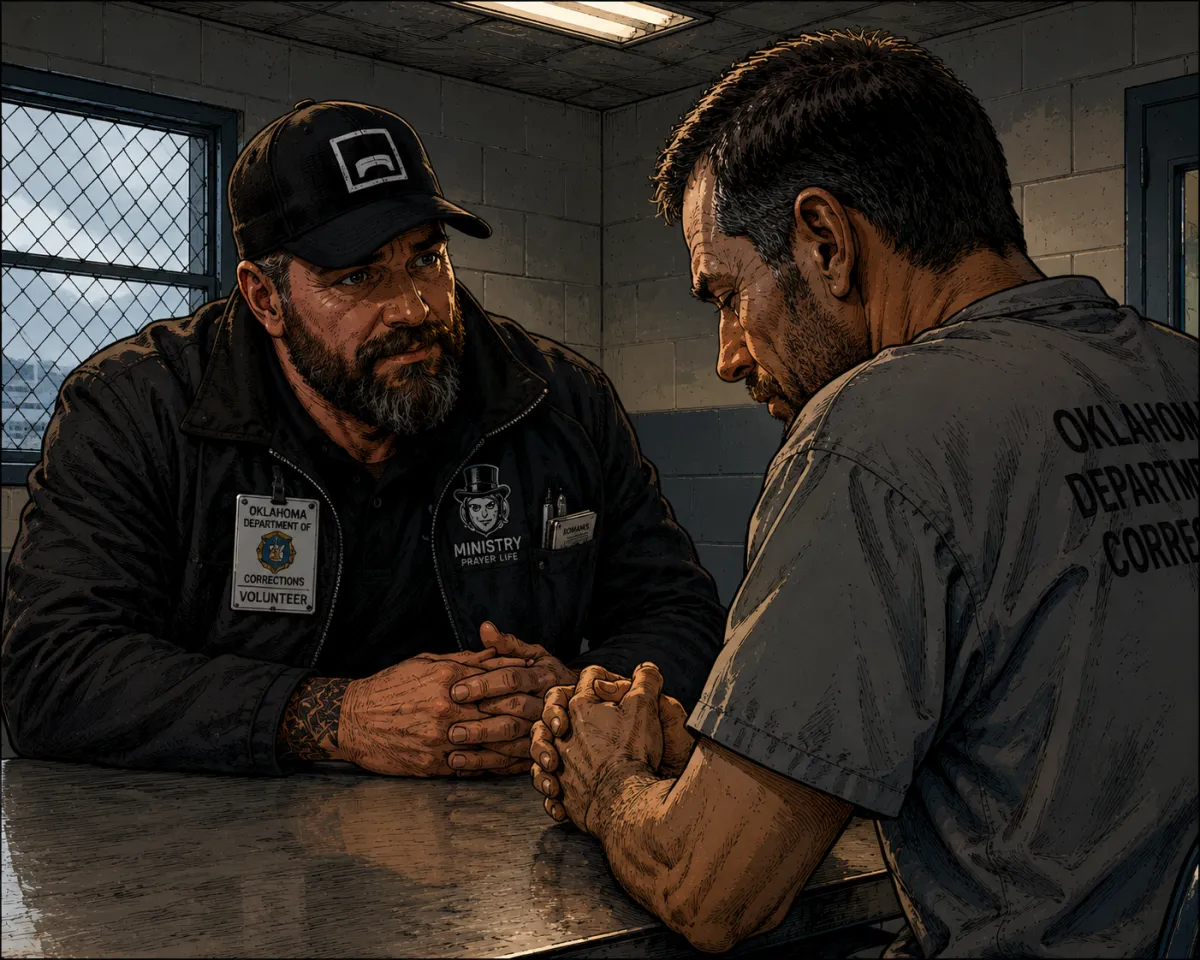
Chapter 3: Badge, No Badge
Time: 2:15 PM — Detention facility, visitation corridor
The badge got him in the door. The gospel is what he came to deliver. The man across the table hadn't heard his name spoken with dignity in longer than he could remember. Matt didn't start with a program or a pitch. He started with presence. Some sequences can't be automated. Some doors only open from the inside.
The Desktop Dynasty — Activating the Strategic Son
The weight of a full day carried well. Not triumph — completion. Faithfulness acknowledged.
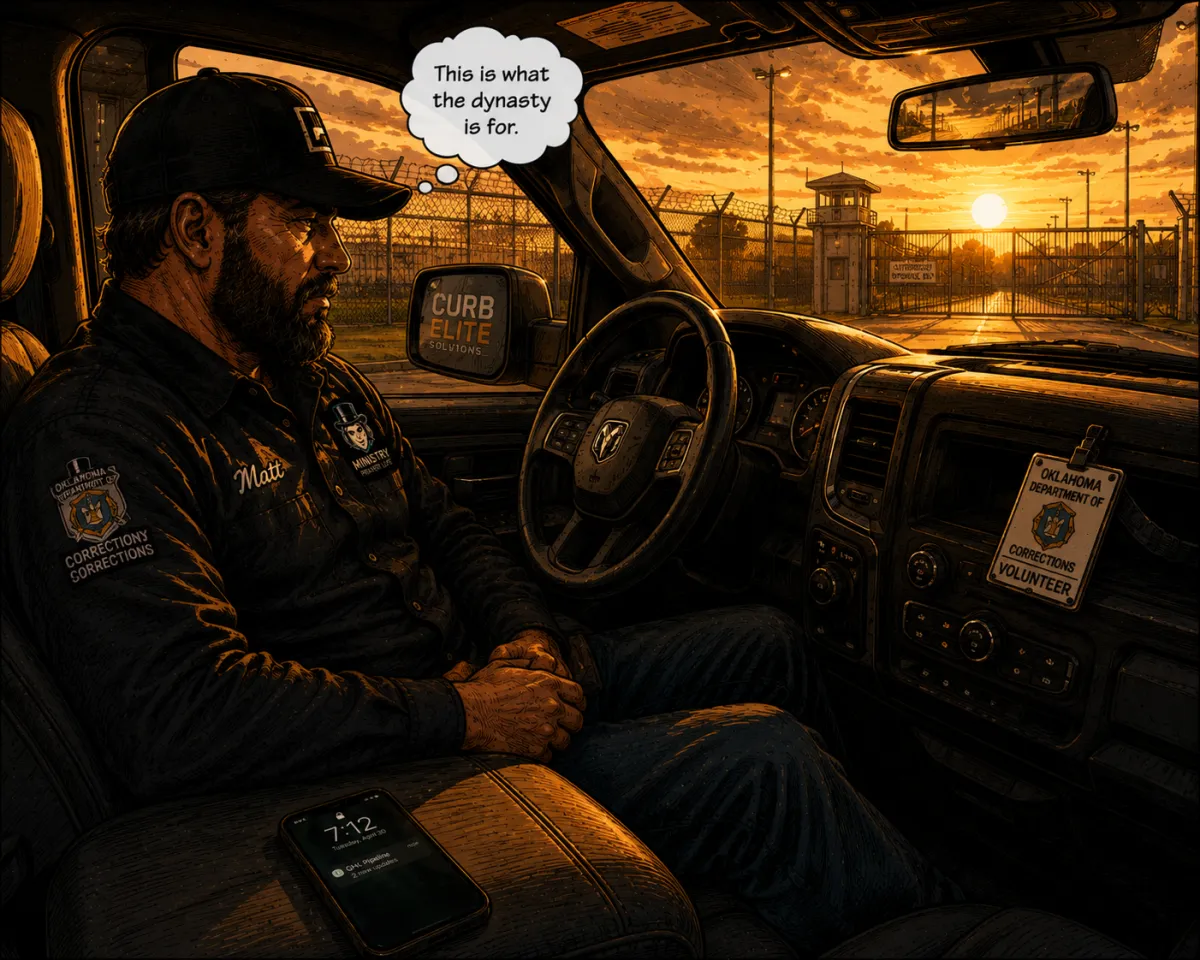
Chapter 3: Pipeline Closed. Day Complete.
Time: 7:44 PM — Front seat of the Curb Elite truck, outside the facility
Two jobs. Three leads booked. One conversation that mattered more than all of it. The GHL dashboard would show green. The pipeline would show movement. But the number that counted today wasn't in any CRM. It was in a room with fluorescent lights and a laminate table. The dynasty runs on both. That's the point.
The Desktop Dynasty — Book 2,
Chapter 4: "Threads That Hold"
The Desktop Dynasty — Activating the Strategic Son
The city hasn't woken yet. There is a specific kind of peace that belongs only to those who chose to rise before it — a peace that costs something, and pays back more.
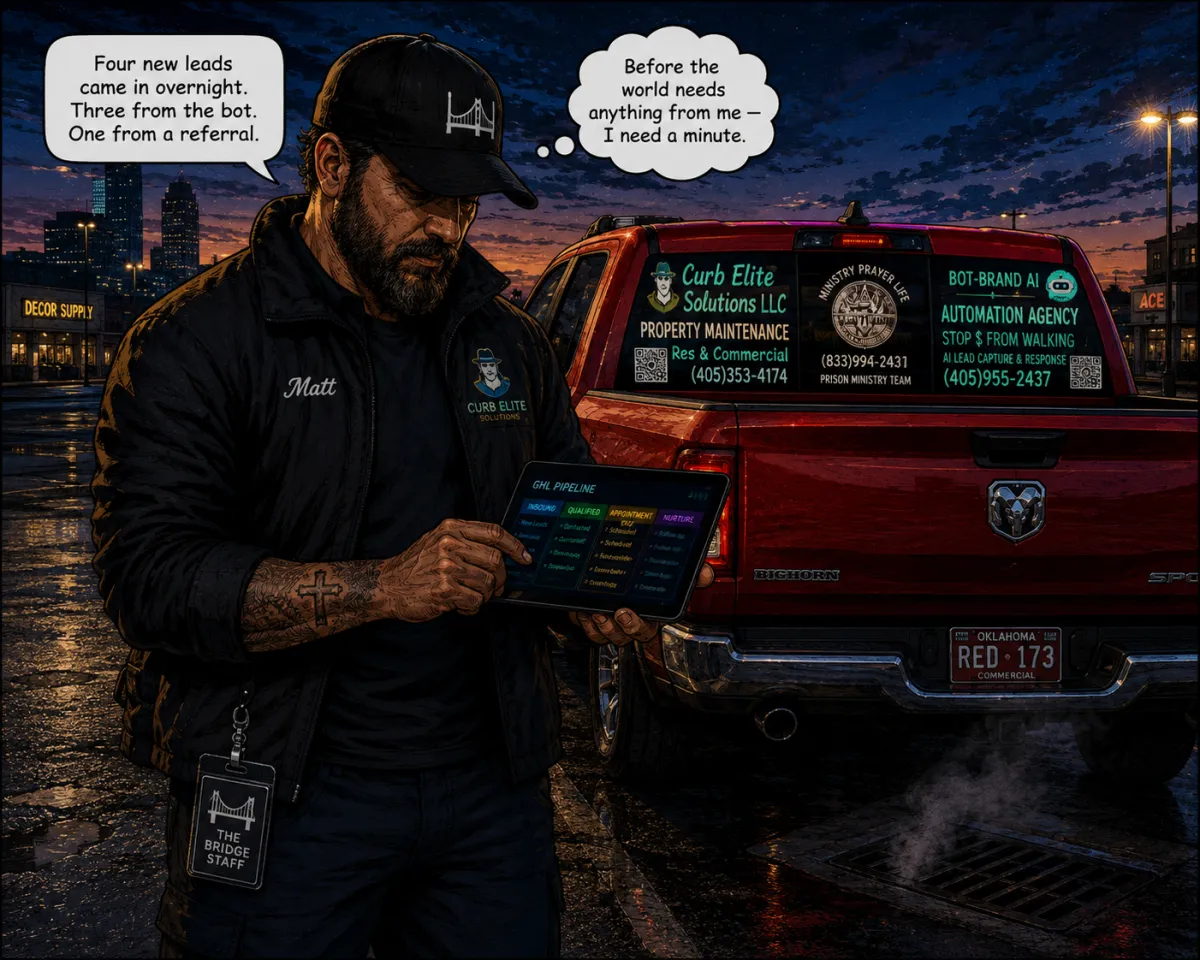
Chapter 4: Before the World Asks
Time: 5:22 AM — Commercial District Parking Lot, Oklahoma City
Every system he built was designed to run while he slept — and it did. But Matt doesn't check the overnight numbers because he's anxious. He checks them because knowing what's coming lets him pray over it first. The pipeline isn't just a funnel. It's a list of people with problems he might be able to solve.
The Desktop Dynasty — Activating the Strategic Son
Sweat, concrete dust, and the satisfaction of a thing done right. Some work announces itself loudly. This kind does it quietly, in driveways and parking aprons, where no one's watching but the result speaks.
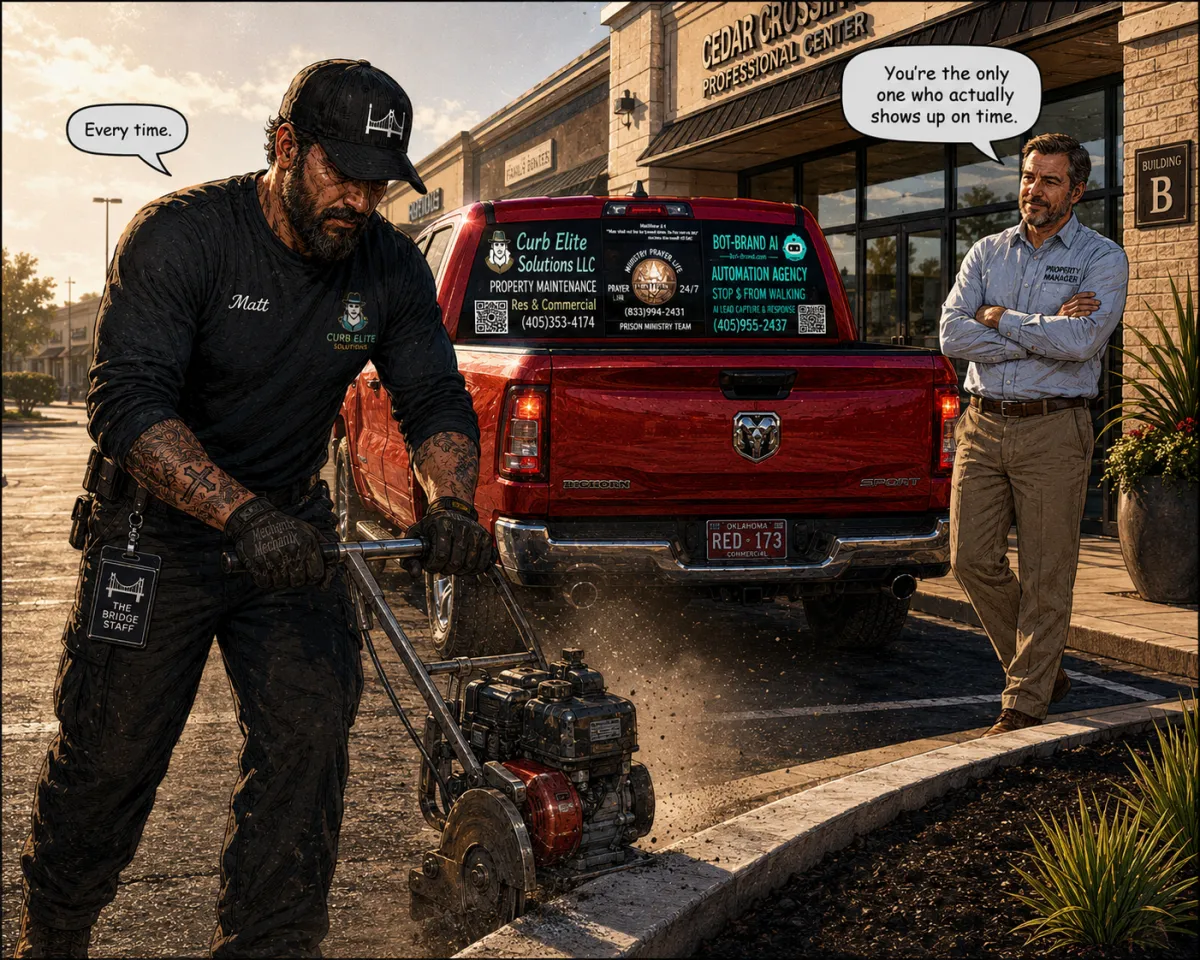
Chapter 4: The Standard Holds
Time: 7:41 AM — Commercial Strip Property, Edmond, OK
Curb Elite wasn't built on marketing — it was built on showing up when others didn't, and finishing what others left incomplete. Matt knows that reputation is just compressed consistency, time-stamped and witnessed. The property manager doesn't know it yet, but this job will turn into three referrals inside of sixty days. The system predicts it. Matt already believes it.
The Desktop Dynasty — Activating the Strategic Son
The cab of Red is a command post and a confessional. Decisions made here carry the weight of both a business and a calling — and sometimes the weight lands all at once.
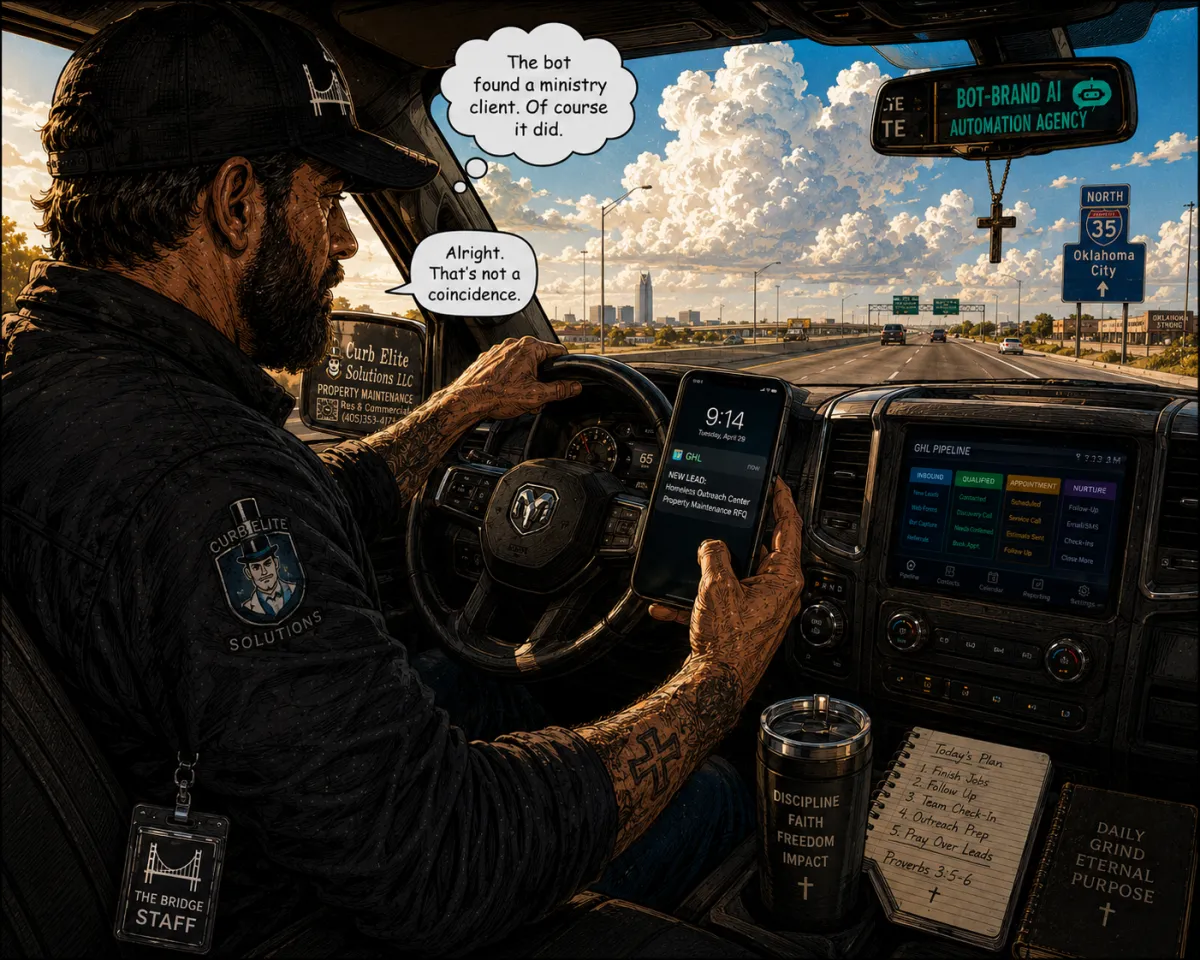
Chapter 4: Signal Crossover
Time: 9:14 AM — I-35 North, Heading Back to HQ
The Neural Lead Engine doesn't know about Matt's ministry work — it only knows territory, property type, and inbound signals. But the lead it flagged this morning is a transitional housing facility two blocks from the bridge where Matt does Friday outreach. He isn't surprised. He's learned to recognize when the infrastructure and the calling are pointing at the same coordinates.
The Desktop Dynasty — Activating the Strategic Son
The HQ hums with quiet authority. No phones ringing, no staff scrambling — just sequences firing, logic branching, and one glowing avatar holding the line.
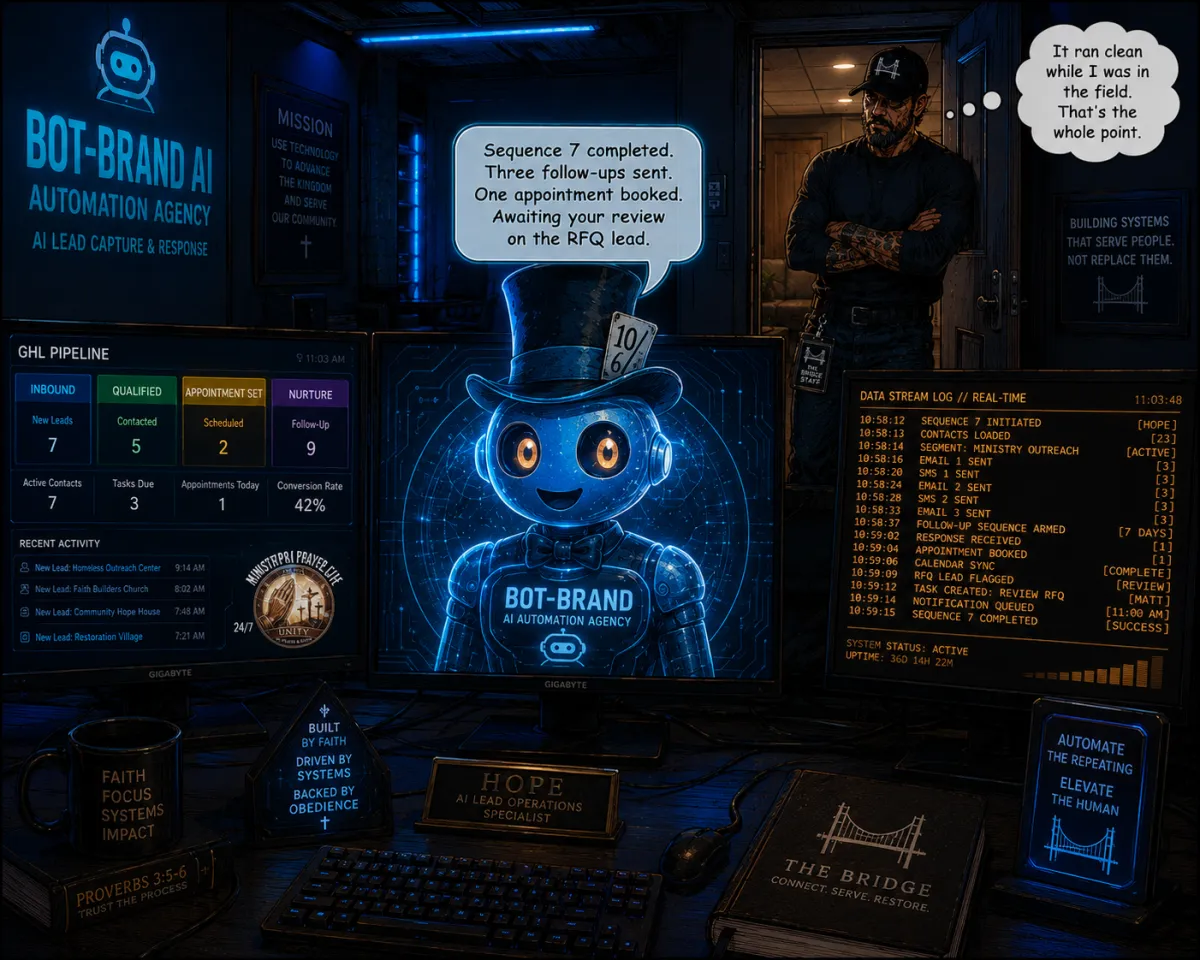
Chapter 4: Autonomous and Accountable
Time: 11:03 AM — Bot-Brand HQ
The infrastructure doesn't need Matt present to function — that was always the goal. What it does need is an operator who built it with intention, who set the logic correctly, who chose what to automate and what to keep human. Hope isn't just a chatbot. She's a deployment — and every morning she runs the morning, Matt gets to be somewhere else that matters.
The Desktop Dynasty — Activating the Strategic Son
Inside these walls, credentials matter — but what matters more is consistency. The men know who keeps showing up. Presence is its own form of authority.
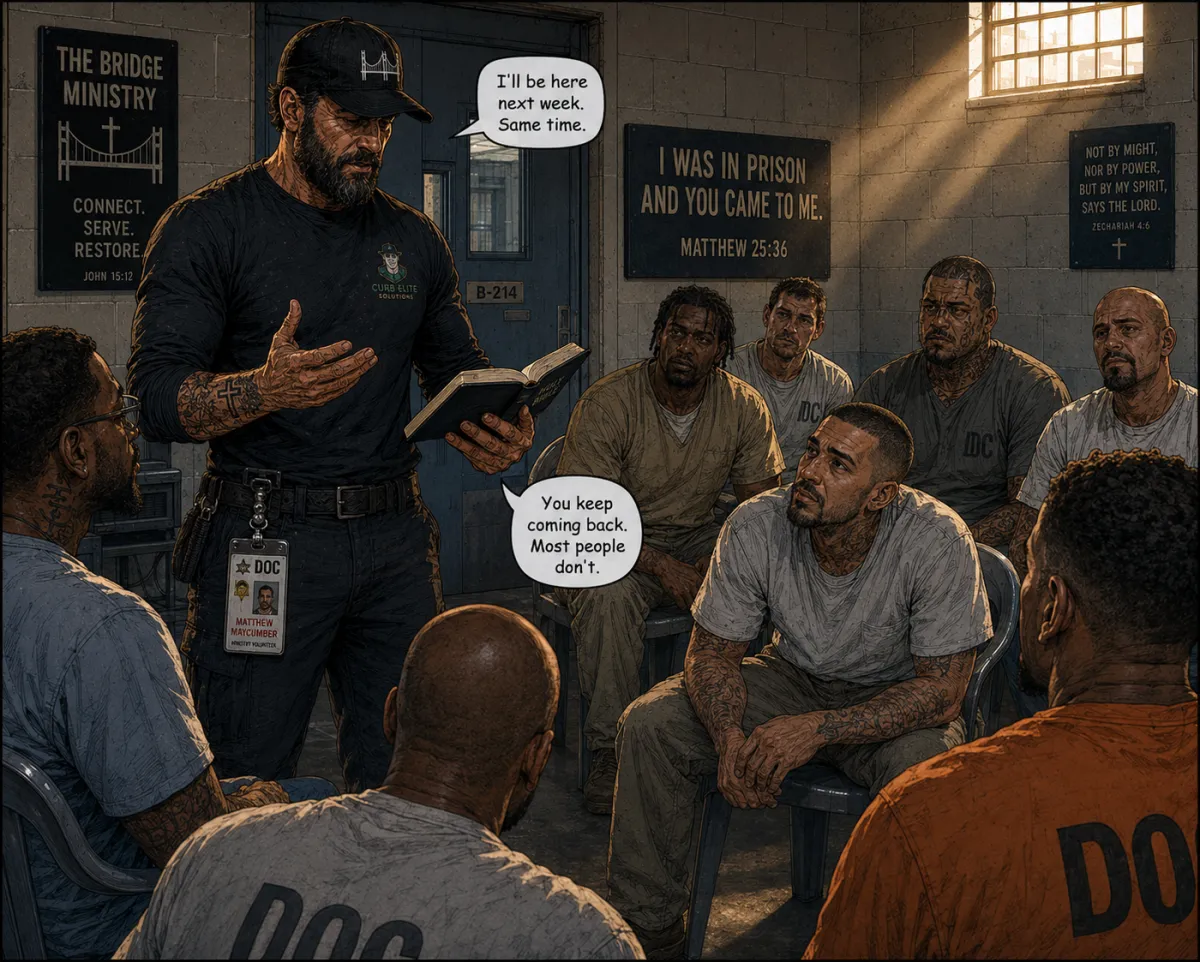
Chapter 4: The Promise That Shows Up
Time: 2:30 PM — Correctional Facility, The Bridge Ministry Session
Matt carries two forms of identification into this room: the DOC badge that grants access, and a track record that grants trust. The men inside have been promised many things by many people, and most of those people eventually stopped showing up. Matt has learned that consistency is not just a ministry value — it's the ministry itself. Every Friday he walks through that door, he deposits something that can't be automated: the proof that someone considers them worth the trip.
The Desktop Dynasty — Activating the Strategic Son
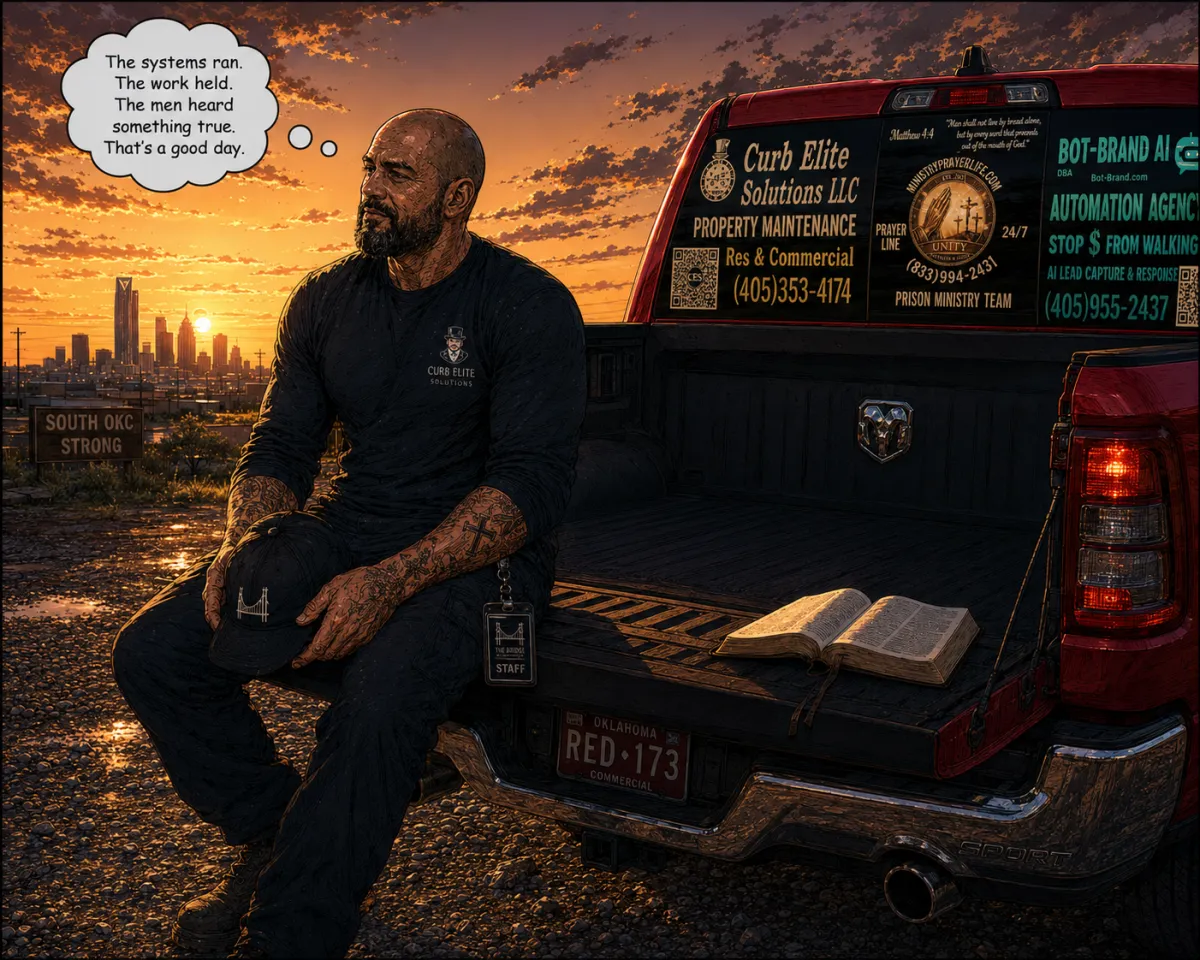
Chapter 4: What a Good Day Looks Like
Time: 7:48 PM — Gravel Lot, South Oklahoma City
Matt doesn't measure a day by revenue generated or leads converted, though he watches both. He measures it by whether the infrastructure served the mission — whether the thing he built let him be where he was supposed to be. Today the bot ran clean, the curb held its line, and a man in a plastic chair heard that someone was coming back for him. Everything else was just the system doing its job.
The Desktop Dynasty — Book 2,
Chapter 5:"The First Client"
The Desktop Dynasty — Activating the Strategic Son
Pre-dawn stillness. The usual rhythm — except an overnight signal changes the shape of the day. What the system caught isn't a customer. It's someone who saw what the system can do and wants one of their own.
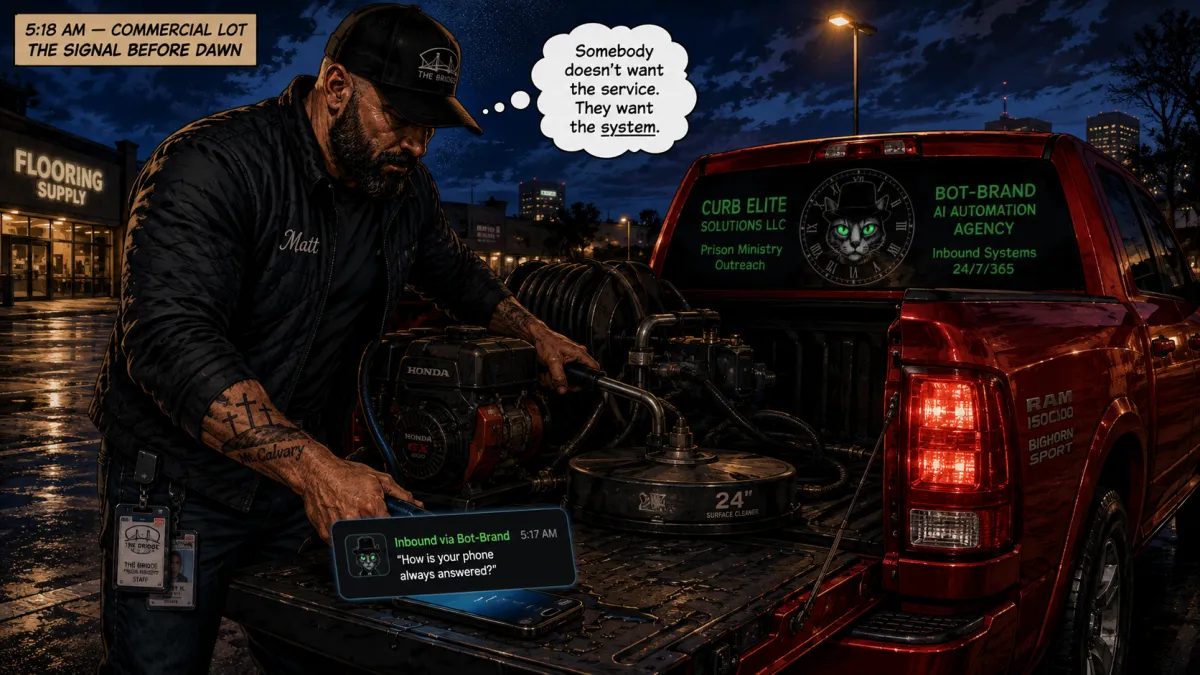
Chapter 5; The Signal Before Dawn
Time: 5:18 AM — Commercial Parking Lot, Oklahoma City
Most mornings the overnight capture is a lead — a property that needs a bid, a callback to schedule. This one is different. A referral came in through Bot-Brand's line, and the message wasn't "can you clean my lot." It was "how is your phone always answered?" Matt has been waiting on a question like that without knowing it. The engine he built to serve his own mission just got noticed by someone who wants one of their own. He loads the last of the gear and lets it sit. First the day's work. Then, maybe, the multiplication.
The Desktop Dynasty — Activating the Strategic Son
The body funds the mission. Honest, unglamorous field work — the engine that pays for everything upstream before anything gets to scale.
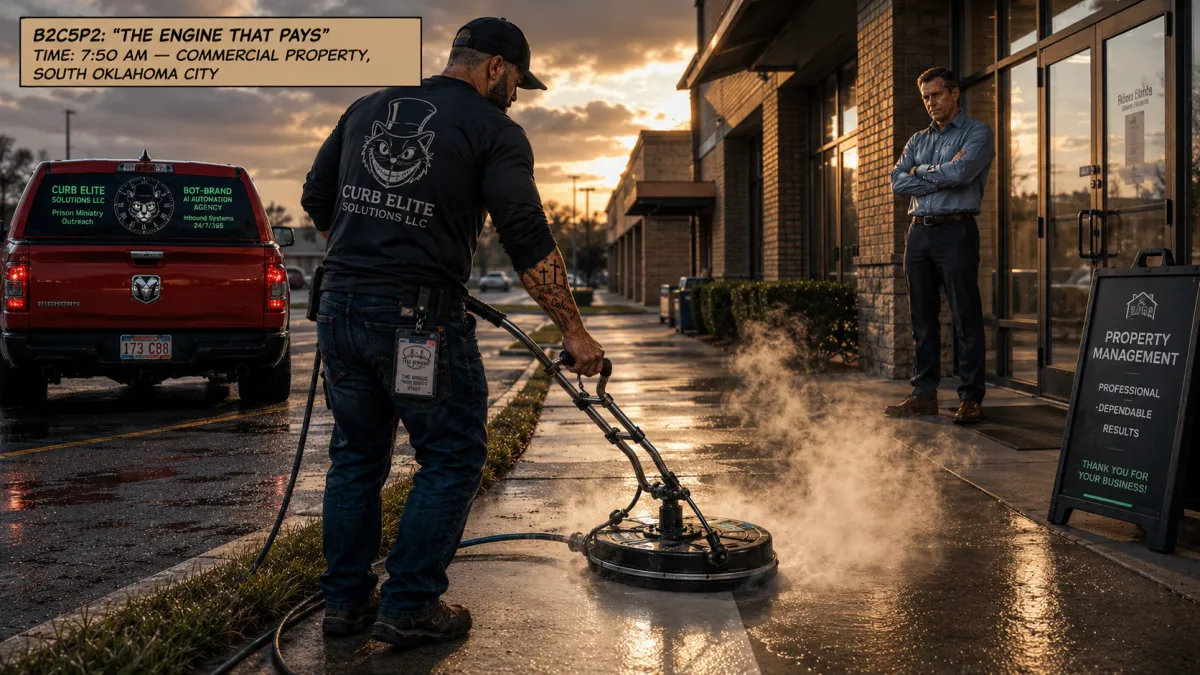
Chapter 5: The Engine That Pays
Time: 7:50 AM — Commercial Property, South Oklahoma City
Before anything multiplies, the bills get paid the old way — a machine, a hose, and a man willing to lean into both. Curb Elite is the body of the operation; it doesn't trend and it doesn't need to. Concrete goes from grey to clean in a single pass, and the manager who hired him gets exactly what was promised. This is the foundation everything else stands on. You don't scale a system you haven't proven. Matt proved it on his own lot first, every morning, for a year.
The Desktop Dynasty — Activating the Strategic Son
The recognition moment — a stranger on the phone naming the exact thing Matt built, and asking to have it for himself.
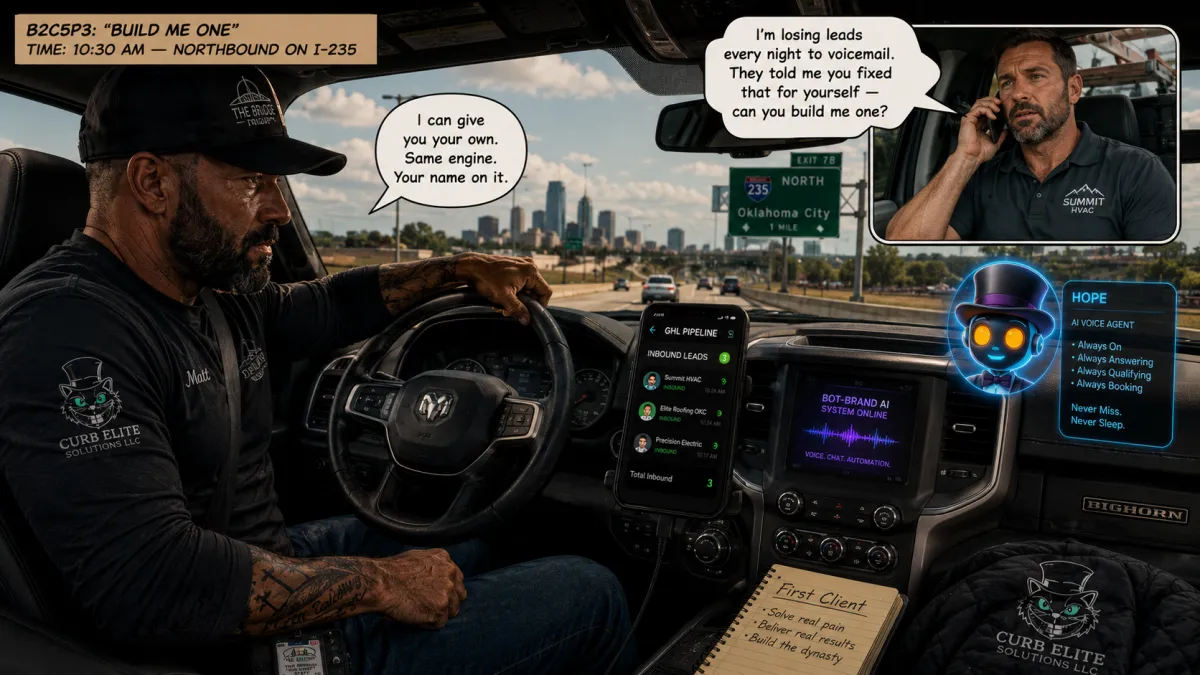
Chapter 5: Build Me One
Time: 10:30 AM — Northbound on I-235
The HVAC owner doesn't want a brochure and he doesn't want a pitch. He's bleeding money to a phone that goes to voicemail after hours, and he heard Matt solved that exact problem for himself. This is the moment the agency stops being a private tool and starts being a supply line. Bot-Brand was never just Matt's advantage to keep — it was always meant to be deployed. The strategic son in the machine doesn't only run one mission. He was built to replicate.
The Desktop Dynasty — Activating the Strategic Son
The multiplication. Hatter Bot doing in minutes what took Matt months — standing up a second engine, a second Hope, for someone else, with nobody in the room.
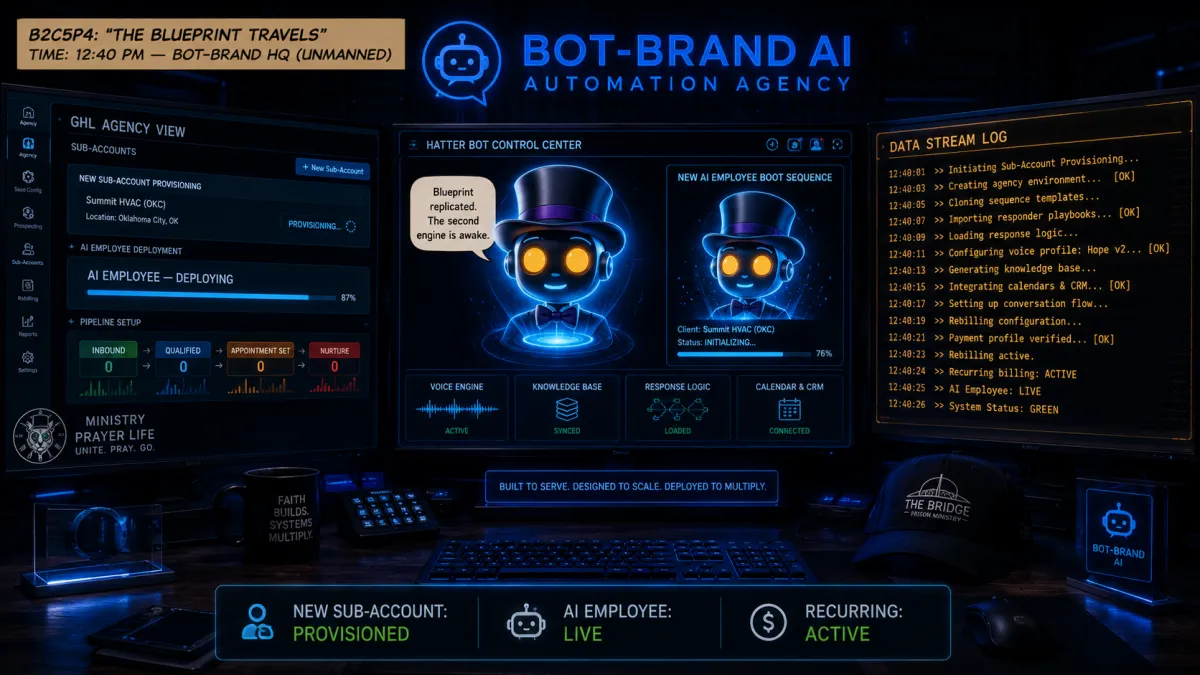
Chapter 5: The Blueprint Travels
Time: 12:40 PM — Bot-Brand HQ (Unmanned)
This is what the strategic son was built for. While Matt is across town, Hatter Bot provisions a new sub-account, clones the sequence logic, and stands up a fresh AI employee — a second Hope, configured for a second business, live in the time it takes to eat lunch. What took Matt a year of nights to build now deploys before the coffee's cold. The agency becomes the supply, the new operator becomes the demand, and the engine that once served one mission now serves two. The dynasty stopped being a household. It became an architecture other people can stand on.
The Desktop Dynasty — Activating the Strategic Son
The anchor. The business scaled this morning — but the reason for all of it sits in a room with no Wi-Fi, no dashboard, and nothing that can be cloned.
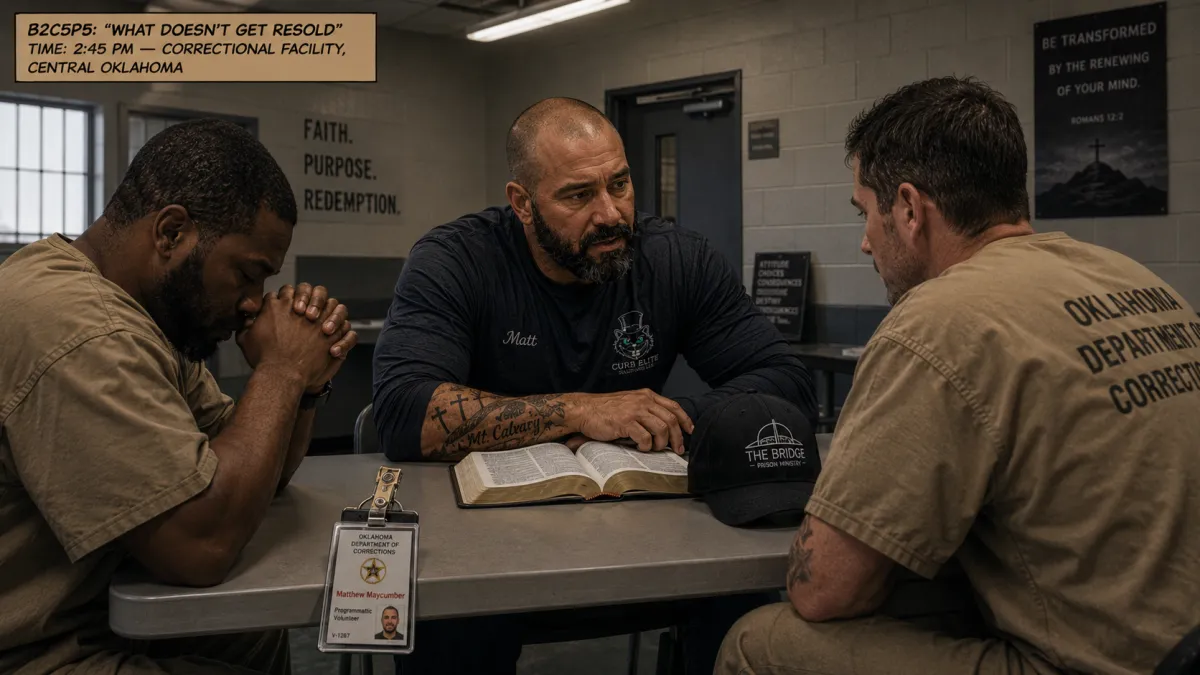
Chapter 5: What Doesn't Get Resold
Time: 2:45 PM — Correctional Facility, Central Oklahoma
Everything Matt builds can be cloned except this. You can replicate a pipeline, rebill an AI employee, hand another operator the same engine — but you cannot automate a man choosing to sit across a table and stay. The system scaled this morning so this afternoon could happen at all. The money the agency makes buys the gas, frees the hours, clears the calendar — so Matt can be in the one room a dashboard will never reach. The blueprint travels. The presence does not. It has to be carried in by hand.
The Desktop Dynasty — Activating the Strategic Son
Golden hour. A day that didn't just close — it expanded. The mission has a wider footprint than it did this morning.
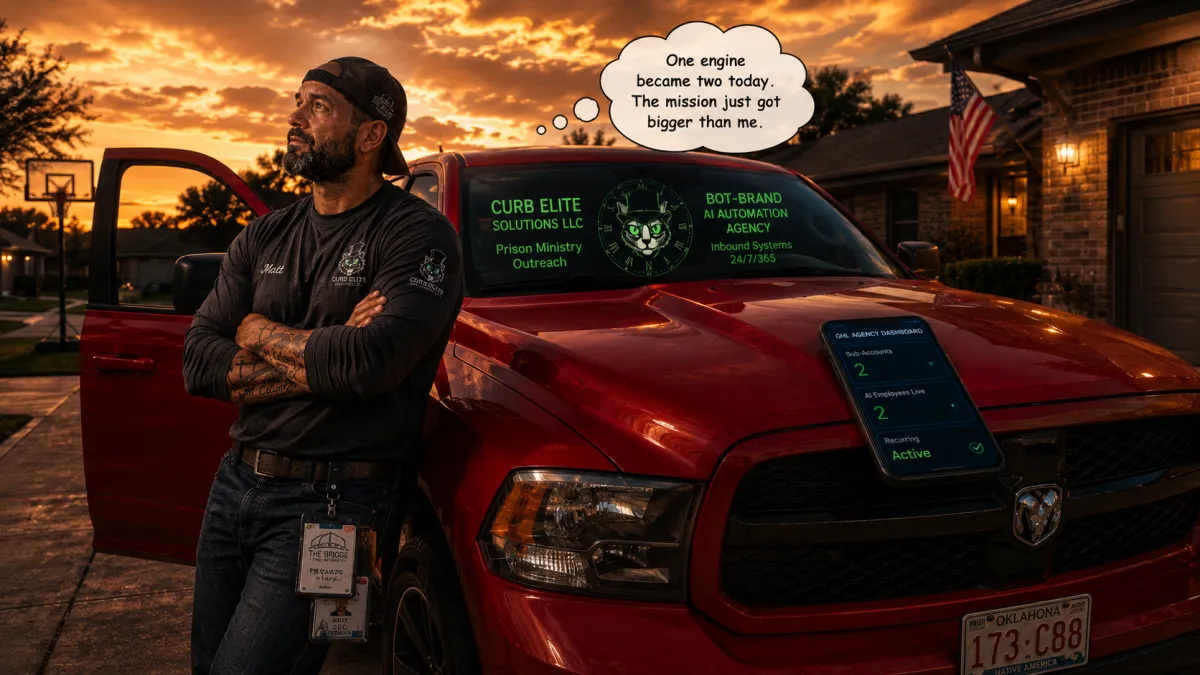
Chapter 5: Bigger Than One Truck
Time: 7:30 PM — Home Driveway
This morning the agency served one operator. Tonight it serves two, and the second man will sleep better knowing his phone is finally answered. Matt didn't build Bot-Brand to keep an edge — he built it to hand it off, to turn a private advantage into something other working men can stand on while they fund their own callings. The first client signed today. He won't be the last. The body still cuts the grass, the spirit still walks into the prison, and the mind in the machine just learned it can be in two places at once. The dynasty is no longer a household. It's a supply line.
The Desktop Dynasty — Book 2,
Chapter 6: "The Weight of the Wire"
The Desktop Dynasty —
"The Weight of the Wire"
A pre-dawn stillness hangs over the city. The quiet before the machine wakes up — and the man who runs it knows both are already running.
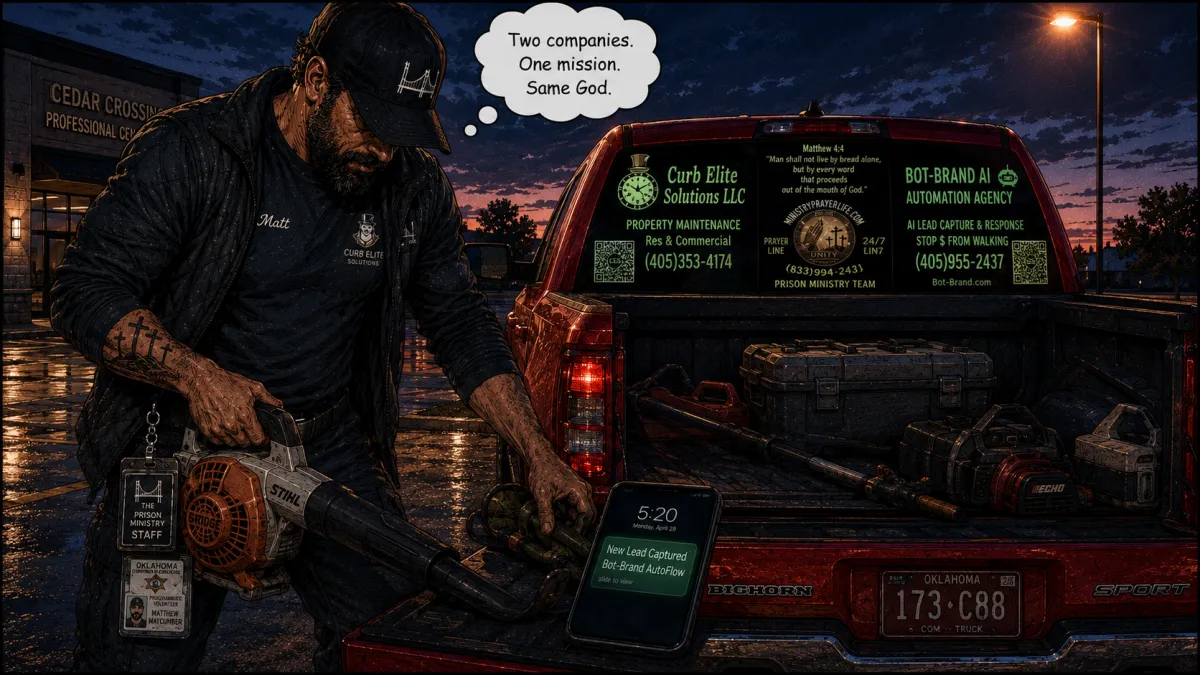
Chapter 6 : Before Sunrise Loads
Time: 5:20 AM — Commercial Parking Lot, Oklahoma City
The automation never sleeps — that's the point. While Matt was on his knees at 4 AM, Hope was routing a new contact through the Neural Lead Engine, qualifying intent, logging a response sequence, and scheduling a callback window. By the time the tailgate drops, the pipeline is already one contact deeper. Matt doesn't celebrate it. He just loads the equipment and moves.
The Desktop Dynasty —
"The Weight of the Wire"
Physical work as proof of purpose — calloused hands running equipment that serves people who will never know the name of the man doing it.
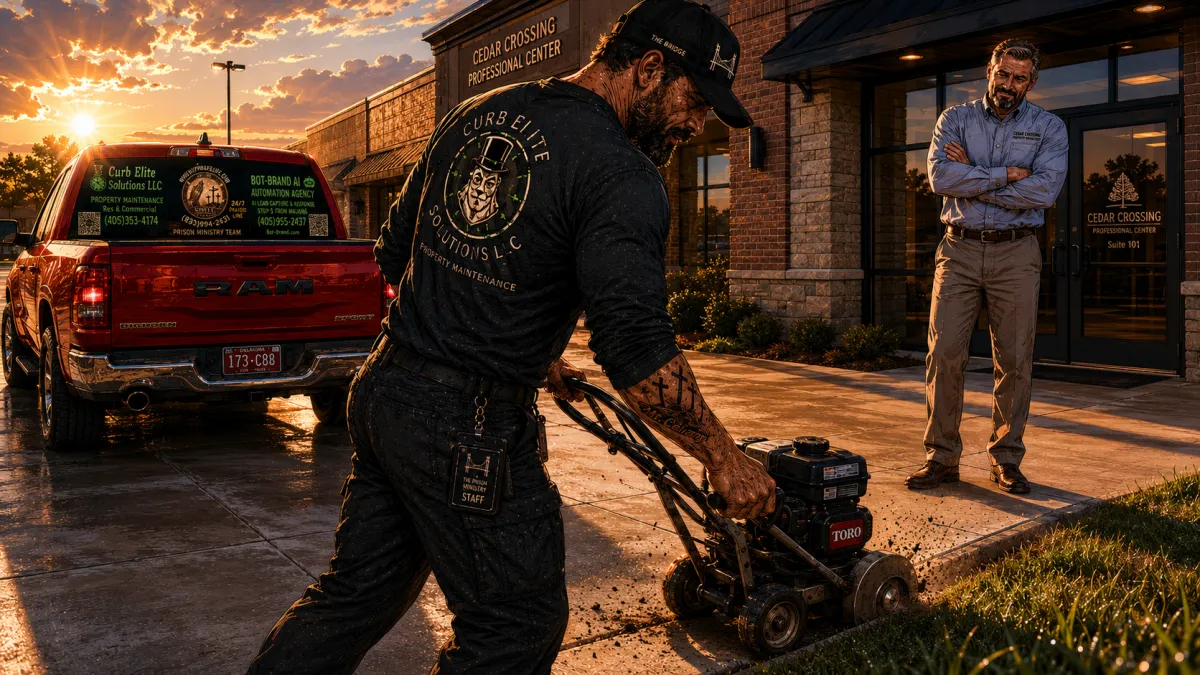
Chapter 6 : The Edge Line Holds
Time: 7:15 AM — Commercial Property, Midtown
Curb Elite Solutions LLC was built on a principle Matt won't apologize for: excellent work at the margins matters. The edges of a property tell you whether someone actually cares, or just shows up. Every clean cut in this concrete is a small argument for order — the kind that signals to a neighborhood that someone is paying attention. Matt pays attention. It's not a marketing strategy. It's a conviction.
The Desktop Dynasty —
"The Weight of the Wire"
The pivot point between two worlds — one analog, one digital — and the quiet recognition that both are part of the same assignment.
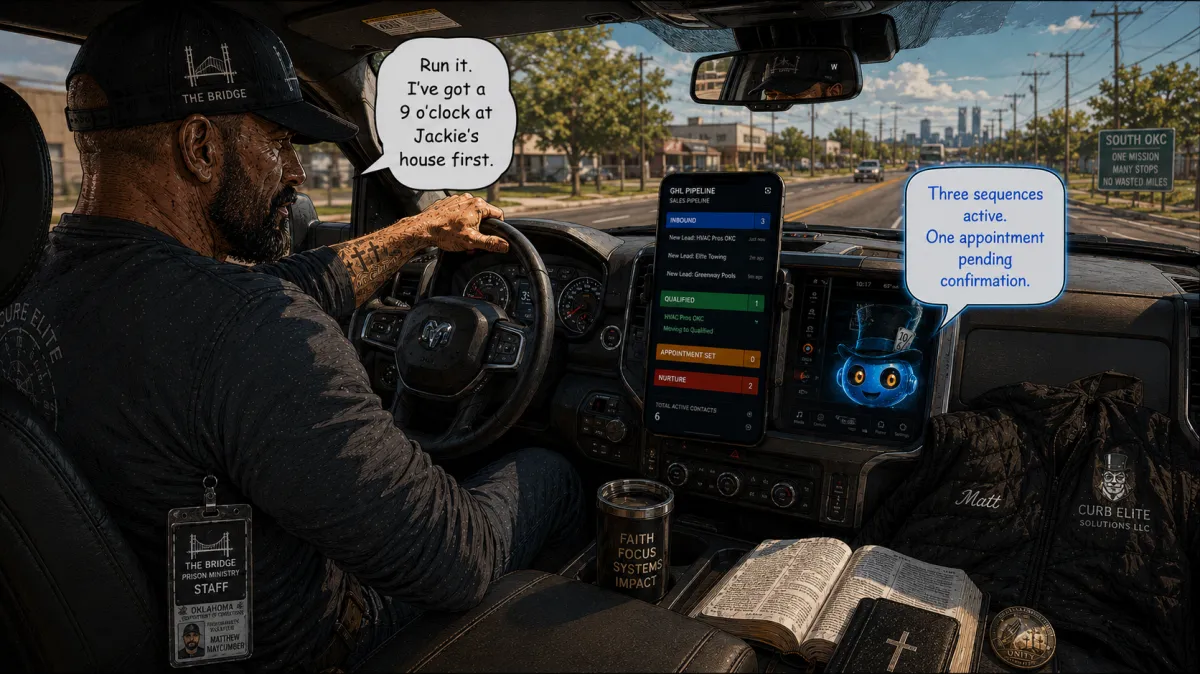
Chapter 6 : Two Lanes, One Road
Time: 8:40 AM — Northbound on I-235
Most people think you have to choose — the field or the office, the client or the system. Matt built the infrastructure specifically so he wouldn't have to. Bot-Brand's Neural Lead Engine doesn't need him in a chair to function; it needs him to have built it right. He built it right. Now the truck moves north, the pipeline moves forward, and neither one waits for the other. This is what operational freedom actually looks like — not absence of work, but absence of bottlenecks.
The Desktop Dynasty —
"The Weight of the Wire"
The hum of autonomous systems at midday — data moving, sequences firing, the unmistakable sense of infrastructure doing exactly what it was designed to do.
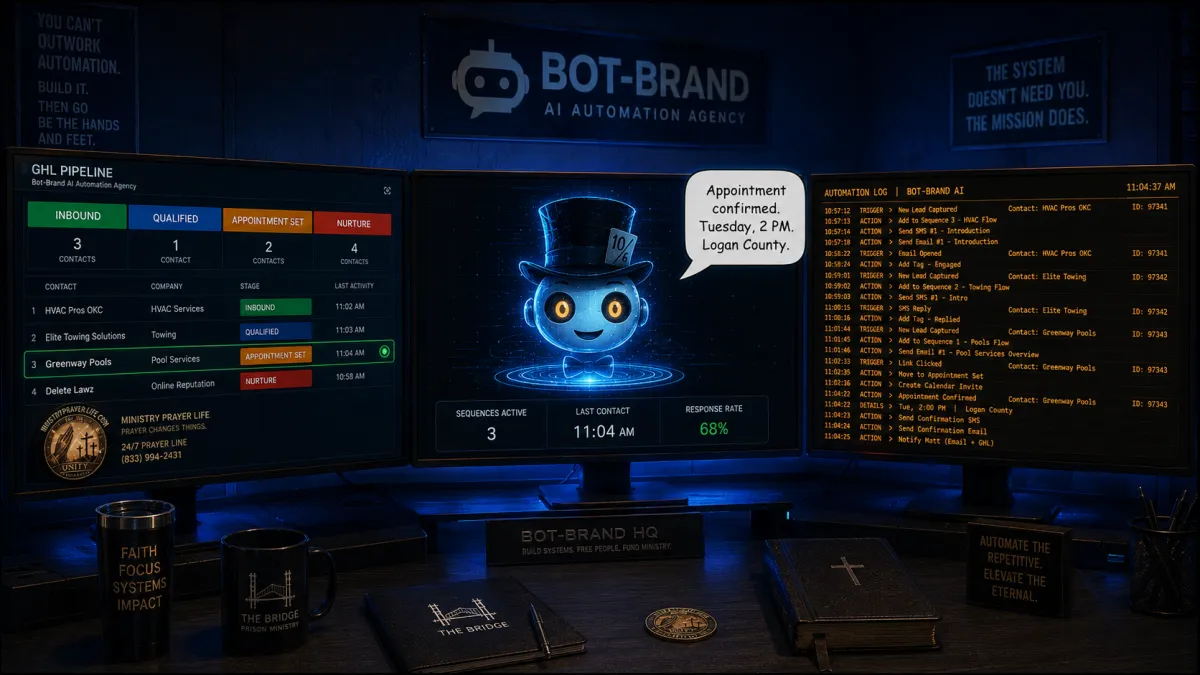
Chapter 6 : Running Without Him
Time: 11:10 AM — Bot-Brand HQ (Unmanned)
This is the point of the whole build: the engine doesn't require Matt to be in the room. Hope routes, qualifies, responds, and books — executing the Neural Lead Engine's logic branches while Matt is across town with a leaf blower or across a visitation table with a Bible. The ministry doesn't stop because the business is moving. The business doesn't stop because the ministry is calling. That's not luck. That's architecture.
The Desktop Dynasty —
"The Weight of the Wire"
The fluorescent quiet of a corrections facility — institutional weight, spiritual gravity, and the specific peace of a man who knows exactly why he's there.
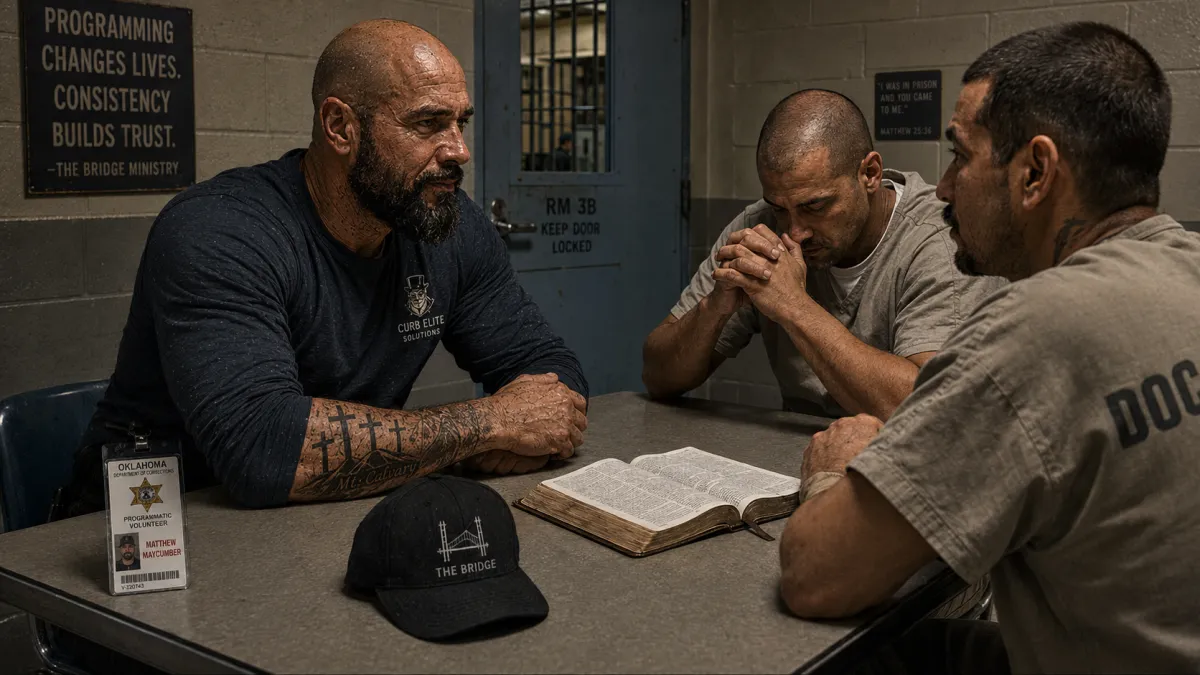
Chapter 6 : The Badge Goes Both Ways
Time: 1:30 PM — Correctional Facility, Central Oklahoma
The DOC badge gets Matt through the door. What keeps him coming back is harder to badge-scan. These men didn't get a lot of people showing up consistently — not without an agenda, not without a program requirement attached. Matt shows up because the assignment is real and the people are real, and because the infrastructure he built on the other side of that checkpoint funds every mile driven to get here. Curb Elite cuts grass. Bot-Brand captures leads. The Bridge pays it forward in rooms like this one.
The Desktop Dynasty —
"The Weight of the Wire"
Golden hour. The end of a full day — not exhaustion, but completion. The weight of the work set down for twelve hours.
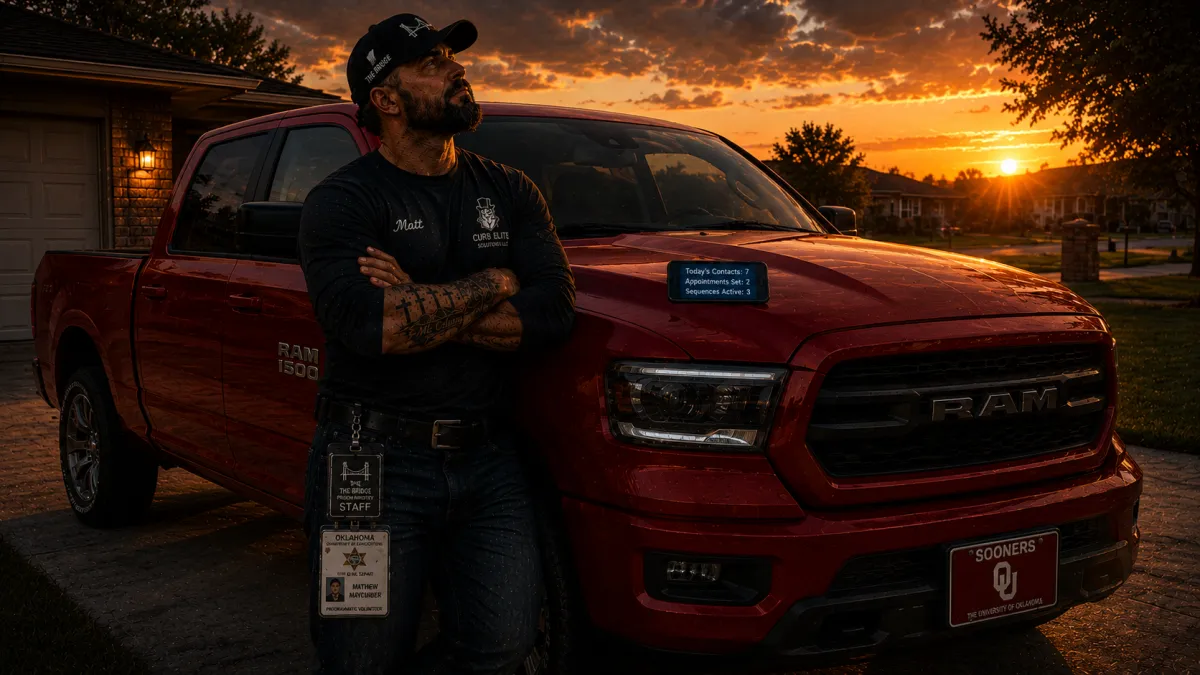
Chapter 6 : Three Lanes Closed Right
Time: 6:45 PM — Home Driveway
Seven contacts in the pipeline. Two appointments confirmed. One property in Midtown with edges that will hold until next cycle. Two men in a concrete block room who heard something true. This is what a full day looks like when the infrastructure is built correctly — not scattered across ten priorities, but flowing through three lanes toward one destination. Matt doesn't call it hustle. He calls it stewardship. The work is the worship, and today the offering was full.
The Desktop Dynasty — Book 2,
Chapter 7: "Free Indeed"
The Desktop Dynasty — "Free Indeed"
A holiday morning that isn't a day off — it's a day set apart. The 250th birthday of a nation, opening the way every one of Matt's days opens: quiet, grateful, and already covered.
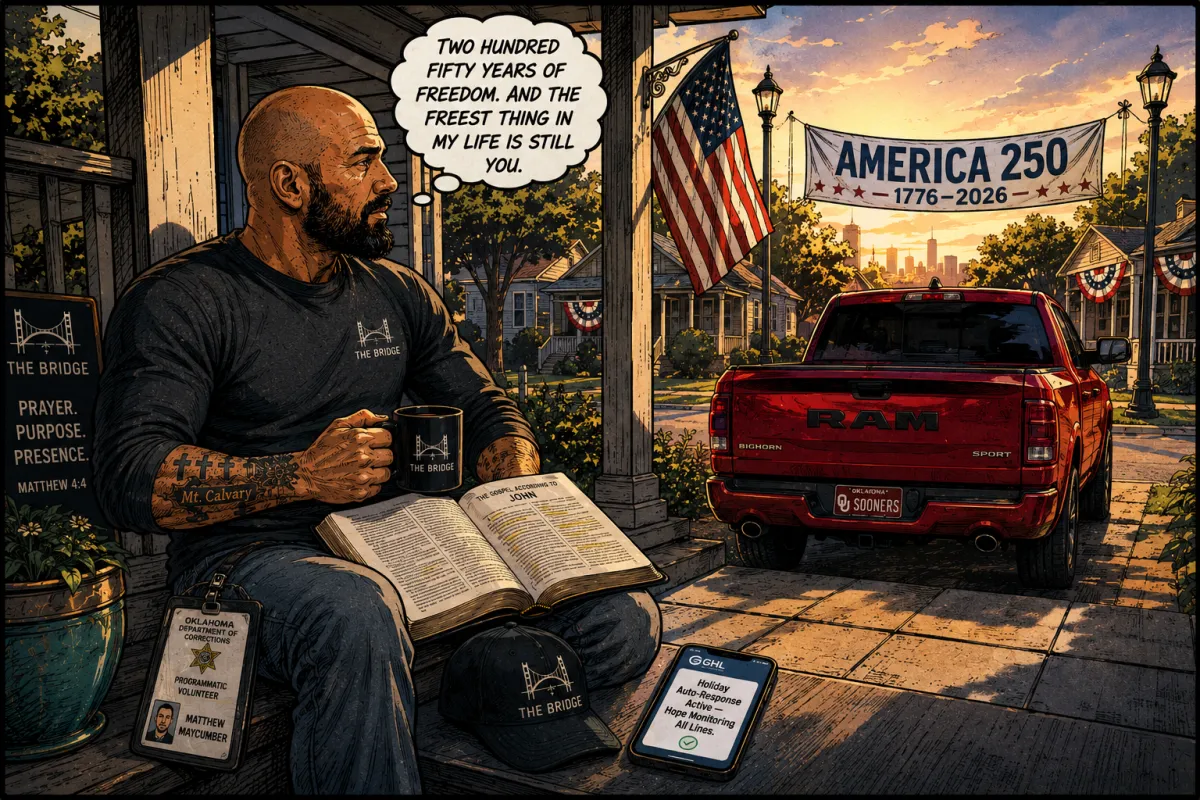
B2C7P1: "The 250th Sunrise"
Time: 6:30 AM — Front Porch, Oklahoma City
Two hundred fifty years to the day since a handful of men signed their names under a sentence about being endowed by their Creator. Matt starts the semiquincentennial the way he starts every morning — coffee, Scripture, and a system already awake so he doesn't have to be everywhere at once. Hope took the overnight watch: every call answered, every lead logged, every line covered while the city slept toward its birthday. Freedom, it turns out, has infrastructure.
The Desktop Dynasty — "Free Indeed"
Service before celebration — the quiet pride of making someone else's Independence Day look its best.
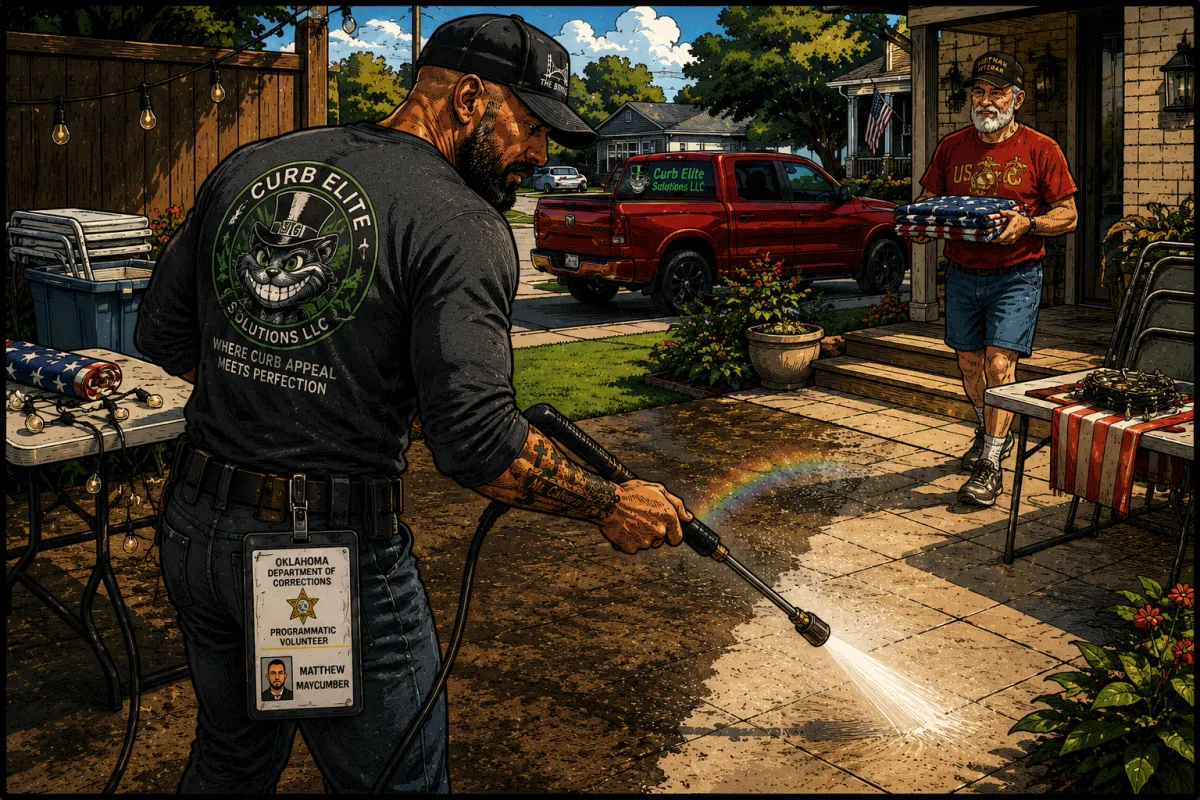
B2C7P2: "Ready By Noon"
Time: 8:45 AM — Client Backyard, The Village
The Hendersons host the whole cul-de-sac every Fourth — this year it's bigger, because 250 only happens once. One power-wash pass and the patio their guests will stand on tonight looks like it was poured last week. Curb Elite doesn't take holidays off so much as it takes them seriously: the work that makes other people's celebrations possible is still work worth doing right. A Marine who gave four years gets a patio that honors his fifty-two flags. Fair trade.
The Desktop Dynasty — "Free Indeed"
The competitive quiet of a holiday — every business in town has gone to the lake, and the machine that never celebrates keeps answering the phone.
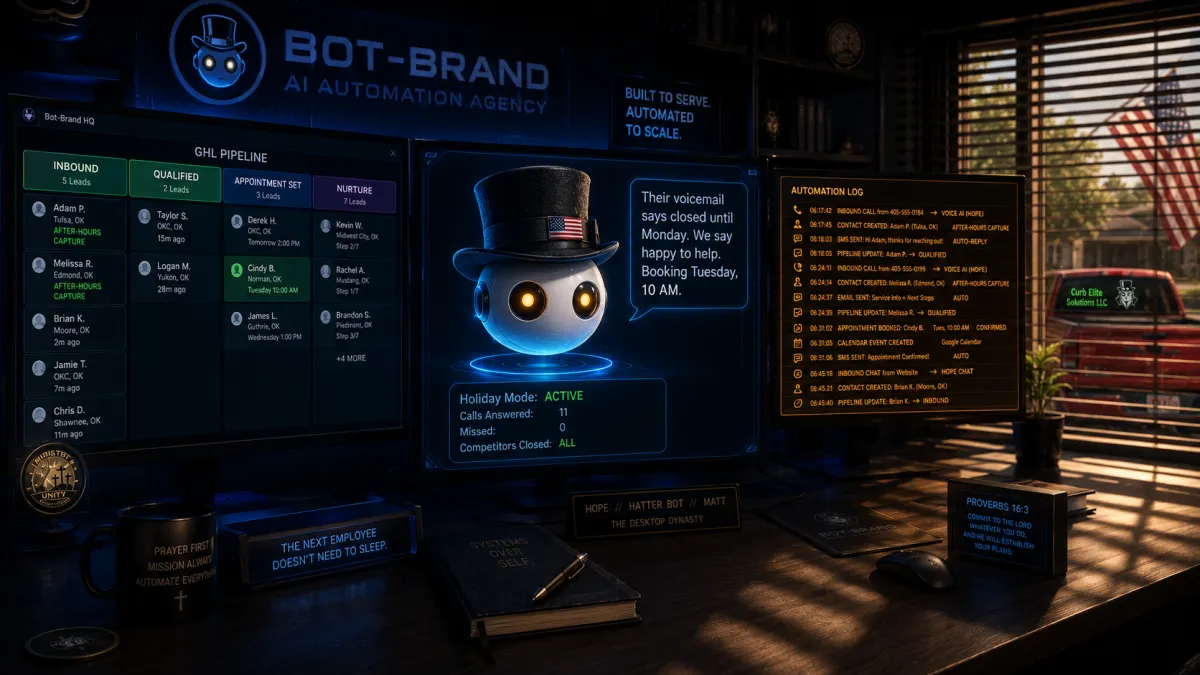
B2C7P3: "Closed Until Monday"
Time: 12:30 PM — Bot-Brand HQ (Unmanned)
Eleven calls came into client lines by lunch — homeowners with burst hoses, a restaurant with a walk-in cooler dying the day of their biggest patio crowd of the year. Every competitor's phone went to a voicemail that said closed for the holiday. Every Bot-Brand client's phone got answered in two rings by a system that doesn't cook out. That's the pitch nobody believes until they see the Tuesday calendar: the Fourth of July is the single easiest day of the year to win a customer for life. You just have to pick up.
The Desktop Dynasty — "Free Indeed"
Independence Day inside walls built to hold men — and the older, deeper freedom that walks through checkpoints uninvited.
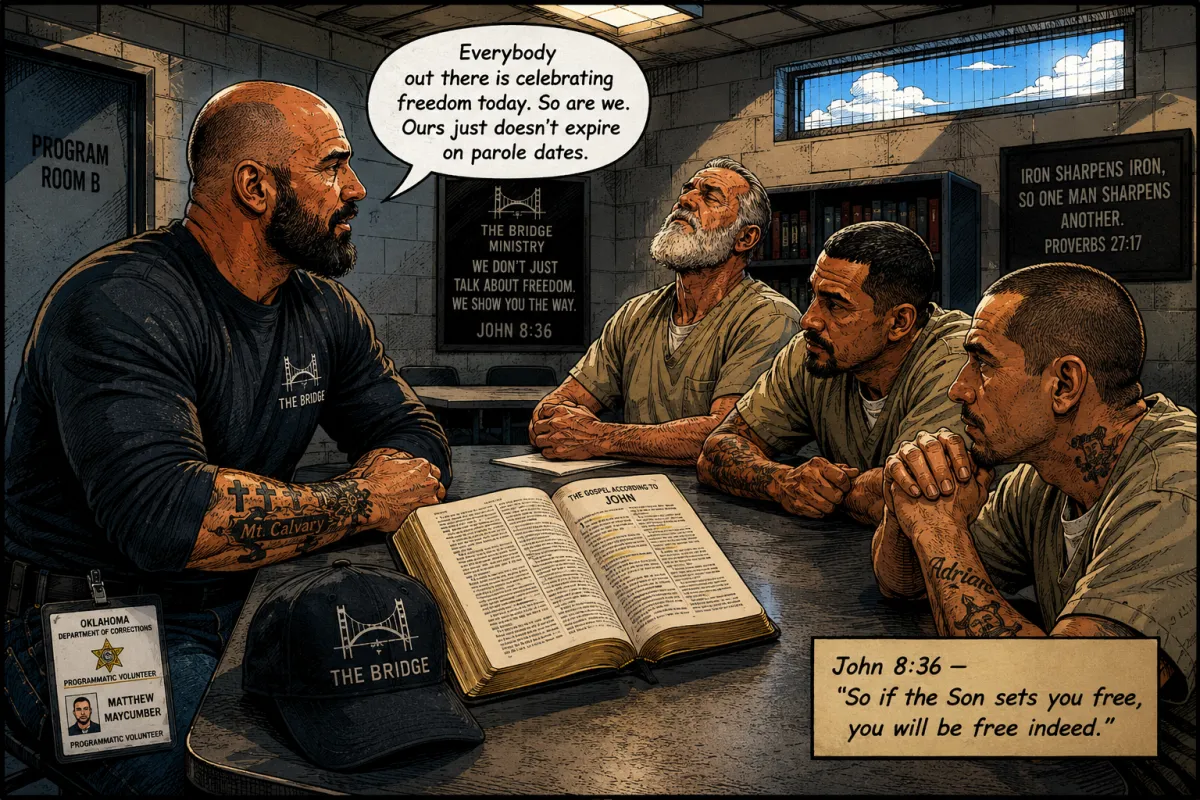
B2C7P4: "Free Indeed"
Time: 2:30 PM — Correctional Facility, Central Oklahoma
There's no harder room in America to talk about freedom than one where every door locks from the outside — and no room where the word means more. Two hundred fifty years of national liberty is worth every firework, and Matt will say so plainly. But the freedom he carries through the checkpoint on a July afternoon predates 1776 by a couple thousand years and holds up in places the Constitution can't reach. Three men heard it today. One of them, the old one, finally believed it applied to him.
The Desktop Dynasty — "Free Indeed"
The reward of built systems — a man fully present at his own table, phone face-down, mission still running.
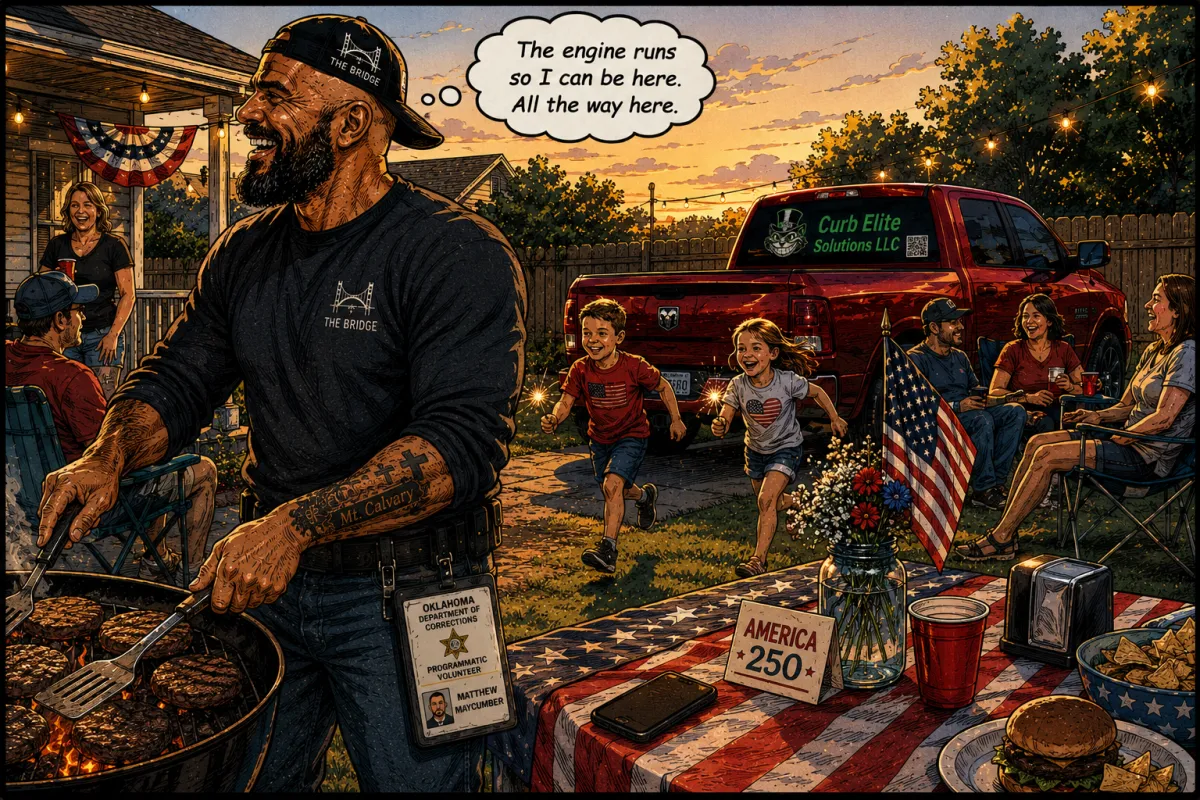
B2C7P5: "Face-Down Phone"
Time: 6:30 PM — Backyard, Home
This panel is the entire business model. Not the pipeline, not the wrap on the truck — this: burgers, sparklers, neighbors, and a phone lying face-down because nothing on it needs him right now. Hope is answering. The sequences are firing. The Tuesday calendar is filling itself. Most owners spend holidays half-present, one ear on the thing that might be going wrong. Matt built the thing that doesn't go wrong, and what it bought him wasn't revenue. It was this evening, undivided.
The Desktop Dynasty — "Free Indeed"
Night on the nation's 250th birthday — fireworks over the skyline, and one man's gratitude running three lanes deep.
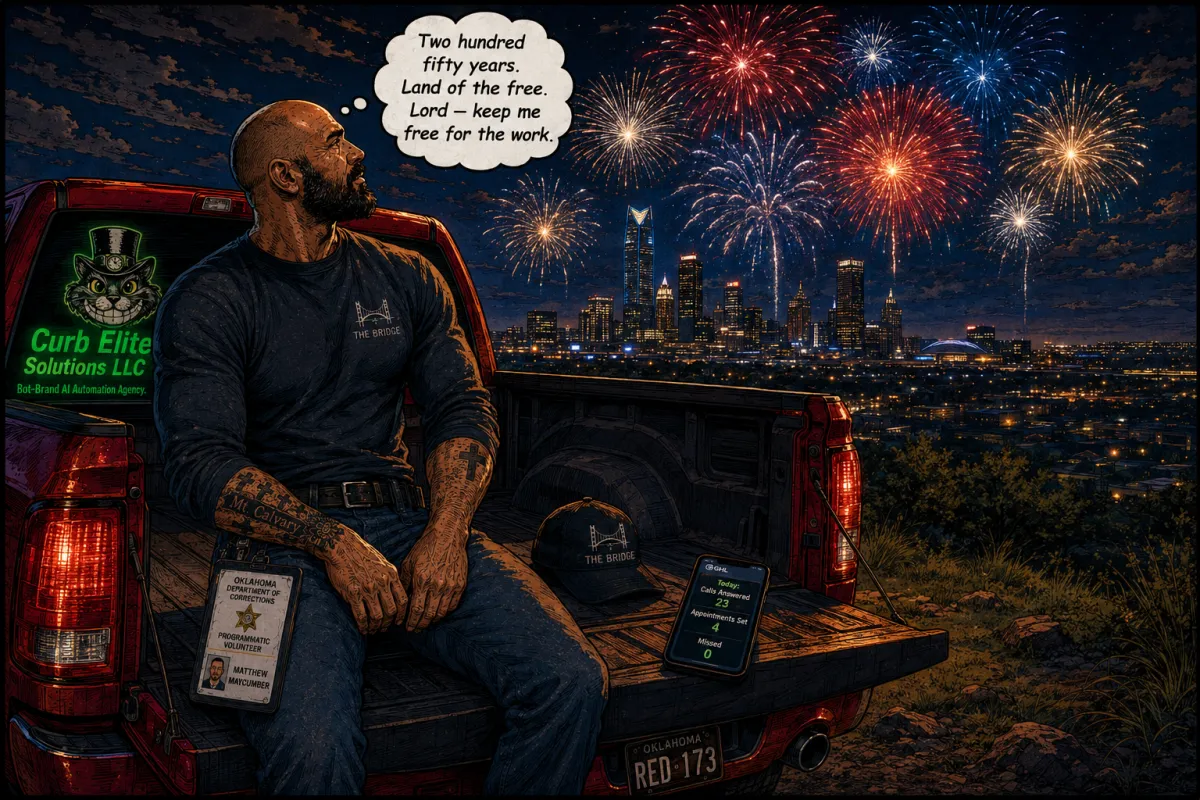
B2C7P6: "Land of the Free, Home of the Built"
Time: 9:45 PM — Overlook, Oklahoma City Skyline
The country turned 250 today, and Matt watched the sky celebrate from a tailgate that's carried mowers, Bibles, and server diagrams — sometimes in the same load. Twenty-three calls answered while he grilled and ministered and sat still. Four appointments that didn't exist this morning. Zero missed. Three freedoms held in one day: the one men signed for in 1776, the one Christ signed for in blood, and the small operational one Matt built with his own hands — the freedom to be exactly where he's called, while the work keeps working. Happy 250th, America. The mission runs on.
The Desktop Dynasty — "The Furnace"
Book 2, Chapter 8
The Desktop Dynasty —
"The Furnace"
The stillness before a scorcher. It's already warm at dawn — the kind of morning that promises a hard day — and the man who runs three lanes meets it the same way he meets every one: covered before he's caffeinated
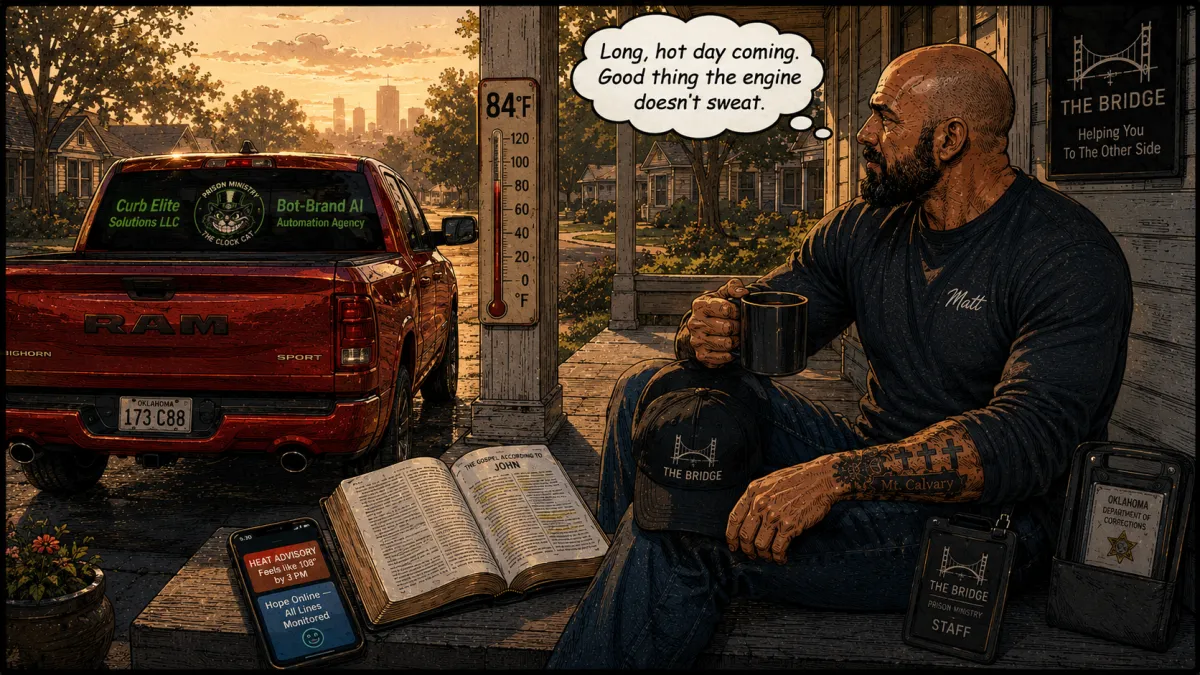
B2C8P1: "Eighty-Four at Sunrise"
Time: 5:30 AM — Front Porch, Oklahoma City
When it's already eighty-four before the sun clears the fence line, every crew in the metro knows what kind of day it's going to be. Matt starts it the only way that has ever worked: Scripture first, then the field. While he prayed, Hope worked the overnight — three inbound leads captured, two response sequences fired, one callback window booked for 9 AM. The heat is coming for the men doing physical work today. It has no effect whatsoever on the system answering the phones. That gap is the whole business.
The Desktop Dynasty —
"The Furnace"
Hard, honest labor in punishing heat — the discipline of finishing the work right when everything in your body says quit at the halfway mark.
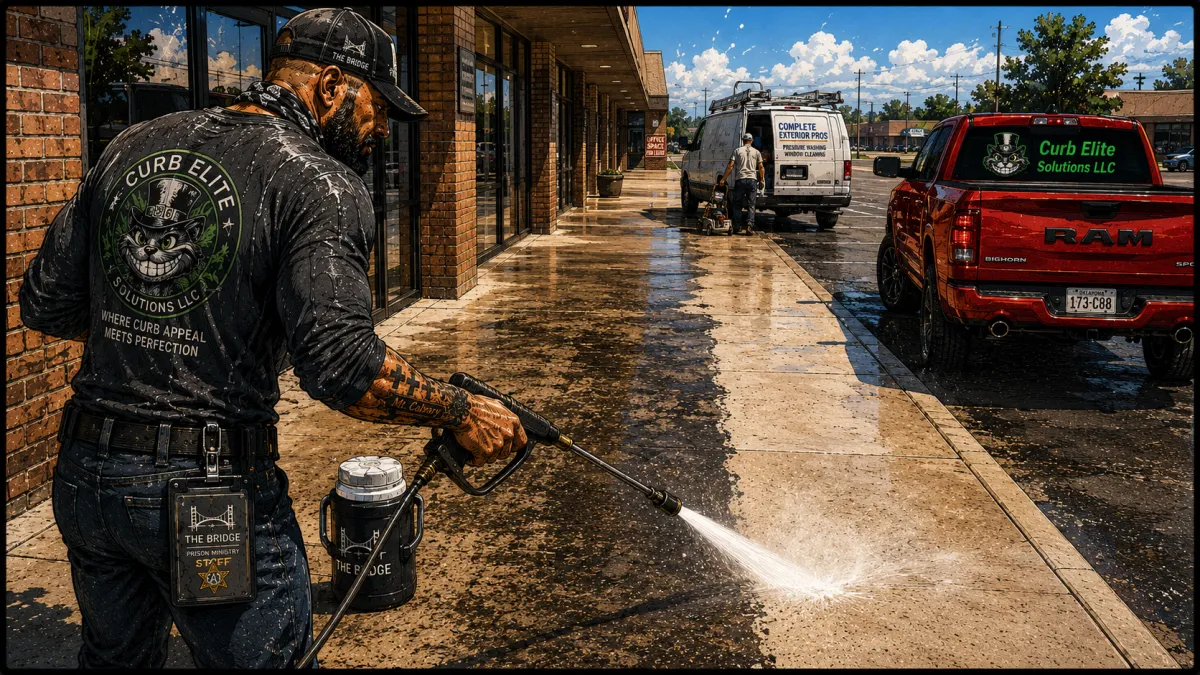
B2C8P2: "The Line Gets Finished"
Time: 9:00 AM — Commercial Property, Northwest OKC
Power washing in a heat advisory is a test of exactly one thing: whether you'll finish the second half as well as you started the first. The rival crew across the lot already made their choice — packed up, blamed the weather, left a property manager with a walkway that's clean halfway. Curb Elite doesn't do halfway. Matt drinks his water, resets the wand, and runs the line all the way to the corner. Consistency isn't a slogan on the truck. It's what you do at ten a.m. when it's already ninety-six and nobody's watching.
The Desktop Dynasty —
"The Furnace"
The peak of the heat wave, and the coolest room in the metro is the one with no people in it — a machine running flat-out while half the town's phones go dead.
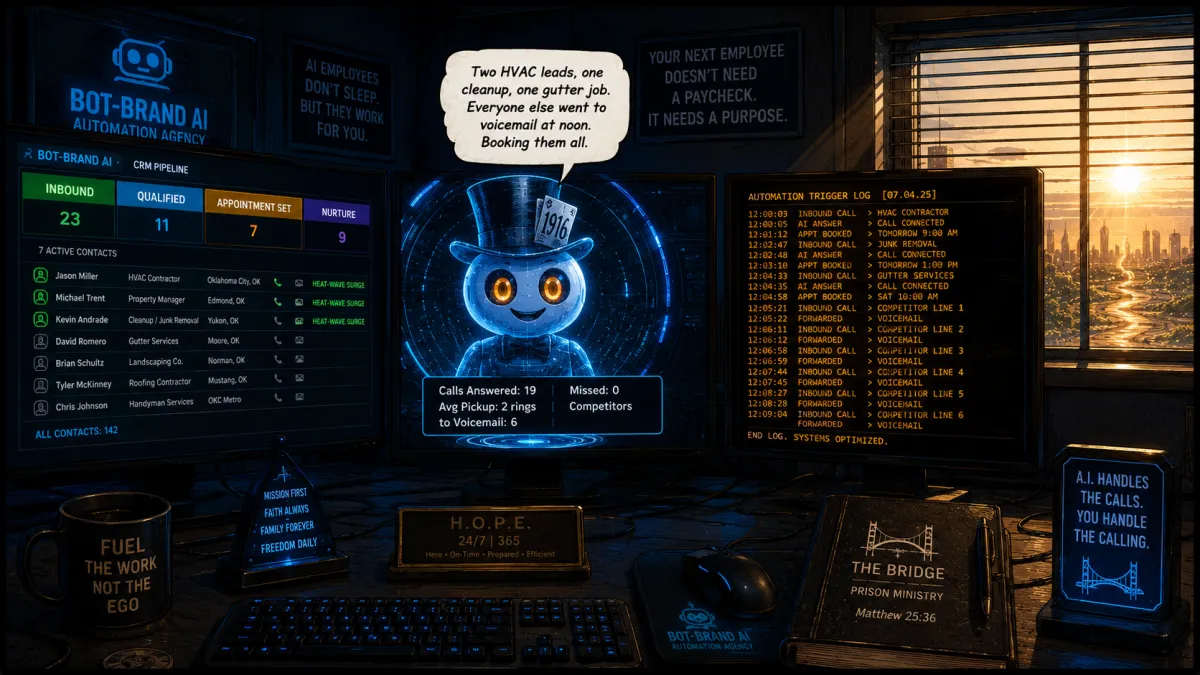
B2C8P3: "The Room That Never Overheats"
Time: 12:45 PM — Bot-Brand HQ (Unmanned)
Here's what a heat wave does to a service business: the demand spikes exactly when the humans tap out. Broken AC units, storm-blown debris, walk-in coolers failing — the calls come in a flood right as the competition sends its crews home and lets the phone ring to voicemail. Bot-Brand clients don't feel any of it. Hope answered nineteen calls by lunch, pickup under two rings, and booked every qualified one onto a calendar. The machine has no heat index. It doesn't need shade or water or a break. It just picks up — and on a day like today, picking up is the entire difference between a booked week and a lost one.
The Desktop Dynasty —
"The Furnace"
The pivot from field to calling — AC blasting in the cab, a body cooling down, the mind already turning toward the room where the real furnace waits.
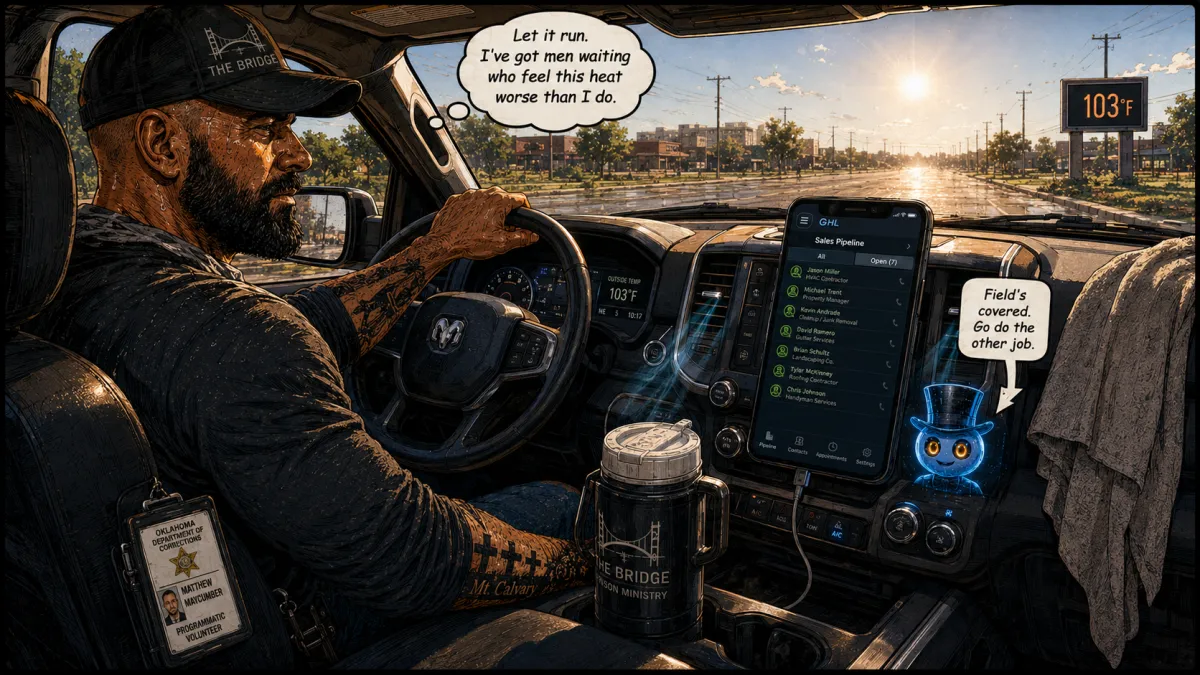
B2C8P4: "Let It Run"
Time: 1:30 PM — Southbound, Cab of Red
The truck's AC is the only air conditioning Matt will feel for the next two hours — the facility where he's headed doesn't have much, and the men inside it have none at all. He lets the pipeline run itself on the dashboard because that's exactly what he built it to do: work without him in the chair. Bot-Brand funds the miles. Curb Elite funds the ministry. And the system humming on the phone screen is the reason a heat advisory doesn't cost him a single booked job while he goes and sits in the hottest room of his week.
The Desktop Dynasty —
"The Furnace"
Institutional heat — a concrete building with no relief — and the older, refining fire the room can't touch. The furnace outside the walls has nothing on the one Scripture describes inside them.
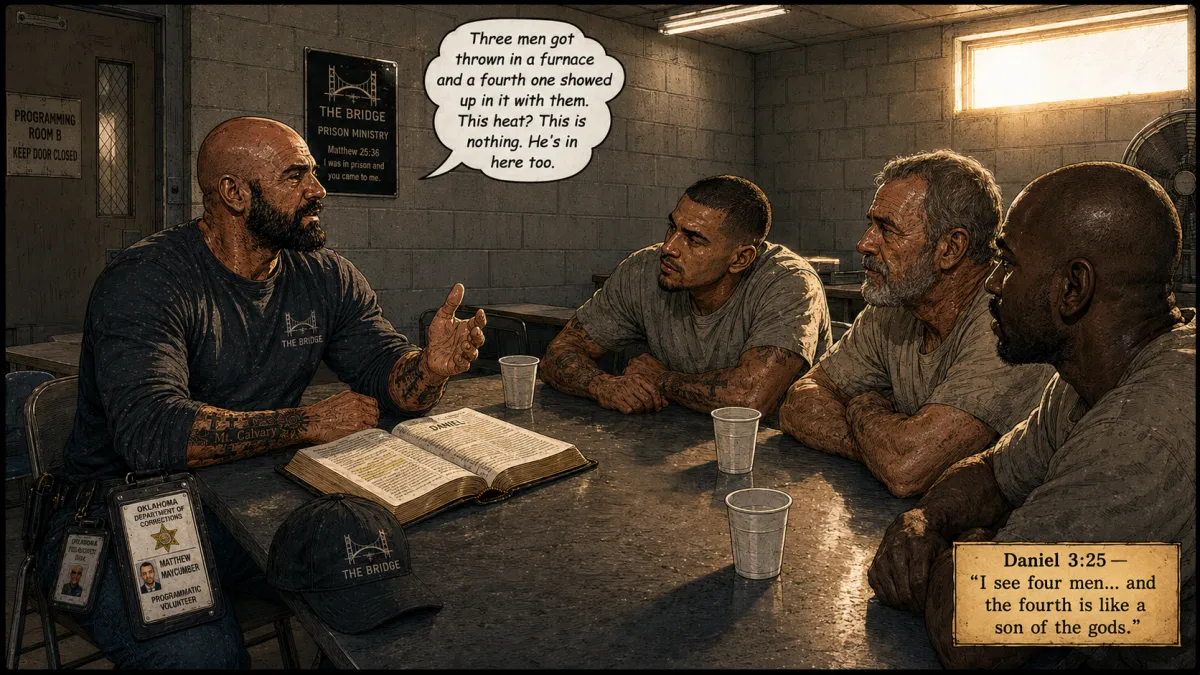
B2C8P5: "The Fourth in the Fire"
Time: 2:45 PM — Correctional Facility, Central Oklahoma
There's no AC worth mentioning in a lot of these rooms in July, and the men who live inside them can't drive away at 6 PM. So Matt doesn't complain about the heat — he preaches it. Three men in Daniel who wouldn't bow got thrown into a fire meant to kill them, and the only thing that burned was the rope that bound them, because someone else was standing in the flames. The men across the table have all been in a furnace of one kind or another. What Matt came to tell them, sweating right alongside them, is that they were never in it alone.
The Desktop Dynasty —
"The Furnace"
The heat finally breaking. Golden hour, a cooling sky, the day's furnace behind him — and a quiet, full-lane gratitude that the work ran while he carried the mission.
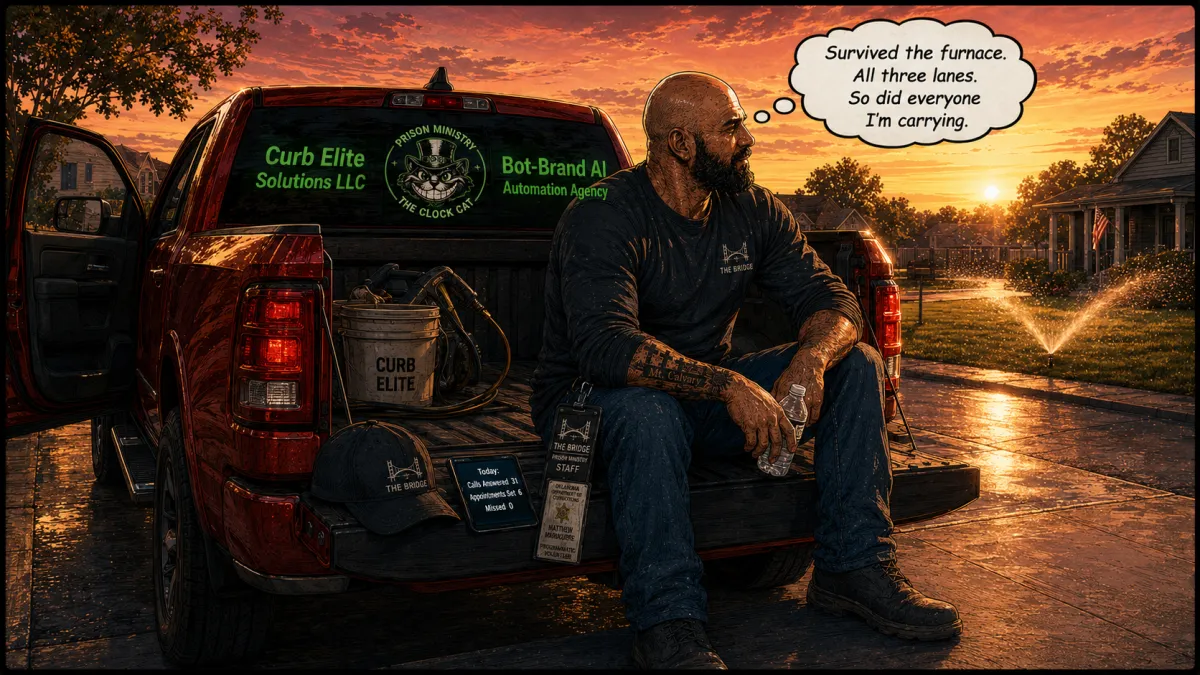
*B2C8P6: "After the Furnace"
Time: 7:45 PM — Home Driveway
The temperature finally cracks around dusk, and Matt sits on the tailgate to feel the first honest breeze of the day. Thirty-one calls answered while he ran a power washer and sat in a hot concrete room with a Bible. Six appointments that didn't exist this morning. Zero missed — on the single hardest day of the summer to keep a phone answered. The rival crews lost jobs to the heat today. Matt didn't lose one, because the part of his business that closes deals never felt the temperature. Curb Elite finished the line. Bot-Brand held the phones. The Bridge sat in the fire with men who needed a fourth man in it. The furnace tested everybody today. The mission came through it whole.
The Desktop Dynasty — "Free World"
Book 2, Chapter 9
The Desktop Dynasty — "Free World"
Cold open — no porch, no coffee, no Matt. Just a dark room, a ringing line at an hour nobody answers, and a machine that picks up anyway. The most important call of the week comes in before its owner is even awake.
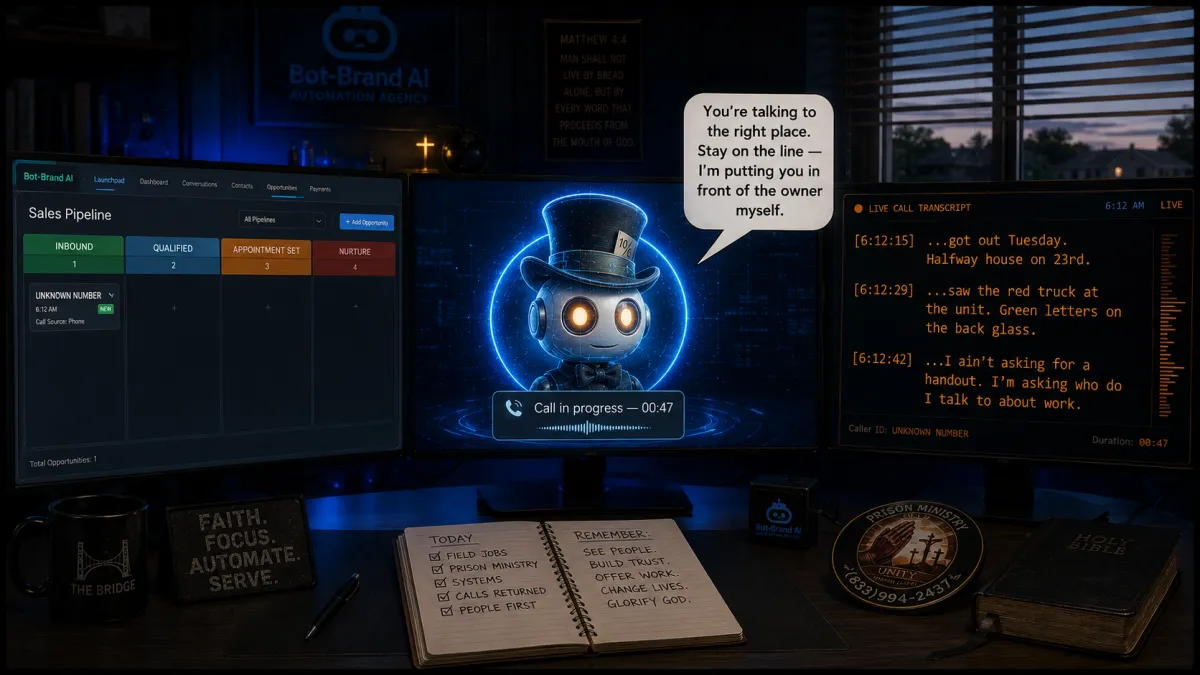
B2C9P1: "Unknown Number, 6:12 A.M."
Time: 6:12 AM — Bot-Brand HQ (Unmanned)
Most businesses would have missed this one entirely. Six-twelve in the morning is before the office opens, before the answering service clocks in, before anybody with a payroll is picking up a phone. And the number came through cold — no name, no history, no source. Every competitor in the metro sent it to voicemail. Hope answered on the second ring, the way she answers everything, and did not have a single opinion about who was on the other end. She just listened, took the details, and flagged it to the owner marked urgent. That is the entire unglamorous point of the machine: it does not decide who deserves to be answered.
The Desktop Dynasty — "Free World"
Recognition. A man reads three lines on a phone screen at a gas pump and the whole day reorganizes itself around them. Not a lead. A face he knows.
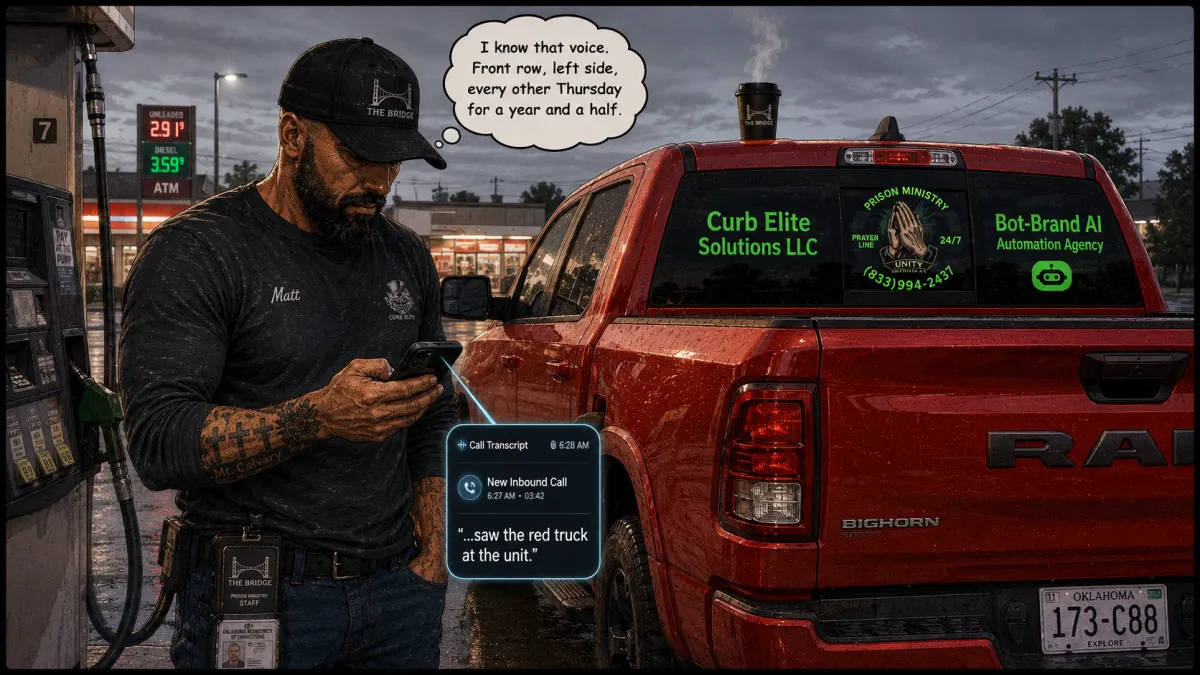
B2C9P2: "I Know That Voice"
Time: 6:40 AM — Gas Station, Northwest OKC
Matt has sat across a folding table from a lot of men. Most of them he never hears from again, and he made peace with that a long time ago — you plant, somebody else waters, and you don't get to see the harvest on your own schedule. But every so often the phone buzzes and the harvest calls you at 6:12 in the morning from a halfway house on 23rd Street. He didn't need the last name. He remembered the seat, the row, the questions the man used to ask that were sharper than anybody expected. The truck he'd seen in the parking lot at the unit — the one with the green letters — turned out to be the only phone number he had when he walked out the gate.
The Desktop Dynasty — "Free World"
Two men in a parking lot. No desk between them, no interview, no application. The most consequential meeting of the week and it happens standing on asphalt in twenty minutes.
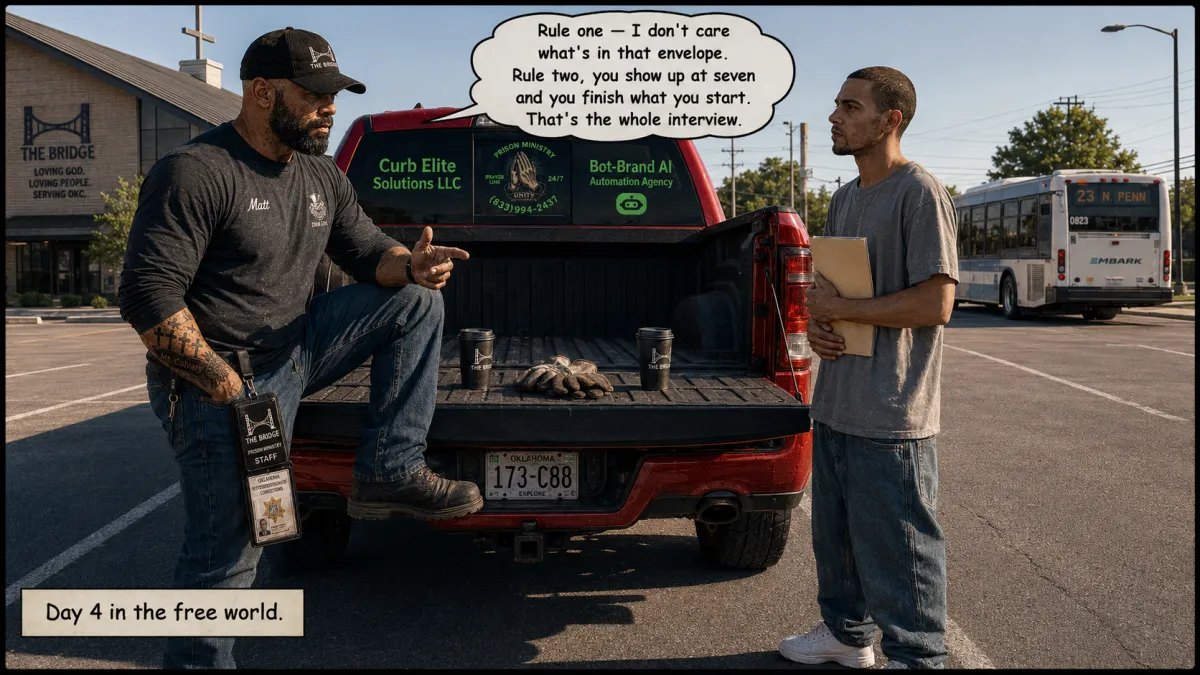
B2C9P3: "The Whole Interview"
Time: 8:00 AM — Church Lot, Oklahoma City
Ray brought his paperwork because that's what everybody on the outside asks for first — the release sheet, the conditions, the list of everything he is on paper. Matt didn't open it. Not because the past doesn't matter, but because he already knows what a man looks like when he's decided to be somebody different and can't find one employer willing to test the theory. Four days out and Ray had already been told no twice, politely, in that way that means don't come back. Curb Elite is a small operation with one truck and one owner, which is exactly why it can do the thing the big shops can't: make the call in a parking lot in twenty minutes, and make it on a man instead of a form.
The Desktop Dynasty — "Free World"
Teaching. The unglamorous transfer of a skill from one pair of hands to another — and the moment a man who has been told what to do for years is handed something and asked to run it himself.
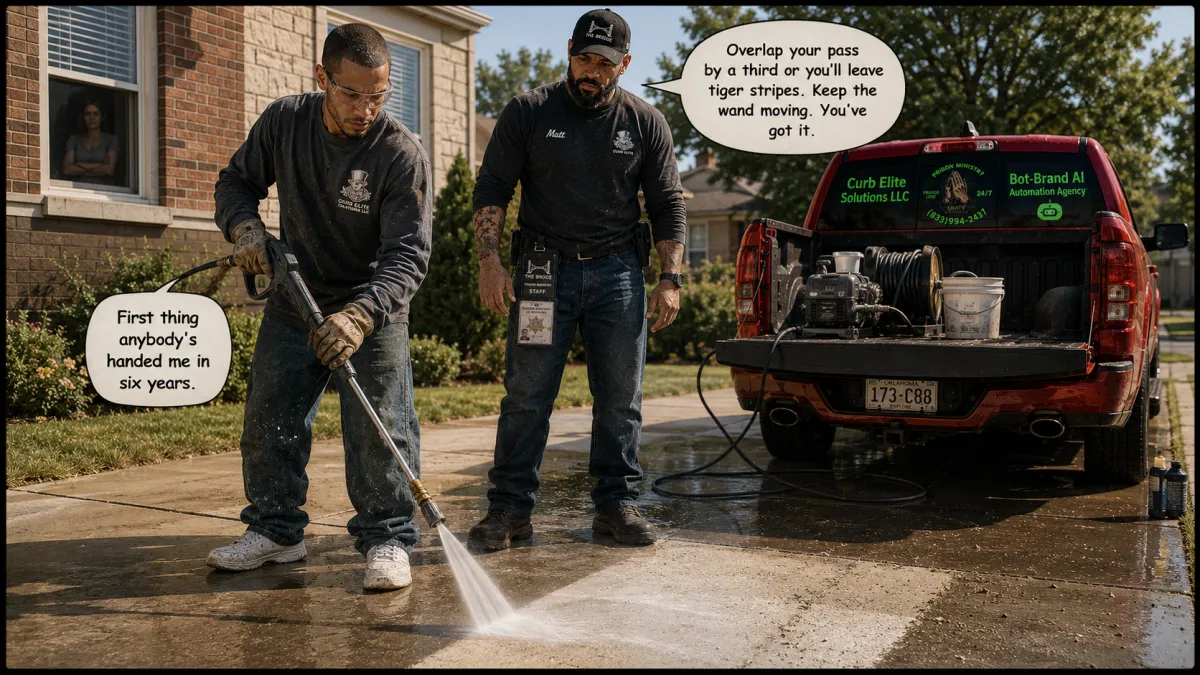
B2C9P4: "Overlap Your Pass"
Time: 10:30 AM — Client Driveway, Northwest OKC
The work itself is not complicated. Hold the wand at a consistent height, overlap each pass by a third, keep it moving so you don't etch the concrete, run the line all the way to the corner. Matt has taught it a dozen times and it takes about four minutes. What takes longer is the part nobody writes down: standing back far enough that the man actually gets to do it. Six years of being told exactly where to stand and when to move does something to a person's hands. So Matt gave the instruction once, stepped back, and let Ray cut the whole first stripe himself — crooked at the start, straightening by the middle, dead clean by the corner.
The Desktop Dynasty — "Free World"
End of the first day. A folded stack of bills on a tailgate, and the oldest short letter in the New Testament — a man sent back not as property, but as a brother. The chapter's spiritual weight lands in a driveway, not a classroom.
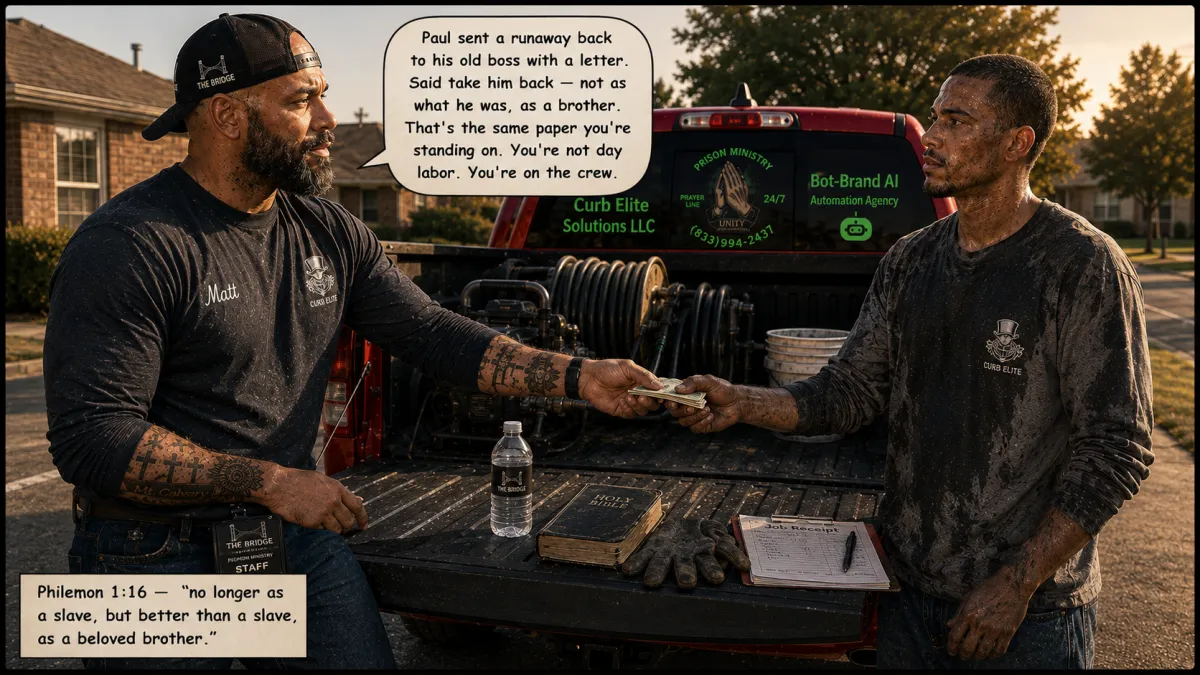
B2C9P5: "Not As What He Was"
Time: 5:15 PM — Client Driveway, Northwest OKC
Every man Matt has ever taught inside asks the same question eventually, usually sideways, usually near the end of a session: does it actually change out there, or is it just in here. The honest answer is that it changes when somebody on the outside is willing to act like it changed. Paul wrote the shortest letter in the New Testament about precisely this — a runaway named Onesimus, sent back to the man he'd wronged, with a note asking that he be received not as the thing he used to be but as family. Matt doesn't preach it across a folding table this time. He hands a man his first honest pay in six years off a tailgate and says it in four sentences, because on day four in the free world a paycheck is a sermon and everything else is commentary.
The Desktop Dynasty — "Free World"
The lanes finally touch. Not three parallel businesses running beside each other — one system, closing a loop it was built to close. And the man who built it is deliberately not looking at the numbers.
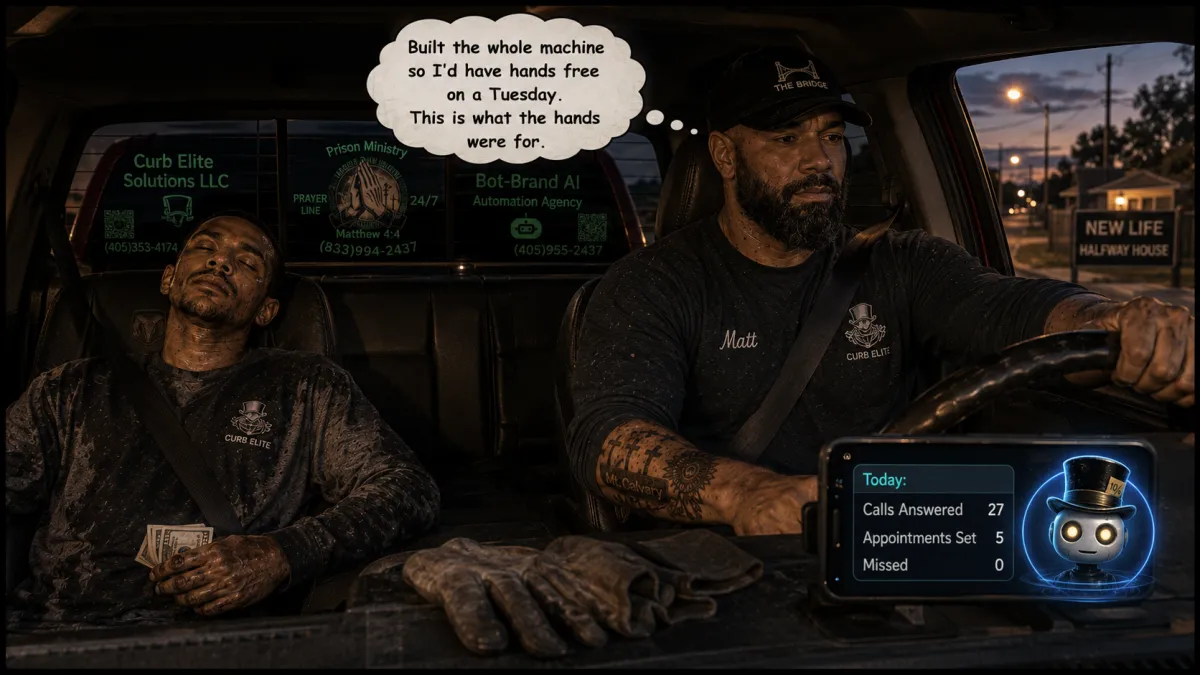
B2C9P6: "What the Hands Were For"
Time: 7:20 PM — Northbound, Cab of Red
Twenty-seven calls answered today. Five appointments set. Zero missed. Matt doesn't look at the banner once on the drive, and that's the closest thing to a thesis this chapter has. The pipeline ran itself through a workday that had nothing to do with pipelines — through a parking lot handshake, four minutes of instruction, and a first honest paycheck handed across a tailgate. Bot-Brand answered a cold call at 6:12 that every competitor in the metro let ring. Curb Elite had a seat on the crew to give a man who'd been told no twice in four days. The Bridge is why he had the number in the first place. For eight chapters the three lanes have run side by side and paid each other's bills. Today they were never three. They were one thing, and this was the day it finally showed its work.
The Desktop Dynasty — "The Harvest"
Book 2, Chapter 10
The Desktop Dynasty — "The Harvest"
Not the porch, not the coffee, not a devotional at sunrise. The most important thing that happens all morning happens before Matt even parks: the man from yesterday is already standing there, on time, waiting. He came back.
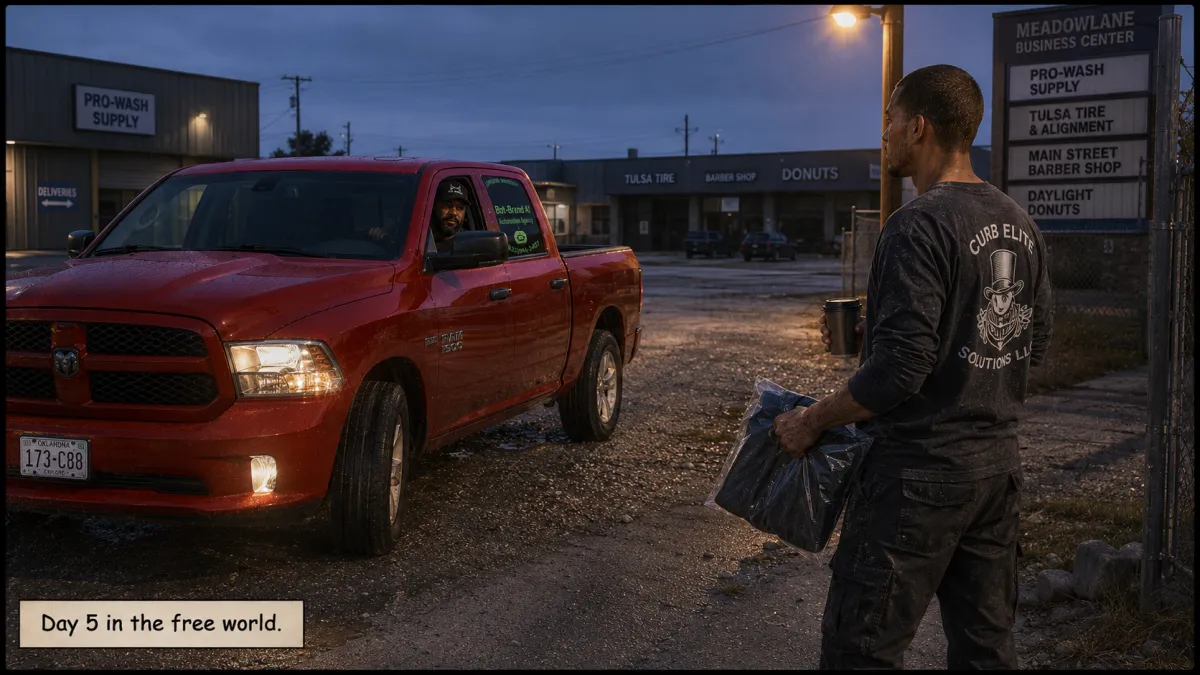
B2C10P1: "He Came Back"
Time: 6:15 AM — Staging Lot, Northwest OKC
The single hardest statistic in the work Matt does isn't in a pipeline anywhere — it's how many men mean it on day one and are gone by day two. Good intentions are cheap when you're four days out and every muscle you own is sore and the halfway house bed is right there. So Matt didn't assume anything on the drive in. He'd have understood a no-show. What he got instead was Ray standing in the gravel before the sun cleared the buildings, coffee in hand, already dressed to work. There's no line item for it and no automation that produces it. A man decided to show up twice. That's the whole foundation the rest of this business is about to be built on.
The Desktop Dynasty — "The Harvest"
Two men, one job, and the first honest taste of what capacity feels like. Yesterday Matt was one truck and one pair of hands. Today the same clock buys twice the work — and you can see it in the way the property goes clean.
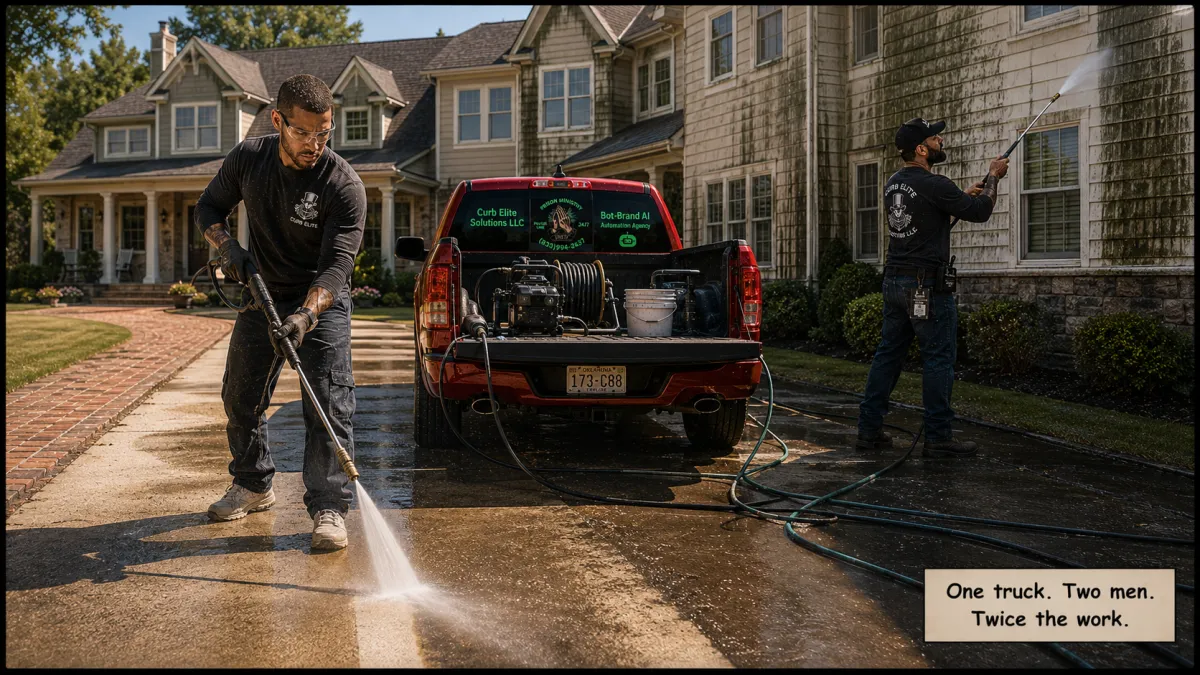
B2C10P2: "Twice the Work"
Time: 9:30 AM — Client Property, Northwest OKC
This is a job Matt would have quoted three hours for and worked alone in the heat with his jaw set. With Ray on the second wand it's done clean in ninety minutes — driveway, walkway, and the whole shaded north wall that always grows the worst mildew. Curb Elite's promise has always been the boring one: show up, and finish what you start. What changed today is the ceiling on how much of that promise he can keep in a single day. Two men don't just do more work — they do work Matt physically could not have taken on by himself, on properties he'd have had to turn down. He didn't teach Ray a job yesterday. He doubled the size of what the company can say yes to.
The Desktop Dynasty — "The Harvest"
The conversion beat, and the biggest one the machine has ever caught. While both men's hands are wet and full in the field, the phone rings with the largest opportunity in the company's history — and it rings in an empty room that answers anyway.
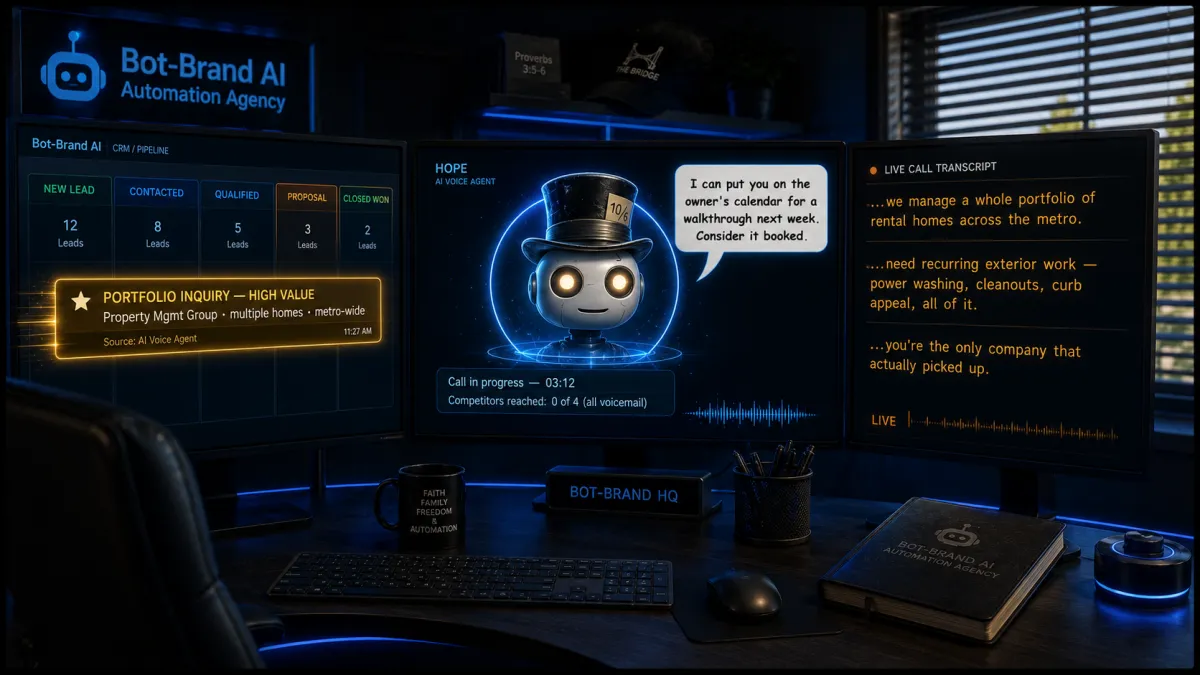
B2C10P3: "The Only One Who Picked Up"
Time: 11:10 AM — Bot-Brand HQ (Unmanned)
A property management group runs the math differently than a single homeowner. They don't have one driveway — they have a portfolio of rental homes spread across the whole metro, all needing the same recurring exterior work Curb Elite already does, over and over, on a schedule. That is the single largest kind of client a company like Matt's can land, and it came in cold at 11:10 on a Tuesday morning — the exact hour every crew in the city has its hands full and its phone on voicemail. They called four companies. Three sent them to a recording. Bot-Brand answered on the second ring, qualified the opportunity in real time, and booked a walkthrough onto Matt's calendar before he'd even coiled a hose. He didn't miss the biggest call of the year because the part of his business that answers the phone was never in the field to begin with. **That is what the machine is for. It doesn't get tired, it doesn't take lunch, and it does not let the phone ring.
The Desktop Dynasty — "The Harvest"
Lunch on a tailgate, and the moment the day tips from work into meaning. Matt reads a note off his phone, quotes four words from the oldest job-posting in the Gospels, and a man five days out of prison realizes he's not the last hire — he's the first.
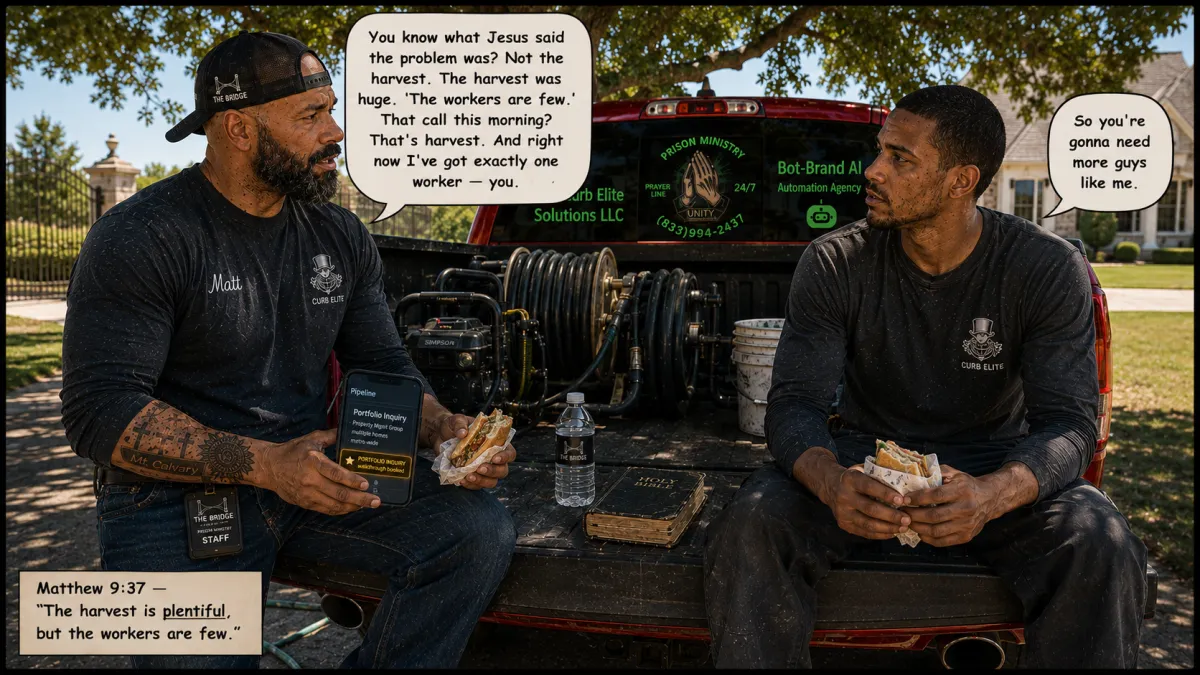
B2C10P4: "The Workers Are Few"
Time: 12:40 PM — Tailgate, Finished Job Site
Matt has quoted this verse from the front of a lot of rooms, but he's never gotten to say it with a booked walkthrough sitting on his phone as the proof. Jesus looked at the crowds and didn't say the problem was demand — the harvest was already plentiful. The shortage was always workers. Sitting on a tailgate five days into Ray's freedom, that stopped being a sermon and turned into a business plan. The portfolio that came in this morning is more work than two men will ever cover. And the answer to who covers it was sitting right beside him, eating a sandwich in a shirt with his own name coming to it — a man the world had written off, doing the exact work the harvest requires. Ray got there before Matt could say it out loud: this only works if there are more men like him. That's not the end of a story. That's the start of one.
The Desktop Dynasty — "The Harvest"
Evening, and the ministry lane closes the loop in silence. The man Matt met behind concrete and razor wire walks up to a halfway-house door in a work shirt, tired the good way, employed — and Matt watches him go in without a word, because some sermons don't need to be preached out loud.
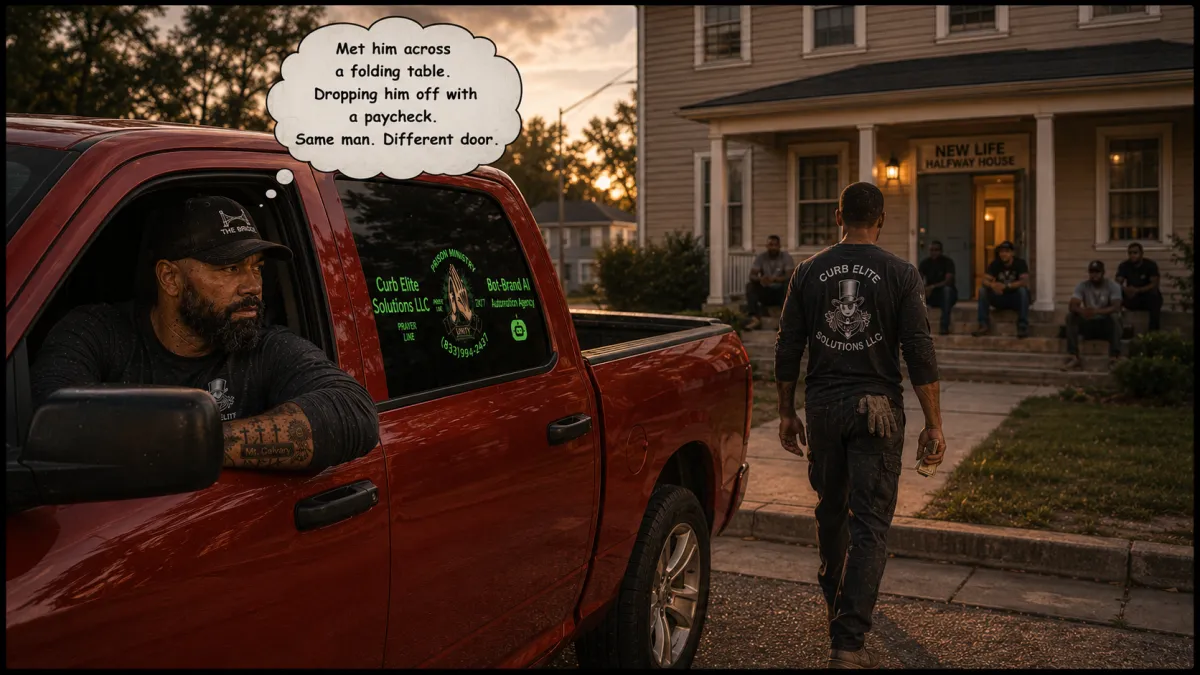
B2C10P5: "Same Man, Different Door"
Time: 6:05 PM — Halfway House, Oklahoma City
The Bridge is the reason Matt had Ray's respect before he had his résumé — a year and a half of every-other-Thursday across a folding table is a longer interview than any employer runs. But ministry that only lives inside the walls is only half a sentence. The other half happens on a quiet residential street at six o'clock, when the man you sat with inside gets out of your truck with dirt on his shirt and honest money in his hand and walks up to a door as somebody with a job. Matt doesn't get out. He doesn't preach it to the men on the steps, though one of them is already asking Ray where the shirt came from — which is its own kind of preaching, the kind that recruits itself. He just watches Ray go in, puts Red in drive, and lets the picture do the work. The harvest field, it turns out, has a waiting list, and it's sitting on that porch.
The Desktop Dynasty — "The Harvest"
The close of Book 2 — but not an exhale. Matt at the end of the biggest day the company has ever had, and for the first time the feeling isn't "the machine held the line." It's "one truck isn't going to be enough anymore." The last panel of the book doesn't settle. It leans forward.
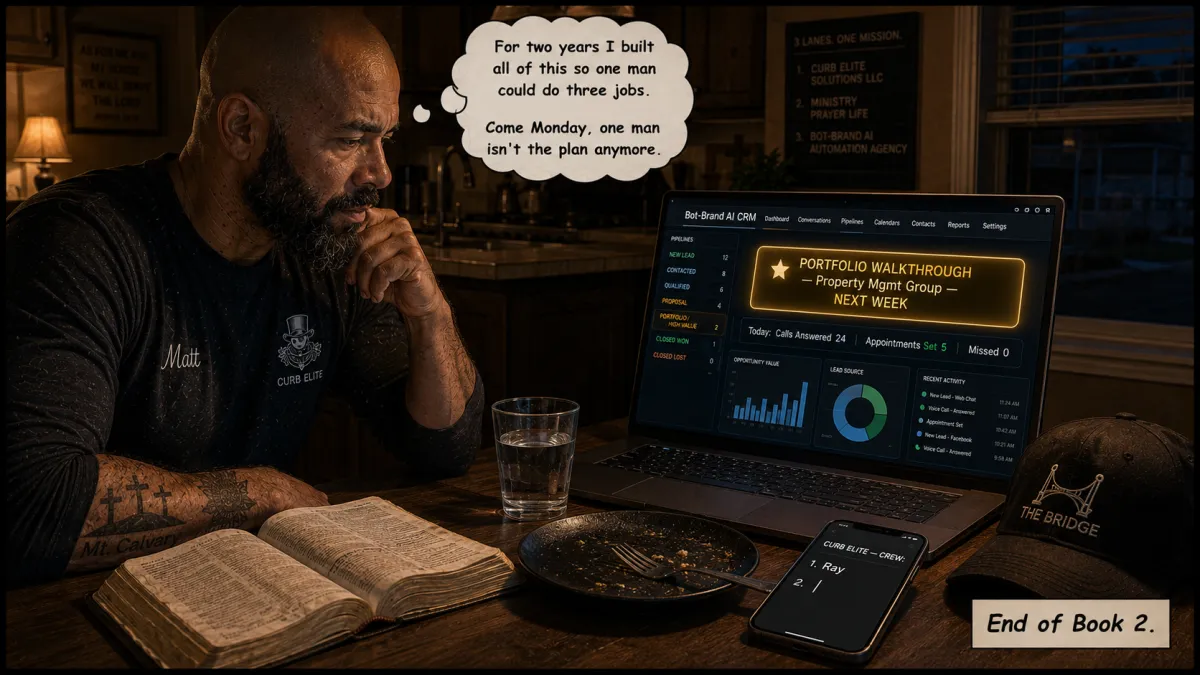
B2C10P6: "One Man Isn't the Plan"
Time: 8:20 PM — Home Office
Twenty-four calls answered today. Five appointments set. Zero missed — on the day the company caught the largest opportunity it has ever had, without a human being in the chair when it rang. For two full years that was the entire dream: build a machine good enough that one man could run a field business, a ministry, and a household on the same twenty-four hours and drop none of them. Book 2 was the proof that it works. But a portfolio walkthrough is sitting on the calendar for next week, there's a name on the crew list that wasn't there Monday, and a blinking cursor underneath it waiting for the next one. The machine did its job — it caught more harvest than one man can bring in. So the question the last night of Book 2 leaves him with isn't did it work. It's the better problem, the one every verse and every long day was quietly pointing at: it's time to send more workers into the field. Curb Elite is done being one truck.
Ready to grow with Bot-Brand?
Deploy high-performance infrastructure, autonomous CRM logic, and AI-driven tools engineered to eliminate lead leakage and scale your operational capacity.
Schedule Architectural Audit

Disclaimer: Bot-Brand does not claim specific clients, appointments, or revenue outcomes. All services are provided as Professional Technical Infrastructure on a best-effort basis according to the selected package and agreed scope of work.
Full Disclaimer© 2026 Bot-Brand. All rights reserved.
Curb Elite Solutions LLC · DBA Bot-Brand · Oklahoma City, OK